
Last updated November 2, 2026
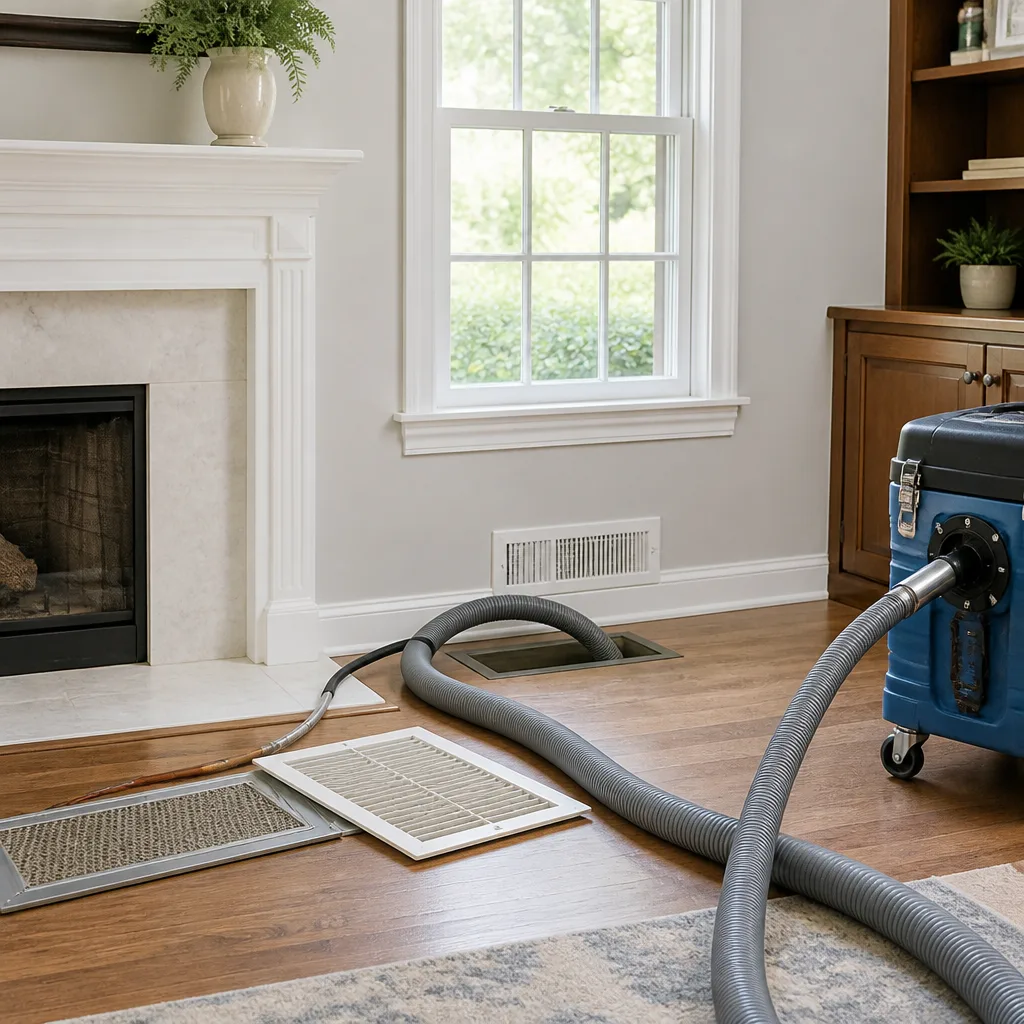 Whole-home duct cleaning
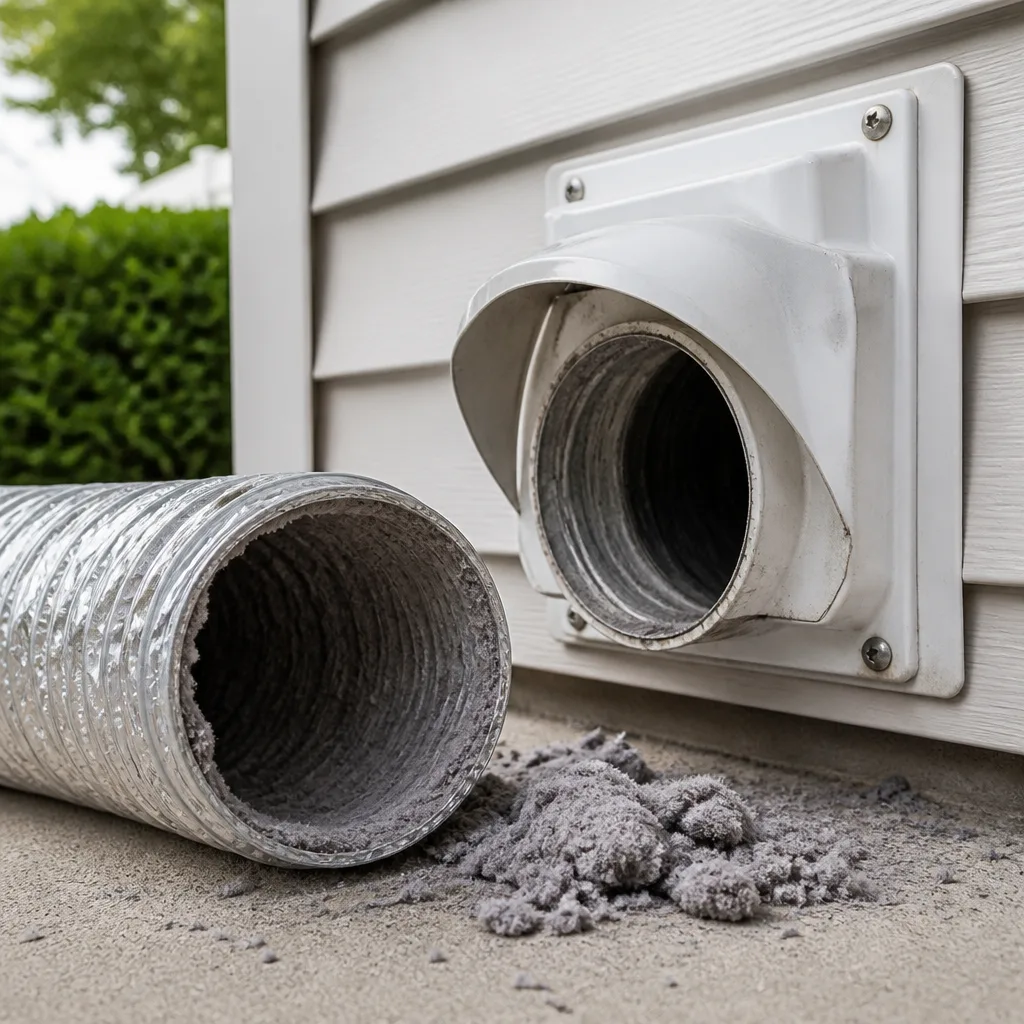 Dryer vent cleaning
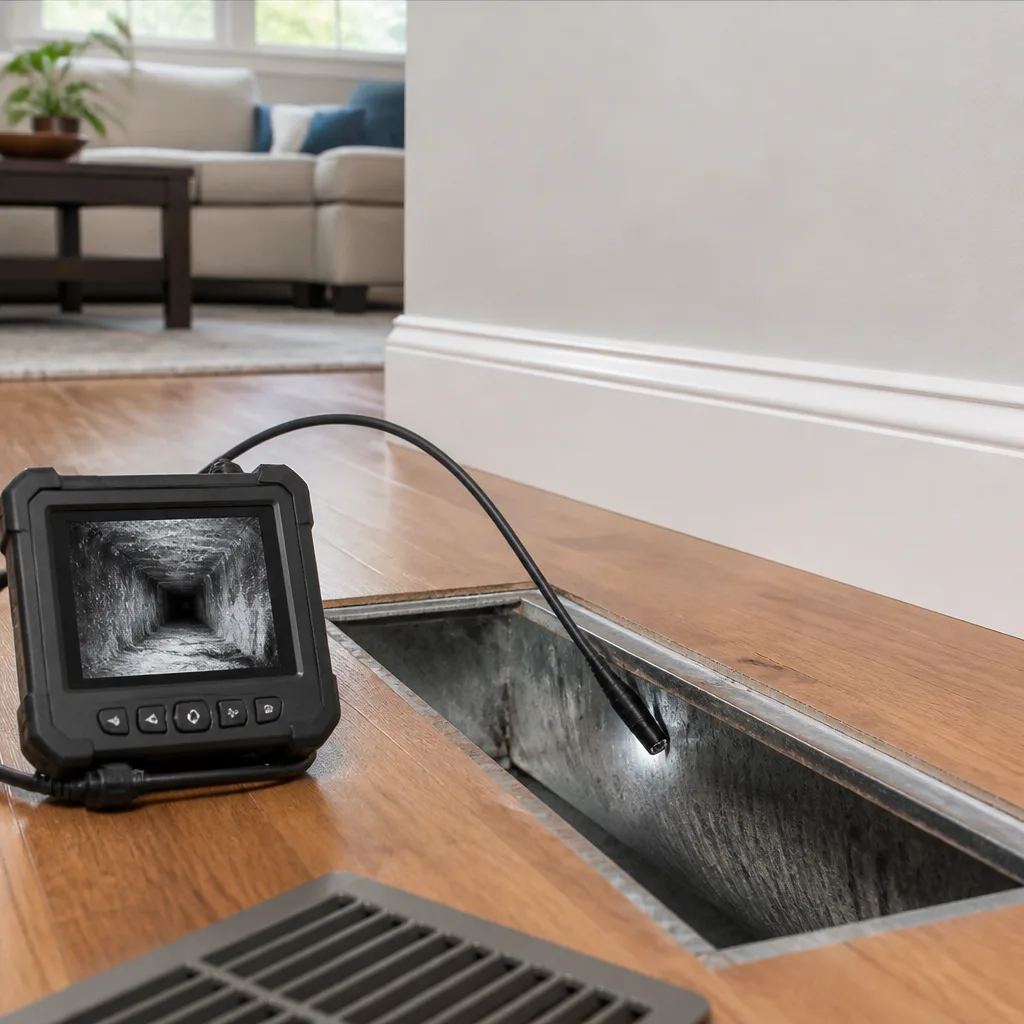 Camera inspection
 Sanitizing & deodorizing
Whole-system duct and dryer vent check with before-and-after photos - you see exactly what came out of your vents
That "$99 whole-house special" is a bait ad - the real number appears once they are in your hallway, or the "clean" is a shop-vac at the register. We photograph the inside of your ducts before and after instead.
The Complete Air Duct Cleaning Guide for Rancho Bernardo Homeowners
Rancho Bernardo sits in a valley that traps particulates from both inland wildfire corridors and the coastal marine layer, yet most air duct cleaning checklists were written for Ohio suburbs where the air behaves differently and houses are built on different assumptions. The result is that homeowners here inherit generic advice that misses the actual conditions inside their walls. This guide maps the full air duct cleaning process against what’s really happening in Rancho Bernardo’s specific climate, housing stock, and air quality patterns, so you’ll know exactly what a legitimate cleaning should include, what it should cost, and what to question if a contractor skips a step. You’ll also learn when cleaning isn’t enough, and when air duct repair in Rancho Bernardo is the actual fix.
Quick Answer
Air duct cleaning in Rancho Bernardo typically costs between $350 and $650 for a full system, depending on home size, number of vents, and how heavily contaminated the ducts are. A proper cleaning uses negative-pressure source removal equipment, not a shop vacuum, and should include an inspection of the ducts for damage, which is critical in Rancho Bernardo because many homes here were built between the 1970s and 1990s and have aging flex-duct runs that fail over time. The entire process takes 3 to 6 hours for a typical 2,000 to 3,000 square foot home.
Styles & brands we work with
- Whole-home duct cleaning
- Dryer vent cleaning
- Camera inspection
- Sanitizing & deodorizing
Table of Contents
- Why Rancho Bernardo’s Air Is Different
- What’s Actually Contaminating Your Ducts
- The Inspection: What Happens Before Cleaning Starts
- Negative-Pressure Source Removal vs. Blow-and-Go
- How Rancho Bernardo’s Tract-Home Layouts Affect Cleaning
- The Full Cleaning Process, Step by Step
- What Should the System Look Like After Cleaning?
- What Air Duct Cleaning Actually Costs in Rancho Bernardo
Why Rancho Bernardo’s Air Is Different
Rancho Bernardo sits in a topographic pocket between the San Pasqual Valley to the east and the coastal plain to the west. Marine layer air pushes in from the coast during summer mornings, and when Santa Ana winds reverse the flow in the fall, air from inland wildfires gets pulled directly through the valley. This isn’t a minor detail. It means the particulate load in Rancho Bernardo’s outdoor air shifts dramatically by season, and your HVAC system is the primary filter between that outdoor air and the indoor air your family breathes.
We’ve cleaned ducts in Rancho Bernardo homes a mile apart that look completely different inside. A home near the Westwood area, closer to the coastal influence, tends to accumulate finer, lighter dust that packs into flex-duct lining. A home up toward the Bernardo Heights area, more exposed to the inland corridors, often has coarser debris mixed with wildfire ash residue that settled through the return registers during fall fire events. The cleaning process is the same in principle, but the time and the tools matter more in one case than the other.
Here’s the part most guides miss: it’s not just about fire season. Rancho Bernardo’s valley topography means fine particulates hang in the air longer than they do in coastal communities like La Jolla or inland communities with stronger wind patterns like Escondido. That lingering particulate gets drawn into return ducts with every HVAC cycle. Over a year, a 2,500 square foot Rancho Bernardo home’s duct system can accumulate several pounds of fine dust, much of it invisible because it’s under 10 microns in size.
What’s Actually Contaminating Your Ducts
When we open a return register in a Rancho Bernardo home that hasn’t been cleaned in a decade, we typically find a combination of things. Knowing what’s in there matters, because it tells us how the system got dirty and what the right fix is. Here’s what accumulates in ducts throughout Rancho Bernardo and the surrounding communities:
- Wildfire ash and smoke residue. Even homes that never had active fire nearby accumulate smoke particulates during regional fire events. This residue is extremely fine, often under 2.5 microns, and sticks to duct walls and flex-duct liners.
- Construction dust from the original build. Many Rancho Bernardo homes built in the 1980s and 1990s still have drywall dust and insulation fibers circulating in the ducts from the original construction, especially if the ducts were never cleaned after the home was finished.
- Pet dander and hair. Rancho Bernardo has a high concentration of pet-owning households. Dander is one of the stickiest contaminants because it binds with moisture in the air and creates a film on duct surfaces.
- Fiberglass particles from degraded duct liner. Many tract homes from the 1970s through early 1990s used fiberglass-lined sheet metal or fiberglass duct board. That liner breaks down over time, releasing glass fibers into the air stream.
- Pest debris. Rodents and insects find their way into duct systems through gaps in the return plenum or disconnections in flex duct. The evidence stays behind long after the pest is gone.
The combination matters. Wildfire residue mixed with construction dust creates a heavier, grittier buildup than either one alone, which is why Rancho Bernardo homes often need more aggressive agitation during cleaning than homes in less particulate-heavy parts of San Diego County.
The Inspection: What Happens Before Cleaning Starts
A legitimate air duct cleaning in Rancho Bernardo starts with an inspection, not with a hose. The inspection is where a contractor determines what’s in the system, whether the ducts are intact, and whether there are problems that cleaning alone won’t fix. Skipping this step is the most common shortcut in the industry, and it leads to homeowners paying for a cleaning that leaves a broken system looking clean but functioning poorly.
Here’s what a proper inspection includes:
- Return and supply register removal. Every accessible register is removed and inspected. In Rancho Bernardo homes, returns are often located in hallways and high on walls, while supplies are in floors or ceilings depending on whether the home has a slab foundation or a crawl space.
- Visual inspection of accessible duct runs. Flex duct is inspected for sags, kinks, disconnections, and tears. In tract homes with long flex runs, disconnections at the plenum connection are common, especially in attics that get extremely hot during Rancho Bernardo summers.
- Plenum and coil inspection. The return plenum and evaporator coil are checked for dust loading, moisture damage, and mold or mildew growth. The coil is a critical point because a dirty coil restricts airflow and forces the system to work harder.
- Airflow and static pressure check. A simple airflow test at each register establishes a baseline. If airflow is uneven or weak in certain rooms, the problem may be duct design or damage, not dirt. Cleaning won’t fix a collapsed duct or a disconnected branch run.
- Access point planning. The contractor determines where access holes will be cut for the vacuum hose and brush system. In Rancho Bernardo homes with limited attic access, this planning matters because the access point placement affects how thoroughly the system can be cleaned.
If a contractor skips the inspection and goes straight to hooking up a vacuum, you should ask why. The inspection isn’t a formality. In our experience in Rancho Bernardo, roughly one in four homes has a duct damage issue that cleaning alone won’t solve, and the homeowner deserves to know that before paying for a cleaning.
Negative-Pressure Source Removal vs. Blow-and-Go
The equipment a duct cleaning company uses determines what actually leaves your house. There are two fundamentally different approaches, and they produce entirely different results.
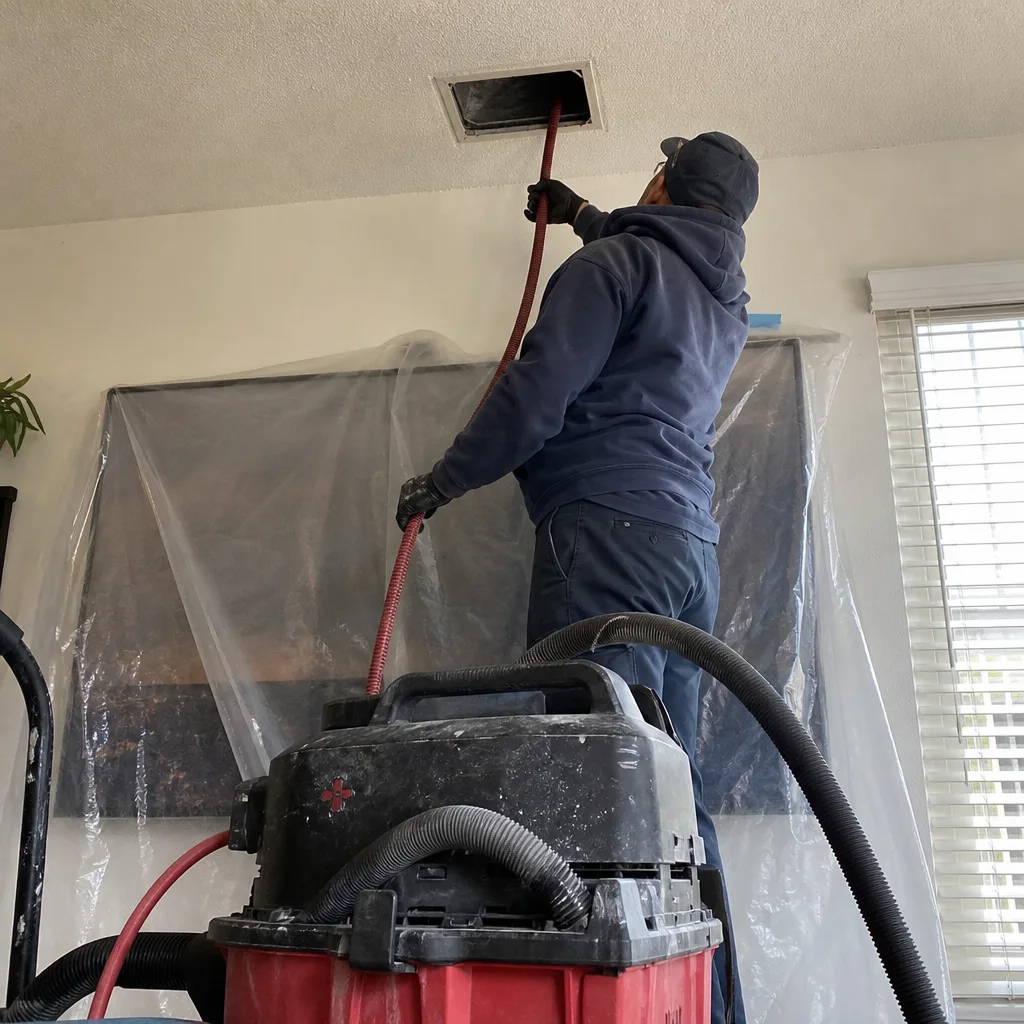
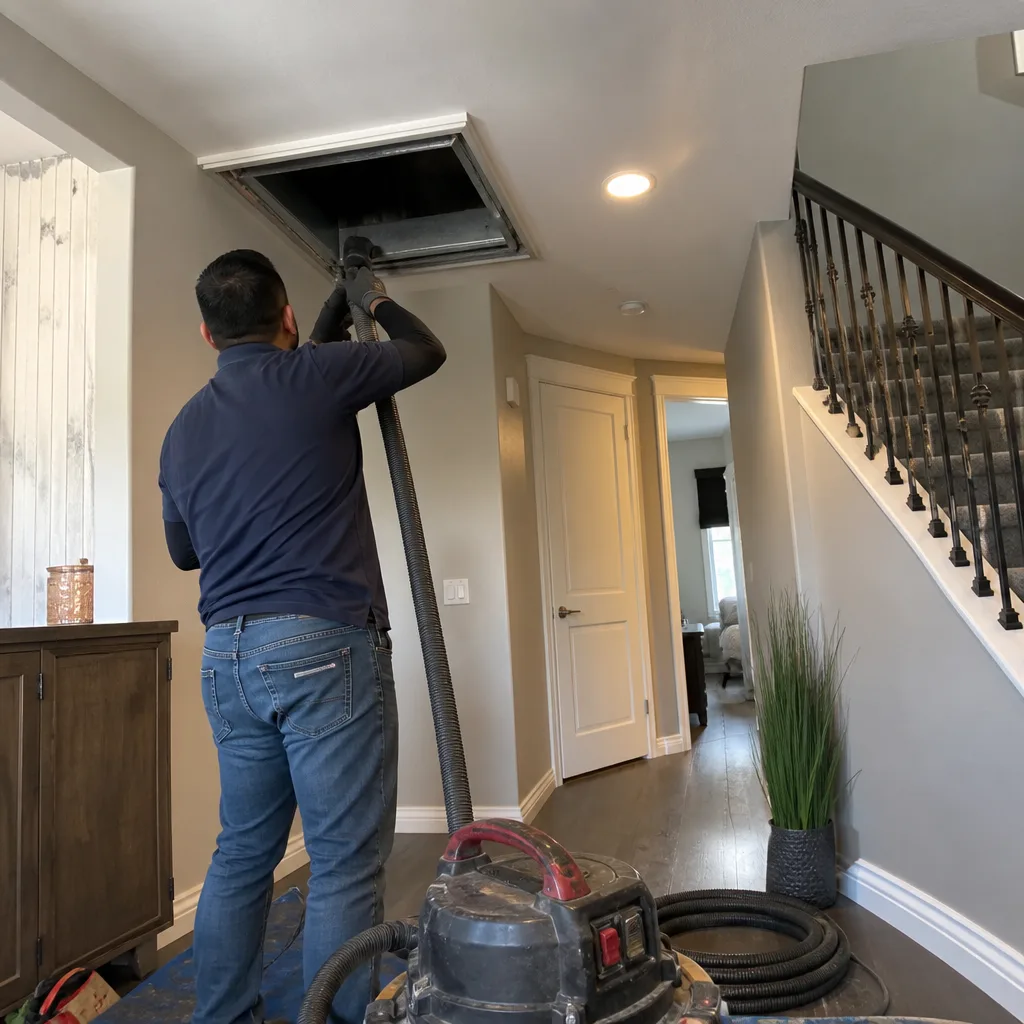
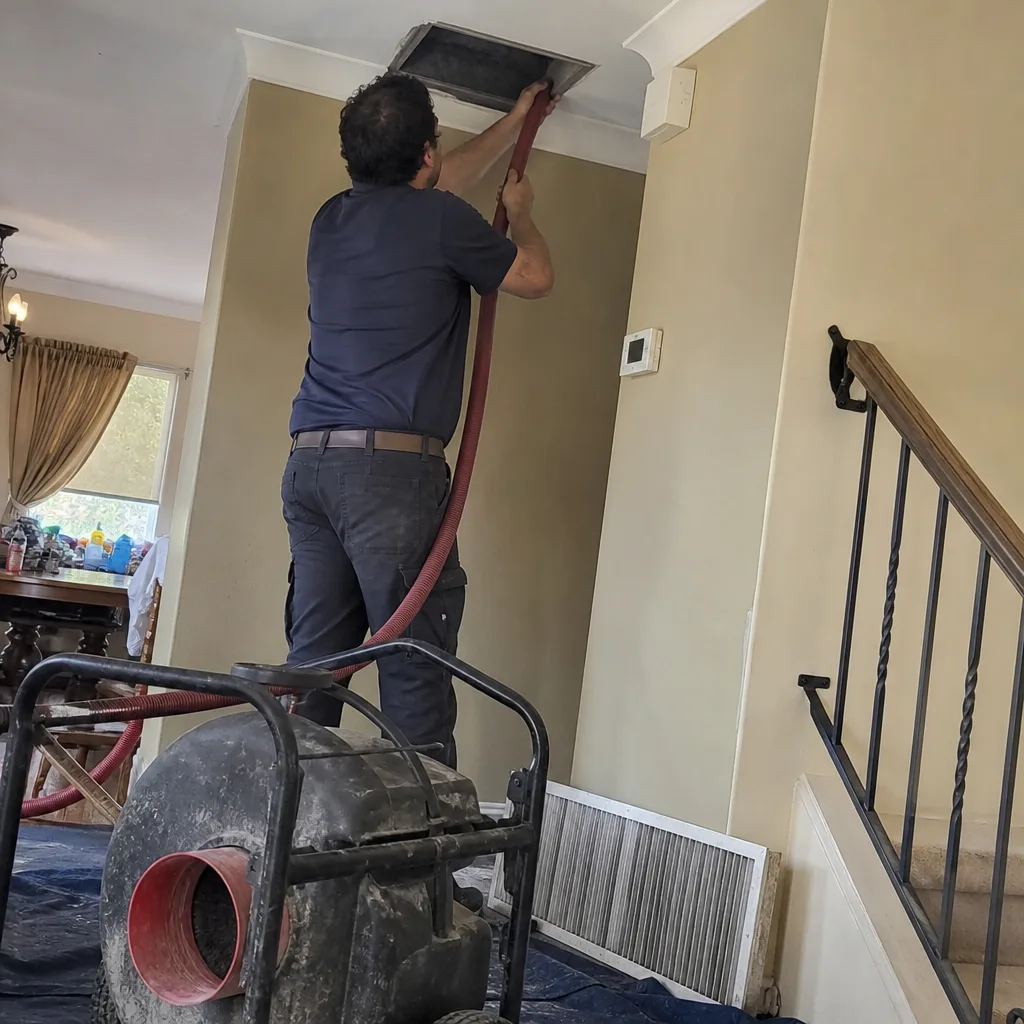
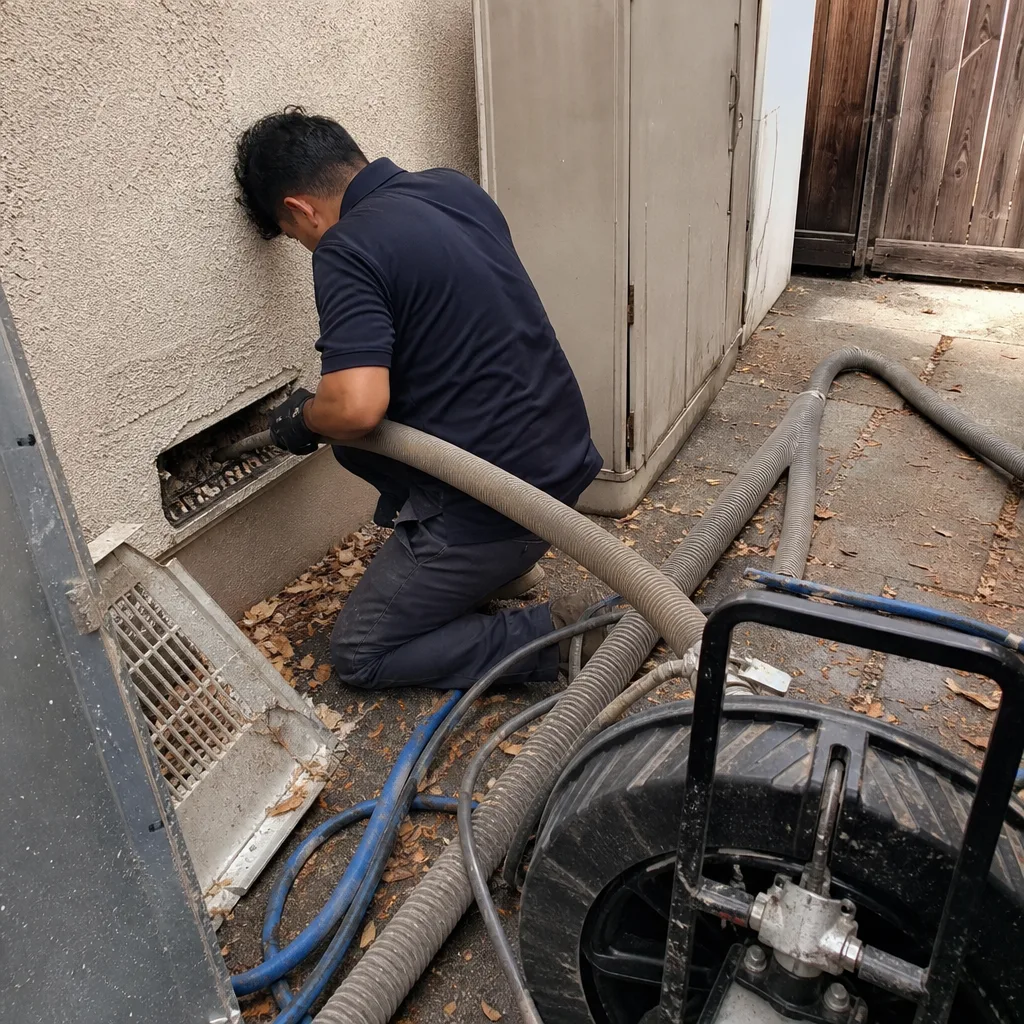
Negative-pressure source removal is the professional standard. A powerful vacuum unit creates negative pressure inside the duct system, typically 2,000 CFM or higher, which means every cubic foot of air inside the ducts is being pulled toward the vacuum and out of the house. HEPA filtration on the exhaust side, like the systems we run with our air duct cleaning in Rancho Bernardo, captures the particles so they exit into a filtered container, not into your home or neighborhood air. While the negative pressure is running, rotary brushes and compressed air tools agitate the debris off the duct walls, and the vacuum pulls it out.
Blow-and-go, by contrast, is what you get from budget operators. A technician inserts a compressed air hose or a spinning brush into the register opening and blows debris around inside the ducts, often with no vacuum running or with an undersized vacuum that can’t keep up. The debris gets dislodged, but without negative pressure to carry it out, much of it resettles deeper in the system. The ducts might look cleaner at the register opening, but the volume of debris inside is effectively moved around, not removed.
The difference shows up in what stays in your ducts afterward. With proper negative-pressure source removal, a post-cleaning inspection shows duct walls that are visibly clean and an airflow test that matches the baseline. With blow-and-go, debris accumulates in the trunk line where it’s hardest to see and hardest to reach. We use professional-grade Rotobrush rotary brush systems paired with Nikro HEPA-rated vacuum units and Abatement Technologies containment equipment on every cleaning. That combination matters because the Abatement Technologies negative-air setup creates true containment around the work area, preventing dislodged debris from recirculating into your living space during the cleaning itself. An industrial standard rarely seen in residential duct cleaning, but it’s the right way to do the job in Rancho Bernardo, where particulate loads are higher than the county average.
How Rancho Bernardo’s Tract-Home Layouts Affect Cleaning
Rancho Bernardo’s housing stock is dominated by tract developments built in waves from the 1970s through the 1990s. Those homes have specific duct design patterns that affect how cleaning works and how long it takes.
The most common design in this era is a shared plenum system with long flex-duct branch runs. A single supply plenum in the attic or crawl space distributes conditioned air through flex ducts that can run 20 to 40 feet to reach far bedrooms. Each bend, sag, or kink in those flex runs creates a low-velocity zone where debris settles out of the air stream. Over decades, that settling accumulates, and the cleaning process has to account for it with longer agitation time on the far ends of the runs.
Return air is often handled by a single central return or just a few large returns, which means return-side velocity is high and debris gets pulled deep into the return ducting. In homes with a single central return in the hallway, that return sees all the air from the entire house, and it’s usually the dirtiest part of the system.
Another factor is duct accessibility. Attic access in Rancho Bernardo tract homes ranges from generous walk-in attics in some 1980s builds to cramped scuttle holes in earlier homes. Limited attic access means the cleaning contractor has to work through the registers themselves in some cases, which slows the process and affects the reach of the cleaning tools. A proper cleaning in a home with limited attic access takes longer and costs more than one with open attic access, and a contractor who doesn’t mention this during the estimate is probably not planning to do a thorough job.
The age of the duct material matters too. Flex ducts from the 1980s and 1990s have an inner liner that degrades with age and heat exposure. Rancho Bernardo attics routinely exceed 120 degrees in summer, which accelerates that degradation. If the liner is cracked or peeling, aggressive brushing can make it worse. That’s when air duct repair becomes necessary, either as a follow-up or as part of the same visit.
The Full Cleaning Process, Step by Step
Here’s what a complete air duct cleaning in Rancho Bernardo should look like, from the time the crew arrives to the time they leave. This is the standard we follow, and it’s what you should expect from any contractor you hire.
- System inspection and baseline measurements. The crew documents register locations, measures airflow at each register, inspects visible duct work, and notes any damage, disconnections, or contamination issues.
- Floor and workspace protection. Drop cloths and corner guards go down in the work path, and the immediate work area around each register is protected. This matters because cleaning equipment and hoses move through your home, and proper protection is the difference between a clean job and a mess.
- Containment setup. Abatement Technologies negative-air containment equipment is positioned and sealed. This creates a controlled negative pressure zone that prevents dislodged debris from escaping into the living space during cleaning. In a Rancho Bernardo home with wildfire particulate residue, this containment is not optional.
- Access hole creation. If needed, access holes are cut in the supply and return plenums and sealed after cleaning. These are typically 8-inch holes, cut with a hole saw and finished with a permanent access cap.
- Negative-pressure vacuum connection. The Nikro HEPA-rated vacuum is connected to the system through the access hole, creating negative pressure that pulls air and debris out of the ducts continuously during the entire cleaning.
- Agitation and debris removal. Rotobrush rotary brush systems are run through each branch run, loosening debris from the duct walls while the vacuum pulls it out. Compressed air tools are used in tight spots and on trunk lines. This step is repeated as needed until inspection shows clean duct walls.
- Register and grille cleaning. Removed registers are cleaned, and the register openings are wiped down. Dirty registers reintroduce debris into the air stream immediately after cleaning if they’re not addressed.
- Coil and blower inspection with cleaning as needed. If the inspection revealed a heavily loaded evaporator coil or blower wheel, it’s addressed in this phase. A dirty coil and blower drastically reduce system efficiency and reintroduce dust into cleaned ducts.
- Sanitization if requested. A sanitizing treatment can be applied to duct surfaces. This is optional and should be discussed before the job starts, with clear expectations about what the product does.
- Post-cleaning inspection and airflow verification. The system is inspected again, and airflow is re-measured at each register to confirm improvement. A before-and-after report, including photos where access allows, is provided to the homeowner.
This entire process takes 3 to 6 hours for a typical Rancho Bernardo home. If a contractor quotes a 90-minute cleaning, they’re not doing the steps above.
What Should the System Look Like After Cleaning?
Verification is where many cleanings fall short. A homeowner shouldn’t have to take the contractor’s word that the job was done. Here’s what legitimate verification looks like in a Rancho Bernardo home after a proper cleaning:
- Visual inspection through access points. The duct walls should be visibly clean when inspected with a camera or inspection mirror through the access holes. Dust film and debris should be gone, not redistributed.
- Airflow improvement. Post-cleaning airflow at each register should be measurably better than the pre-cleaning baseline, unless the airflow problem was caused by duct design or damage that cleaning can’t fix.
- Before-and-after documentation. You should receive photos or video of the duct interior before and after cleaning. We document every job this way because it’s the only way a homeowner can see the work that was done inside walls and ceilings.
- Register cleanliness. Every register and grille should be clean and properly reinstalled, with no gaps or visible debris around the openings.
- No new damage. Flex ducts should not have new kinks, sags, or tears from the cleaning process. A careful technician cleans without damaging, and the inspection after cleaning confirms this.
If you don’t get verification, you don’t know what you paid for. Ask for it before the job starts, not after. In our experience serving Rancho Bernardo, homeowners who ask about verification before hiring get a better result, because the question itself filters out contractors who weren’t planning to provide it.
What Air Duct Cleaning Actually Costs in Rancho Bernardo
Here’s the honest pricing picture for Rancho Bernardo. Air duct cleaning is priced by system size, not by the hour in most cases, and the numbers below reflect what legitimate professional cleaning costs in this market.
| Home Size | Typical Price Range | Notes |
|---|---|---|
| Under 1,500 sq ft | $300 – $450 | Fewer registers, shorter duct runs. Attic access may still affect time. |
| 1,500 – 2,500 sq ft | $400 – $600 | Most common Rancho Bernardo home size. Moderate access typically. |
| 2,500 – 3,500 sq ft | $500 – $750 | Longer flex runs, more registers. Longer agitation time needed. |
| Over 3,500 sq ft | $650 – $1,000+ | Multiple systems possible, complex layouts common in newer builds. |
Several factors move the price within these ranges. Homes with a single central return are slower to clean effectively because all the return-side debris funnels into one location. Homes with multiple systems, or zoned systems, cost more because there are more components. If the inspection reveals that duct repair is needed, that’s quoted separately and should be itemized.
Be wary of any quote under $200 for a full-system cleaning. At that price, a contractor cannot afford the equipment, time, and labor required to do the job properly. What you typically get is a partial cleaning, a blow-and-go, or a bait price that escalates once the crew is in the house. A legitimate Rancho Bernardo cleaning costs what it costs because the equipment and the time are non-negotiable parts of doing it right.
Does Your Dryer Vent Need Attention Too?
While the HVAC system is the focus of this guide, the dryer vent deserves a mention because it’s the most dangerous duct in the house and the most commonly ignored. Dryer vents in Rancho Bernardo homes, especially those with long vent runs through walls or under floors to reach an exterior outlet, accumulate lint in ways that horizontal or short vent runs don’t. Lint is highly flammable, and vent restriction is a leading cause of residential dryer fires.
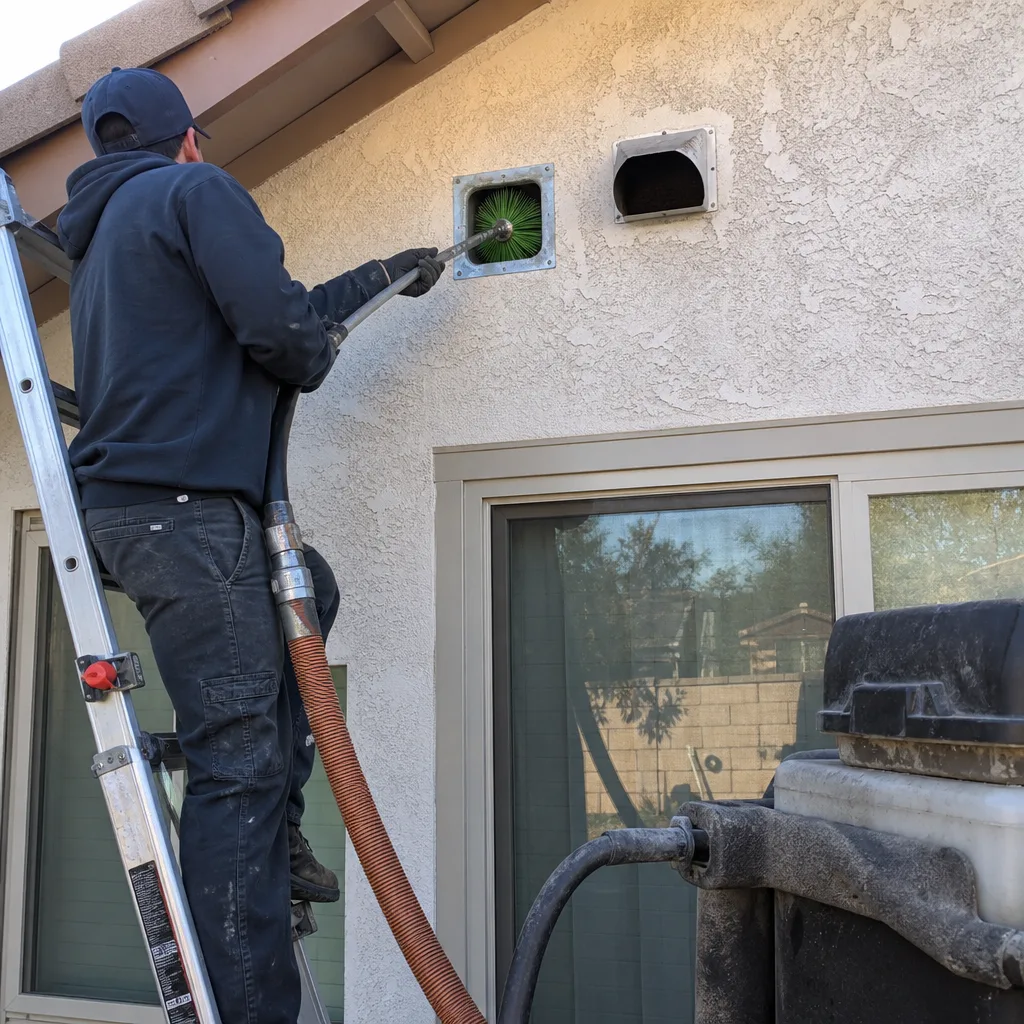
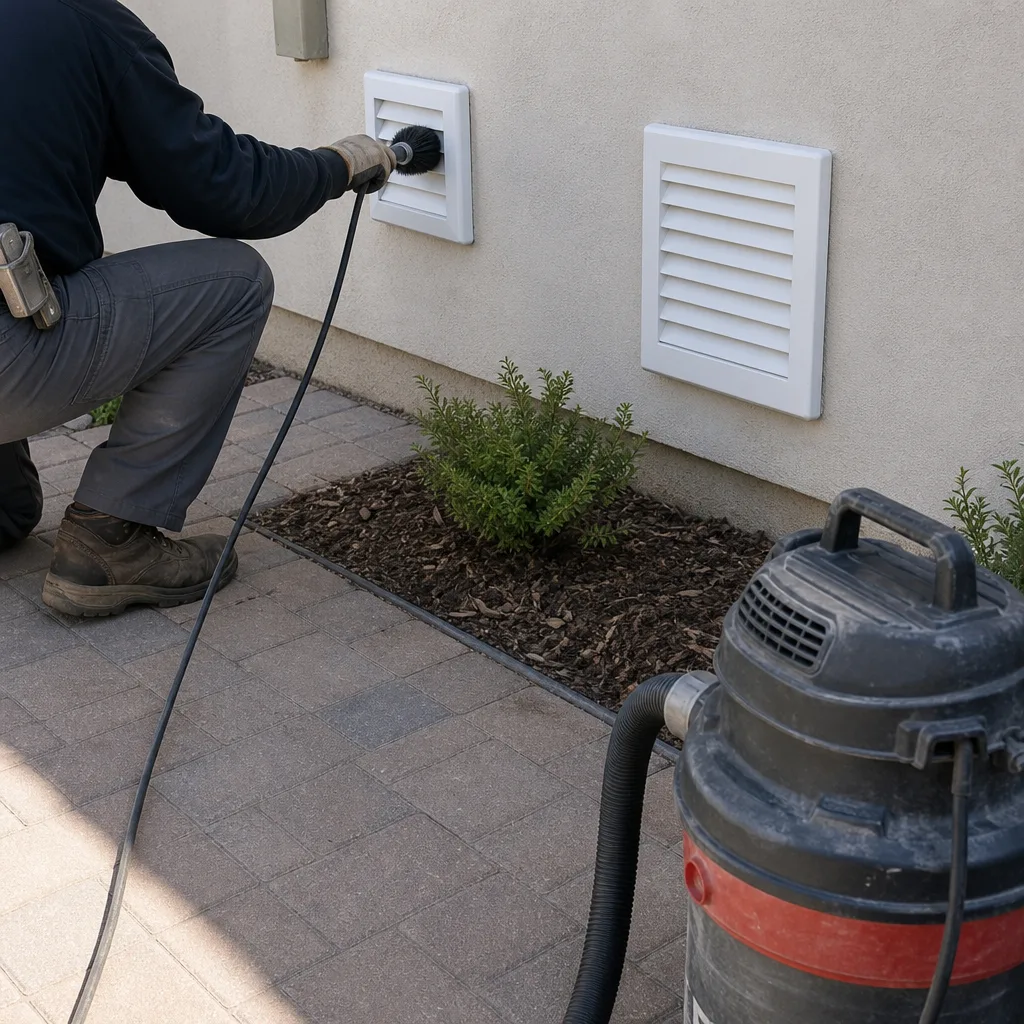
Clogged dryer vents also force the dryer to work harder, which means longer drying times, higher energy use, and more wear on the dryer. If your clothes are taking longer to dry than they used to, or the dryer feels hotter than normal on the outside, the vent is likely restricted. We offer dryer vent cleaning in Rancho Bernardo as a dedicated service, separate from air duct cleaning, because it requires its own tools and its own process. It’s not an add-on afterthought.
See the difference
 Before
 After
 Before
 After
 Before
 After
Common Mistakes to Avoid
- Hiring on price alone. The cheapest quote in Rancho Bernardo is unlikely to include negative-pressure equipment, containment, or verification. You’ll pay less and get less, but the dirt stays behind.
- Accepting a cleaning without an inspection. If the contractor doesn’t inspect the system first, they’re cleaning blind. In Rancho Bernardo tract homes, that means missed damage and ducts that still leak after cleaning.
- Using a “whole-house air duct cleaning $99” coupon. That pricing model relies on the upsell once the tech is in the home. The real price will be much higher, and you’ll be dealing with a contractor who built the relationship on a bait price.
- Cleaning without addressing the source of contamination. If your ducts are filled with construction debris or pest droppings, cleaning without fixing the entry point means recontamination within months.
- Treating the dryer vent as optional. The dryer vent is a fire safety item, not a convenience. In Rancho Bernardo homes with long vent runs, skipping it is a genuine risk.
- Ignoring duct damage because cleaning “fixed” the visible issue. Clean ducts with holes or disconnections are still leaking conditioned air into the attic. If the inspection found damage, fix it.
- Assuming all systems are built the same. Houses in Rancho Bernardo have specific duct layouts and aging patterns. A contractor who treats your system like every other house hasn’t actually looked at it.
When to Call a Professional
Call a professional when you notice visible dust blowing from registers, when your allergies worsen indoors, when rooms heat or cool unevenly, when your energy bills climb without explanation, or when you can’t remember the last time the ducts were touched and you’ve lived in the home more than five years. If you’ve had a pest issue in the attic or crawl space, if there’s been renovation work, or if you smell a musty odor when the system runs, those are also signs that the ducts need professional attention. Golden Air Duct provides free estimates in Rancho Bernardo. Call (844) 798-0150 to schedule an inspection, and we’ll give you an honest assessment of what’s needed.
Frequently Asked Questions
Air duct cleaning in Rancho Bernardo costs between $300 and $1,000 depending on home size, system complexity, and contamination level, with most homes falling in the $400 to $600 range. The price should be quoted as a flat system price before work begins, not per vent, and not subject to on-site upselling.
A thorough cleaning takes 3 to 6 hours for a typical Rancho Bernardo home between 1,500 and 3,500 square feet. If a contractor promises results in under two hours, they’re skipping significant steps, most likely the inspection and the full agitation of the branch runs.
Cheaper quotes reflect cheaper equipment and fewer steps. A franchise or discount operator using a shop vacuum and a drill brush can quote $150 because they’re not creating negative pressure, not containing the work area, and not documenting the results. The debris stays in your ducts, and you’ve paid for the appearance of cleaning rather than cleaning.
Ask for before-and-after photos or video of the duct interior through the access points, and request airflow measurements before and after. A legitimate contractor has no reason to refuse either. In Rancho Bernardo, where attic access can be limited, photos from the access holes are the standard verification method.
Every 3 to 5 years is the standard interval for most Rancho Bernardo homes, but homes with pets, high wildfire smoke exposure, recent renovation, or allergy-sensitive occupants may need cleaning every 2 to 3 years. The condition the inspection reveals matters more than the calendar, which is why we recommend an inspection rather than a fixed schedule.
Cleaning removes the accumulated dust, dander, and particulate matter that recirculates through your living space with every HVAC cycle, which can reduce indoor allergen levels significantly. It won’t eliminate outdoor allergens that enter through open windows and doors, but it removes a major indoor source, which is a meaningful improvement for most allergy sufferers in Rancho Bernardo.
The Bottom Line
Air duct cleaning in Rancho Bernardo is not a generic service, and it shouldn’t be treated like one. Your home’s ducts accumulate a specific mix of wildfire particulate, coastal dust, and aging duct debris that requires proper inspection, negative-pressure source removal, and real verification to address. If the inspection uncovers damage, air duct repair should happen in the same visit rather than leaving a cleaned-but-broken system. And if the dryer vent hasn’t been cleaned, that’s a separate task with its own fire safety urgency. The right contractor for a Rancho Bernardo home is one who understands these local conditions and has the equipment to handle them. Golden Air Duct provides free estimates for air duct cleaning, repair, and dryer vent cleaning throughout Rancho Bernardo. Call (844) 798-0150 to schedule an inspection and get an honest assessment of your system.
Written by the team at Golden Air Duct, serving Rancho Bernardo since 2013.