
Last updated November 4, 2026
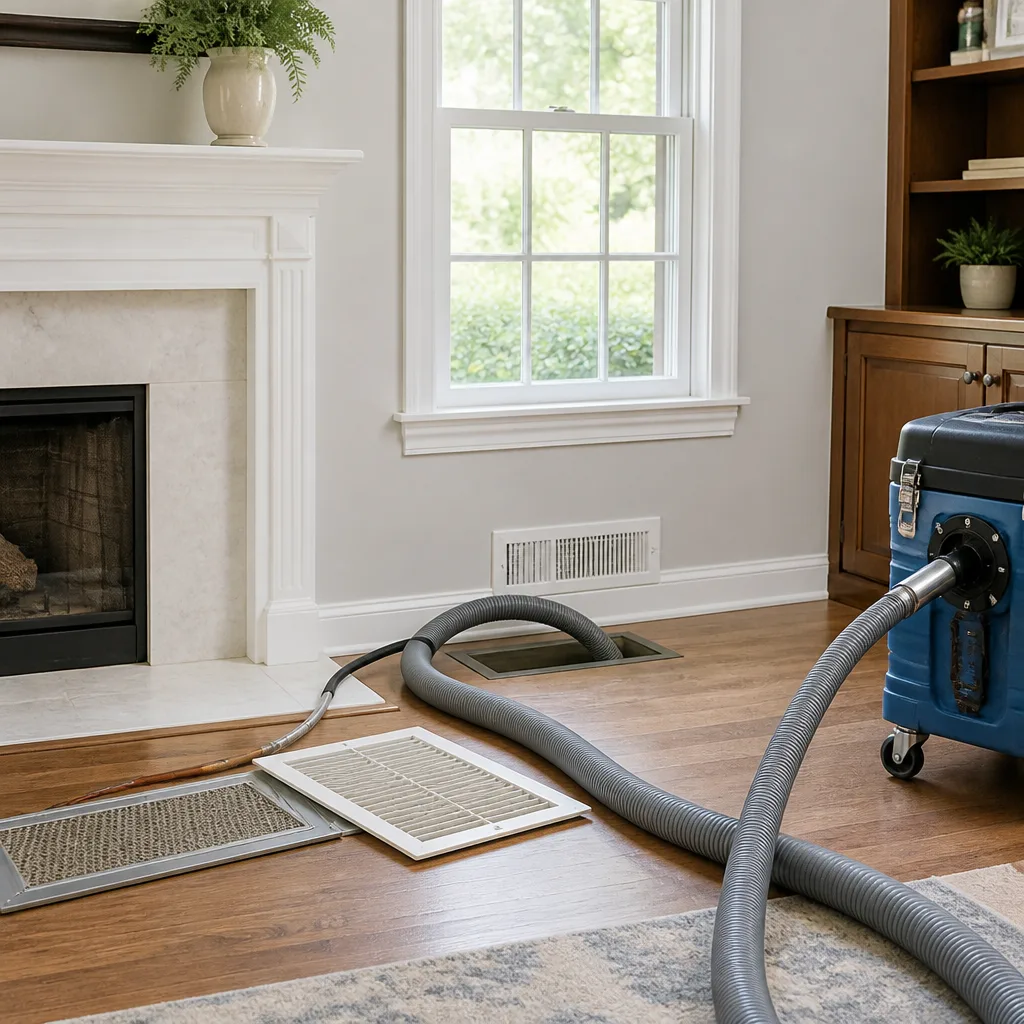 Whole-home duct cleaning
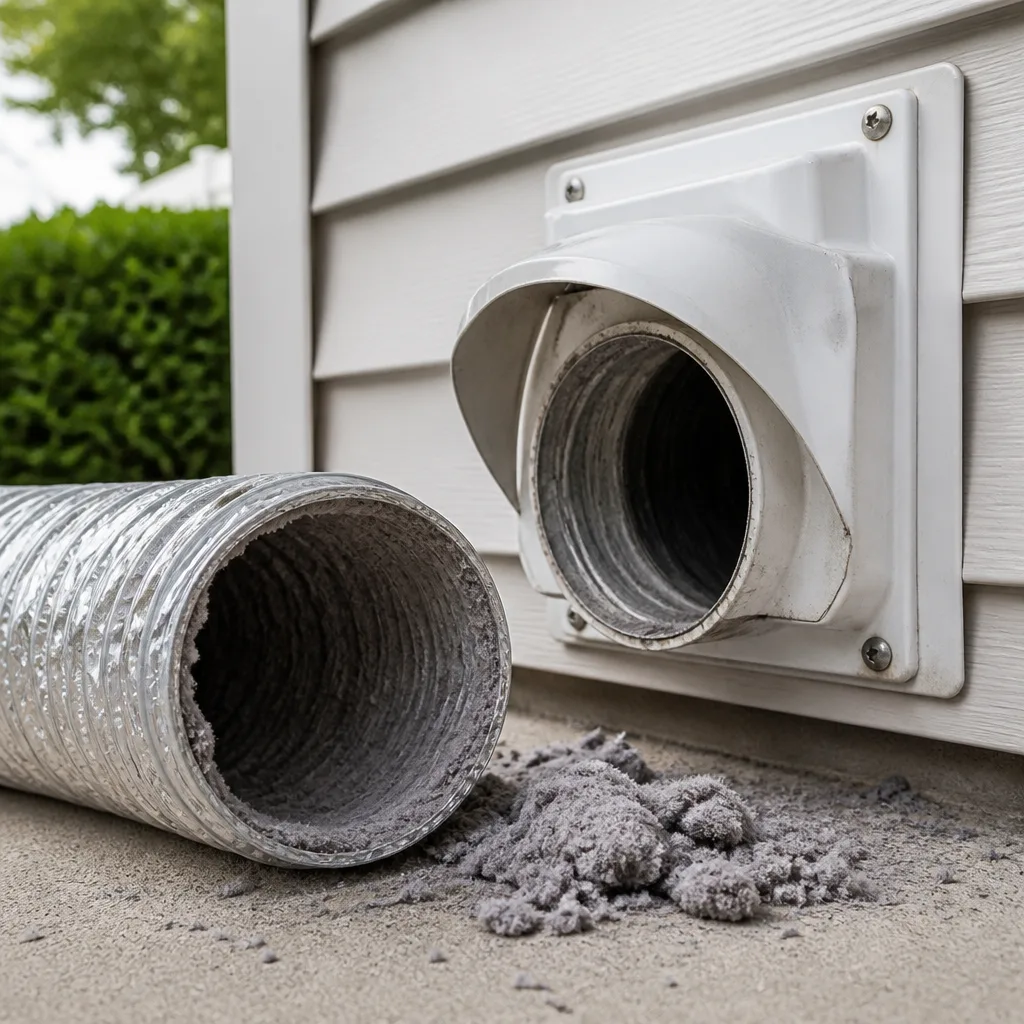 Dryer vent cleaning
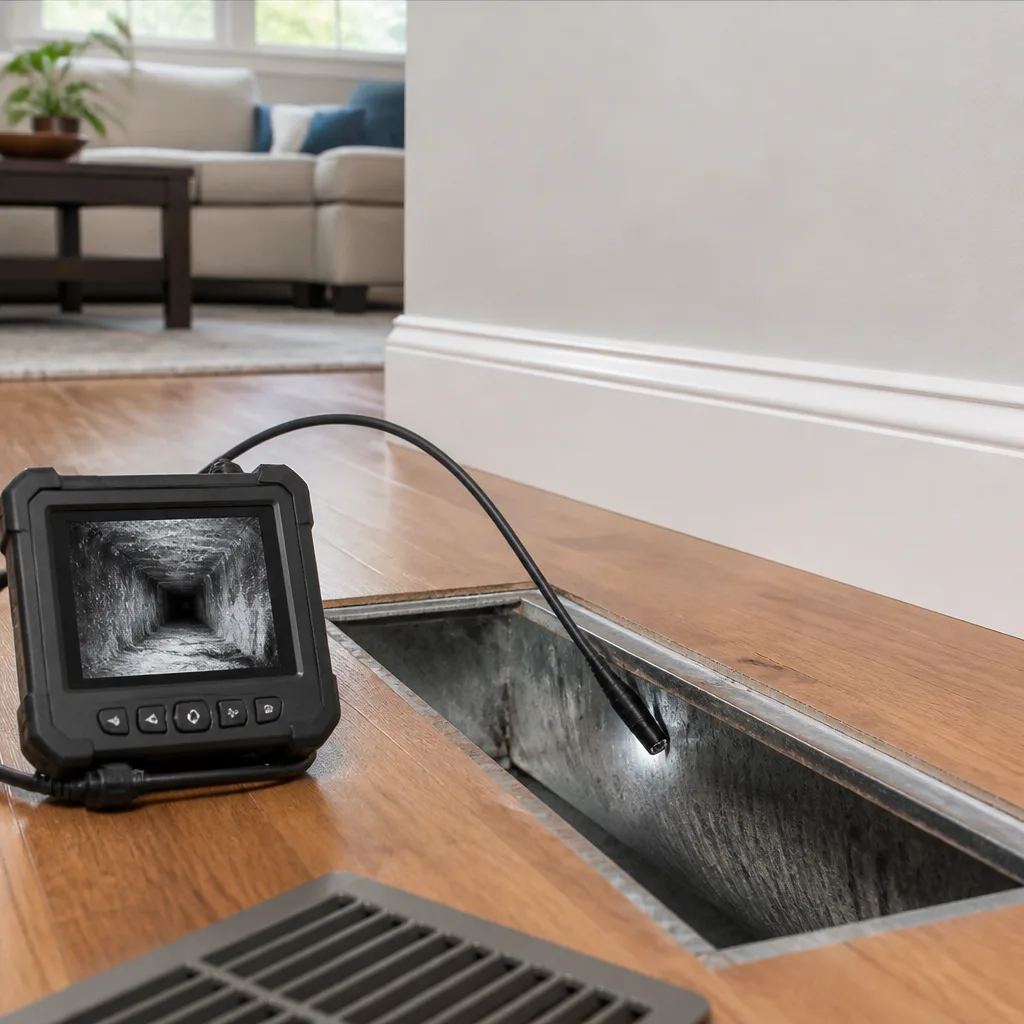 Camera inspection
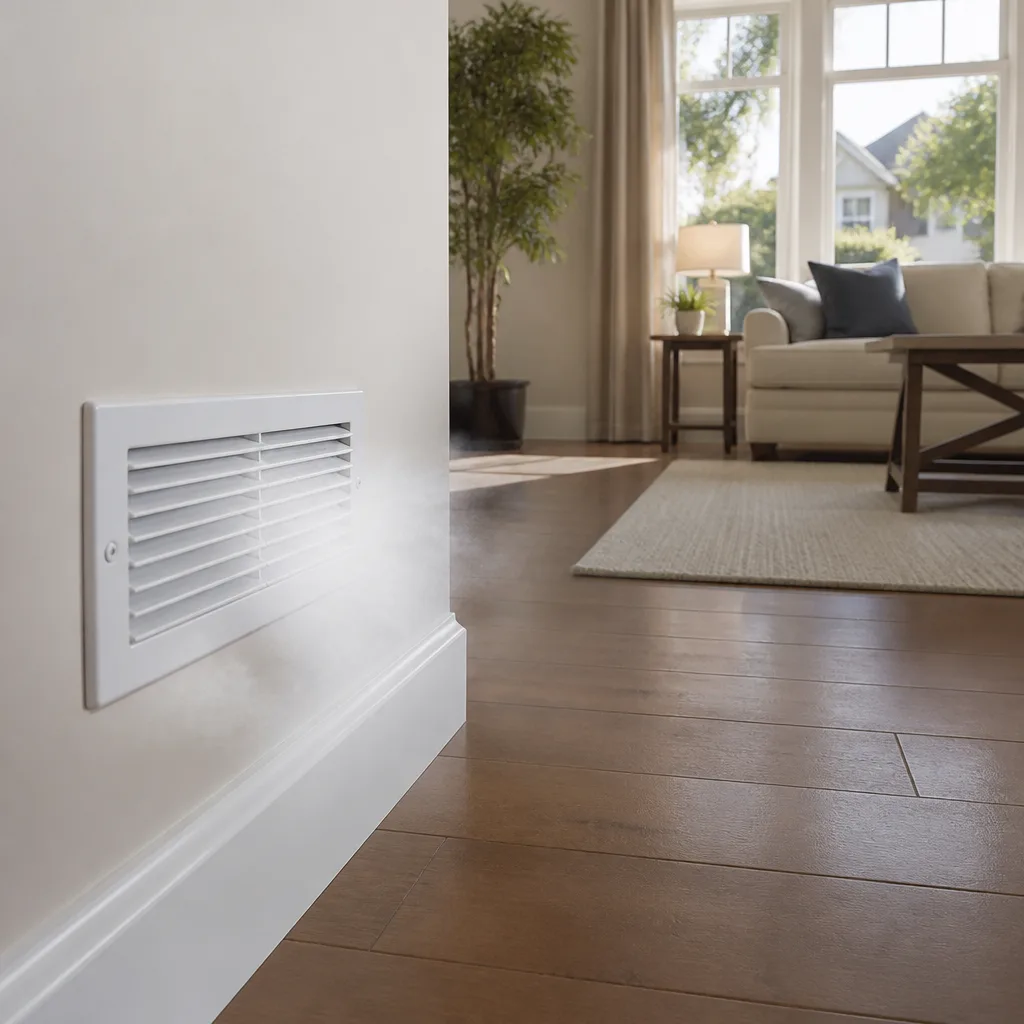 Sanitizing & deodorizing
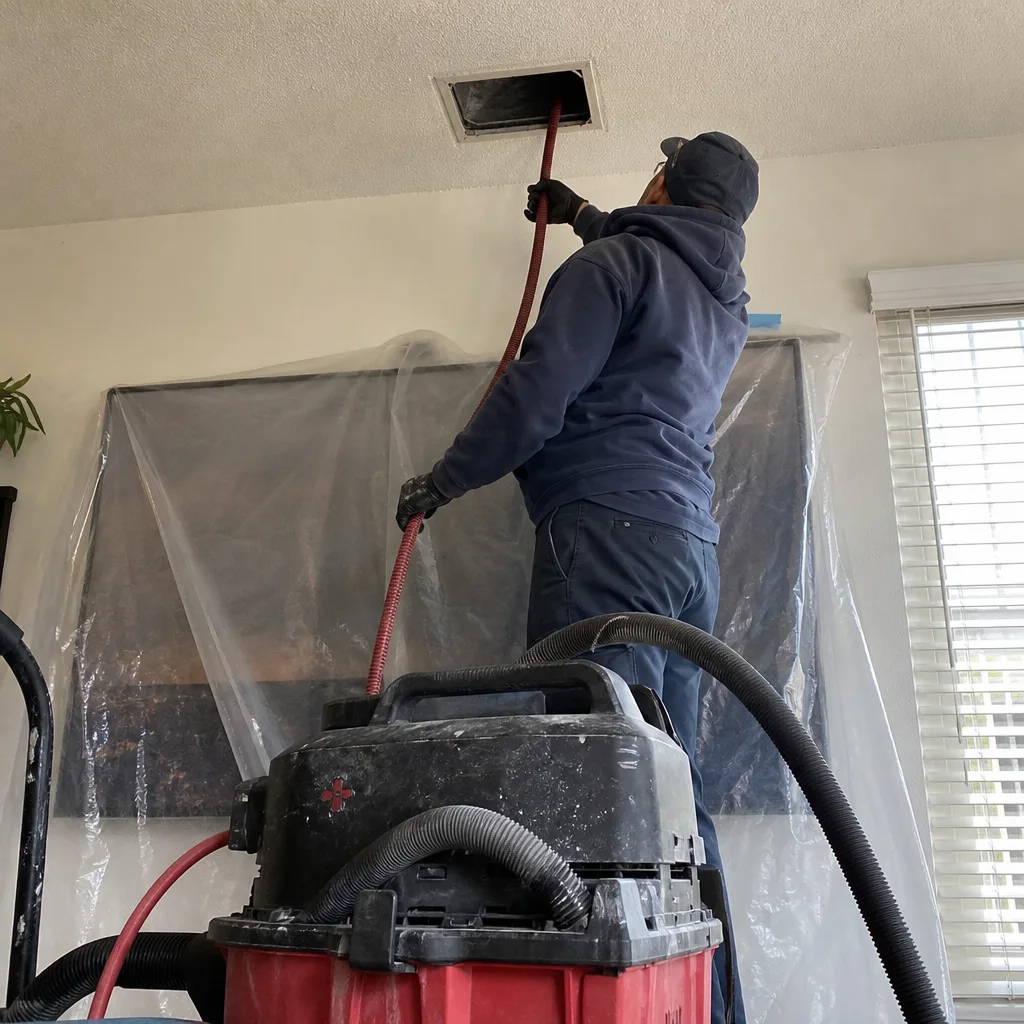
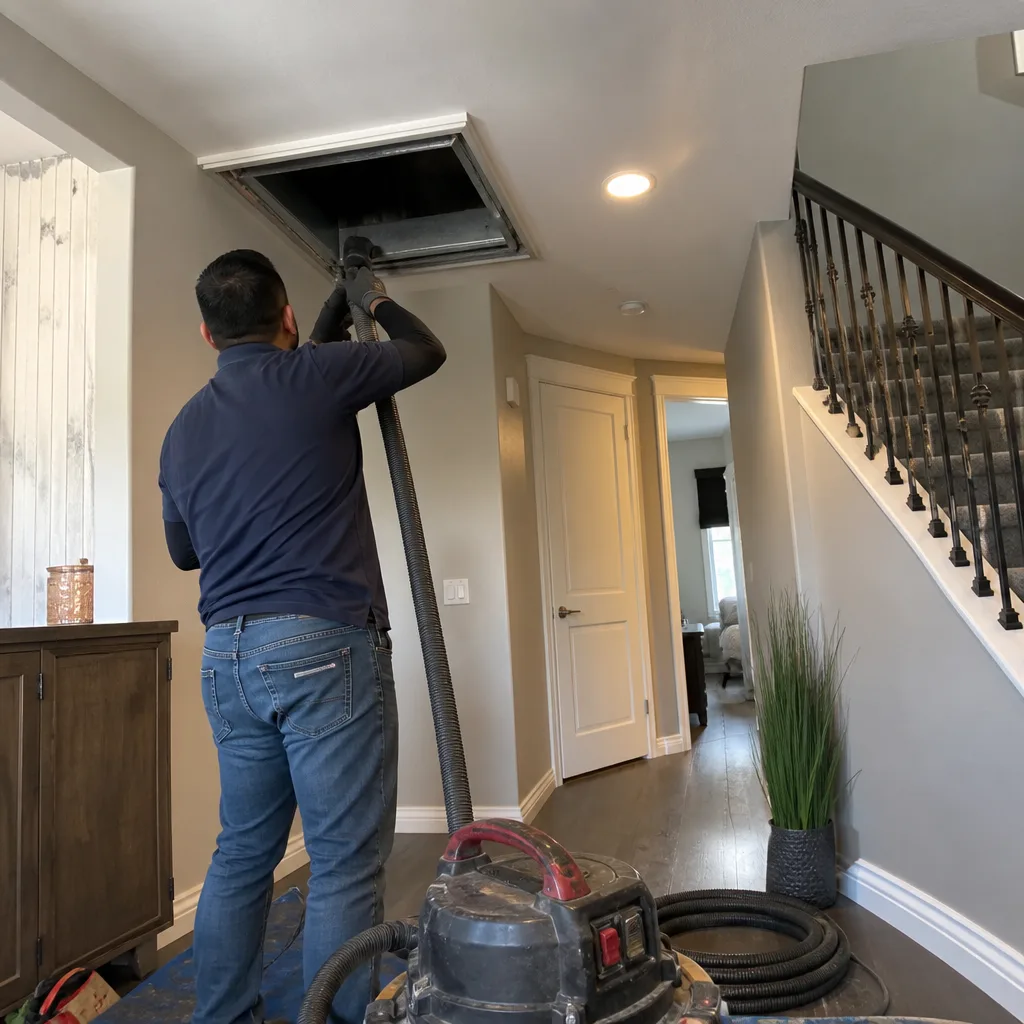
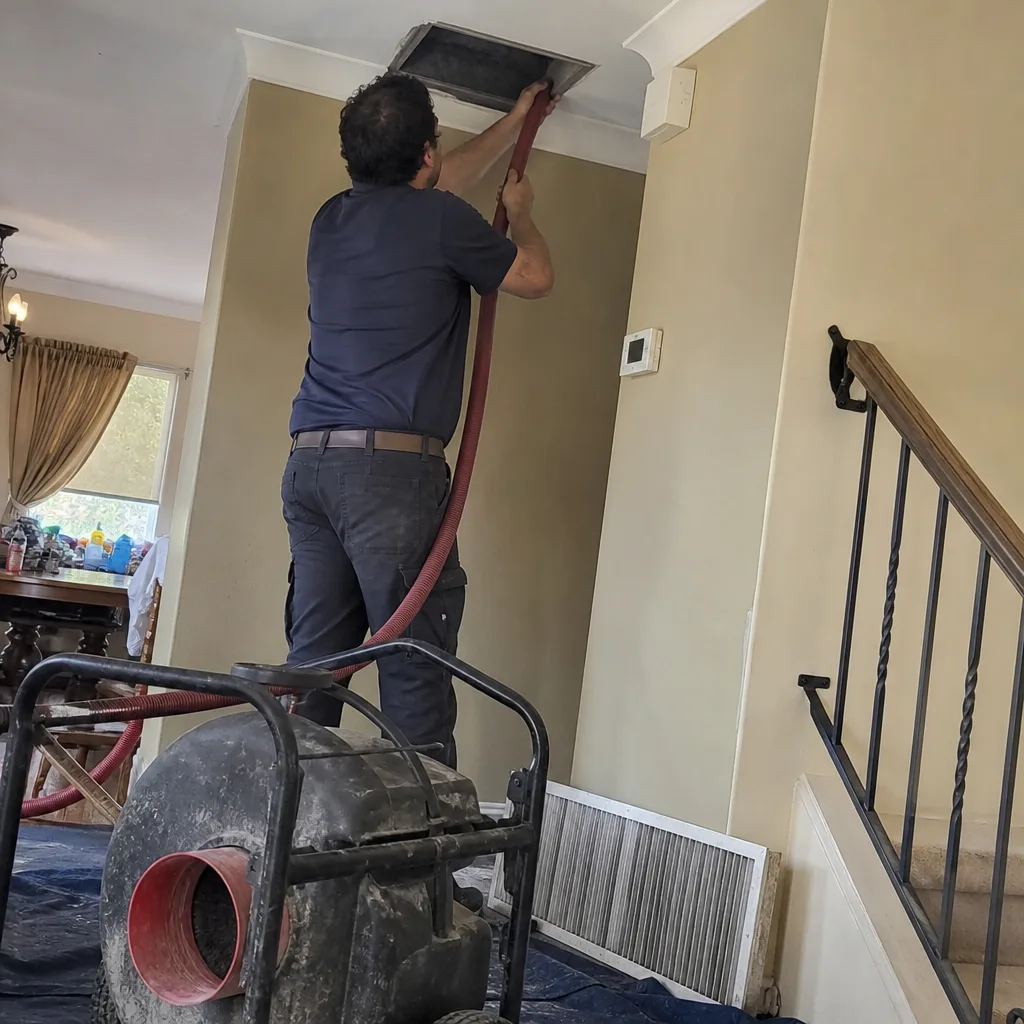
Whole-system duct and dryer vent check with before-and-after photos - you see exactly what came out of your vents
That "$99 whole-house special" is a bait ad - the real number appears once they are in your hallway, or the "clean" is a shop-vac at the register. We photograph the inside of your ducts before and after instead.
Air Duct Cleaning Warning Signs: A Rancho Bernardo Homeowner’s Reference Guide
Here’s the uncomfortable truth most Rancho Bernardo homeowners discover too late: if you can see dust blowing from a register, your ducts have been overdue for cleaning for at least one full season. The visible puff when the blower kicks on is not the first symptom. It’s the final stage of a process that began months earlier with signs far more subtle, and far more telling. This guide and our The Complete Air Duct Cleaning Guide for Rancho Bernardo Homeowners walk you through the early indicators that give you time to act before air quality deteriorates or your HVAC equipment starts paying the price.
Quick Answer
The earliest Air Duct Cleaning warning signs in Rancho Bernardo are uneven room temperatures during shoulder seasons, air filters loading noticeably faster than their rated life, and a faint musty or stale odor when the system first starts. If you notice any of these, your ducts likely need attention within weeks, not months. Visible dust at registers and black sooty rings around vent openings are late-stage signals that cleaning is already overdue.
Styles & brands we work with
- Whole-home duct cleaning
- Dryer vent cleaning
- Camera inspection
- Sanitizing & deodorizing
Table of Contents
- Uneven Room Temperatures: The Sign Everyone Misses
- Filters Loading Faster Than They Should
- That Musty First-Blast Smell
- Reading the Dust: What Different Debris Tells You
- Pest Activity: What Rancho Bernardo Rodents and Ants Leave Behind
- Cleaning vs. Repair: Signs You Need More Than a Cleaning
- The Rancho Bernardo Self-Diagnostic Sequence
Uneven Room Temperatures: The Sign Everyone Misses
You walk from the living room into the back bedroom and notice it’s noticeably warmer. Most people blame the thermostat, the window insulation, or the age of their AC unit. In our experience across Rancho Bernardo’s varied housing stock, from Westwood’s newer builds to the established homes along Pomerado Road, uneven temperatures are frequently a duct problem masquerading as an HVAC problem.
Here’s what’s happening. When ducts accumulate debris, airflow resistance increases in specific runs. The rooms at the ends of the longest duct runs suffer first because they already receive the lowest static pressure. A 15 percent restriction in a branch line can translate to a 4 to 6 degree temperature differential between rooms. You feel it most during shoulder seasons, April to June and September to November, when the system cycles less aggressively and doesn’t overpower the restriction.
What should tip you off:
- The temperature difference persists even after you’ve replaced filters and checked vent dampers
- The warmer or cooler room is at the furthest point from the air handler
- The problem room also has noticeably weaker airflow at the register
- Your thermostat reads correct, but the room doesn’t match it
Rancho Bernardo’s inland valley climate means summer temperatures frequently push into the 90s while evenings cool significantly. When your system is already working hard, a restricted duct run becomes the difference between a comfortable bedroom and a room your family avoids. This is a duct signal worth investigating before the cooling season peaks.
Before calling a technician, walk your home systematically. Close all doors one evening, let the system run for 30 minutes, then check each room with a simple thermometer. If one room consistently runs 5 degrees or more off from the rest of the house, and that room’s register delivers weak airflow, you’ve isolated a duct restriction, not an equipment failure. The next step is determining whether it’s debris buildup or a structural problem like a disconnected joint or crushed flex duct.
Filters Loading Faster Than They Should
Your air filter has a rated life, usually one to three months depending on the MERV rating. When you start finding your filters caked with debris after three weeks, your first thought might be that the filter is doing its job. And it is. The question is why it’s working so hard.
Filter loading rates are one of the most reliable early indicators of duct contamination. A clean duct system passes air that has already been filtered. A dirty duct system pulls air across accumulated debris inside the ductwork, picking up particulates and carrying them downstream to your filter. The filter becomes the last line of defense against debris that should never have been in the airstream to begin with.
In Rancho Bernardo, we see filter loading accelerate during two periods. Santa Ana wind events push fine particulate matter through every gap in the building envelope, and much of it finds its way into return ducts. Fall and spring, when windows open more frequently, introduce pollen and dust that settles in ductwork and circulates when the system runs.
What to look for:
- Pleated filters noticeably discolored within 3-4 weeks of installation
- Reduced airflow at registers before the filter reaches its rated life
- Filter media clogged with dark, fine material rather than household lint and hair
- Consistent fast loading across multiple filter brands and ratings
If your filter is loading in half its rated life across multiple months, the contamination source is upstream in your duct system. Cleaning the ducts addresses the source. Replacing filters faster only treats the symptom. We’ve also seen cases where homeowners upgraded to higher MERV filters thinking it would help, only to restrict airflow further and strain the blower motor. The right sequence is cleaning the system first, then maintaining it with appropriately rated filters.
That Musty First-Blast Smell
You know the moment. The AC kicks on for the first cycle of the day, and for 10 seconds there’s a smell. Damp, stale, slightly organic. Then it dissipates as the airflow continues. Many homeowners write this off as “the system just needs to clear out.” What they’re actually smelling is accumulated biological material inside the ducts being stirred up by the first airflow of the day.
Here’s what happens in ductwork. Dust and debris settle in low spots and along horizontal runs. Over time, especially in Rancho Bernardo’s coastal-influenced humidity patterns, this material absorbs moisture from the air. It doesn’t need to be wet. Just elevated humidity during certain months is enough. That moisture creates a micro-environment where bacteria and mold spores can colonize the debris. The first cycle of the day pushes air across this material, and the odor carries into your living space.
This smell is different from the “dirty sock” odor that comes from a contaminated evaporator coil. That odor tends to be persistent whenever the system runs and is strongest at the return. A duct-related musty smell is strongest on the first cycle, diminishes after 10 to 30 seconds, and returns after the system has been off for several hours. That cycling pattern is your diagnostic clue.
If the smell is strongest at first startup and fades, the source is settled material in the ducts. If it’s constant whenever the system runs, suspect the coil or drain pan. Either way, running the system doesn’t clear it. Biological material doesn’t dissipate from airflow alone; it has to be physically removed. This is where professional equipment makes the difference. Our Rotobrush rotary brush system physically agitates and removes material from duct walls, while Nikro HEPA-rated vacuum systems capture the dislodged debris rather than letting it recirculate through your home.
Reading the Dust: What Different Debris Tells You
Not all dust is created equal. The material accumulating at your registers tells a story if you know how to read it. This is one of the most useful diagnostic skills a homeowner can develop, and it costs nothing but a few minutes of attention.
Household dust is light, gray, and composed primarily of skin cells, fabric fibers, and tracked-in soil. It’s normal and present in every home. But when you see specific types of material at registers, you’re looking at evidence of specific problems.
Fibrous, fuzzy material at the register face or trapped in the register grill suggests insulation breakdown. Duct liner or wrap insulation degrades over time, particularly in older Rancho Bernardo homes where original ductwork may be 20 to 30 years old. When insulation begins failing, fibers enter the airstream. This material is often pinkish, yellowish, or white and has a fuzzy, clumped appearance. It’s not just a cleanliness issue. Insulation breakdown means your ducts are losing thermal performance and potentially exposing your airstream to material that should never be breathable.
Dark, sooty rings or stains around register openings indicate fine particulate matter that has a combustion component. In Rancho Bernardo, this often traces to fireplace use during winter months, cooking byproducts, or candle burning. The material is extremely fine, adheres electrostatically to register surfaces, and is difficult to clean without dislodging. It also suggests that your return system is pulling this material from your living space and distributing it throughout the entire duct network.
Coarse, sandy grit at floor registers typically indicates the return system is drawing from inadequate intake points or that return ducts have developed openings that allow crawlspace or attic material to enter. This is particularly common in homes with flex duct that has settled and kinked, creating low spots where heavier material accumulates before being blown into living spaces.
When we inspect ducts and find these signatures, the cleaning scope changes. Fibrous insulation material requires careful removal and often signals a repair need. Sooty material indicates an air quality issue that cleaning can address but that lifestyle factors will continue to feed. Grit suggests structural duct problems that need attention beyond cleaning. Our Air Duct Repair in Rancho Bernardo service exists precisely because cleaning alone doesn’t fix a duct system that has structural failures.
Pest Activity: What Rancho Bernardo Rodents and Ants Leave Behind
Rancho Bernardo’s climate makes it active pest territory. Roof rats, mice, and Argentine ants are established across the community, from the canyons to the golf course-adjacent neighborhoods. Your duct system is a highway through your home, and pests use it exactly that way.
Rodent activity in ducts leaves specific evidence. Look for droppings around floor registers. Listen for scratching sounds that coincide with system cycles, particularly when the blower starts and stops. Check for greasy rub marks at duct joints where animals have passed through. And watch for your pets staring fixedly at a register or wall vent, which is often the earliest detection system homeowners have.
What rodents do in ducts goes beyond leaving droppings. They chew flex duct, creating entry and exit points that compromise your system’s pressure balance. They nest in low spots, introducing organic material that holds moisture and creates odor. They die in ducts, and you won’t mistake that smell for anything else. In every case, cleaning is required to remove contamination, and repair is frequently needed to close the breaches they created.
Argentine ant pressure in Rancho Bernardo is relentless, especially in irrigated landscapes. Ants don’t live in ducts the way rodents do, but they follow moisture trails and can establish satellite colonies in humid sections of ductwork, particularly around the evaporator coil cabinet and condensate drain lines. If you’re seeing ant trails emerging from register openings, your ducts have moisture conditions that ants find attractive, which is a broader signal worth investigating.
From the register side, you can check for pest evidence without tools. Remove a floor register and shine a flashlight into the duct run. Look for droppings, nesting material, or grease trails. Check around the register opening for chew marks on flex duct connections. And if you find any evidence, treat it as a cleaning and inspection trigger, not just an extermination job. The contamination left behind requires removal, and the entry points require repair.
Cleaning vs. Repair: Signs You Need More Than a Cleaning
One of the most valuable distinctions a homeowner can make is recognizing when a duct problem needs repair rather than cleaning. The two services address different issues, and confusing them means wasting money on a cleaning that won’t solve the underlying problem.
Airflow collapse in a single zone: If one room or one floor of your home has dramatically reduced airflow while the rest of the system performs normally, suspect a disconnected or collapsed duct run, not accumulation. Flex duct can pull apart at joints, especially in attics with high heat cycling. Rigid duct can collapse from external pressure or internal deterioration. A cleaning won’t reconnect a separation. Air Duct Cleaning in Rancho Bernardo will remove debris, but structural problems need repair.
Persistent burning smell after cleaning: If you’ve had ducts cleaned and a burning or hot-dust smell persists, the contamination source may be inside the air handler or furnace cabinet, or the blower motor may be overheating. This signals an HVAC equipment issue that cleaning won’t address. The smell of hot dust can also indicate that debris has accumulated on heat exchanger surfaces, a situation requiring equipment service.
Visible duct separation at joints: If you can see gaps where duct sections connect, particularly in accessible attic or crawlspace areas, you have leakage. Leaky ducts pull unconditioned air from outside your living space, introducing dust, humidity, and allergens directly into your airstream. You can clean the ducts, but unsealed joints will re-contaminate the system within months. The sequence should be repair first or repair concurrently with cleaning.
Collapsed flex duct: In attic installations, flex duct that’s been compressed by storage items, work traffic, or poor original installation can restrict airflow dramatically. The fix is replacement or re-support of the damaged section, not cleaning. This is exactly why we built repair capability into our service. When we encounter these situations during cleaning, the path forward is clear: we find the problem, we fix the problem, done.
The Rancho Bernardo Self-Diagnostic Sequence
Before you call anyone, here’s a methodical sequence we recommend to Rancho Bernardo homeowners who want to pinpoint whether their ducts are the problem. This takes about 20 minutes and gives you the information needed to make an informed decision when you do call a professional.
Step 1: The Register Airflow Test
Take a piece of standard printer paper. Hold it 6 inches from each register with the system fan running. A healthy register will easily push the paper to 45 degrees or more. A restricted register will produce weak deflection, under 30 degrees. Compare registers across rooms. If some rooms show strong deflection and others weak, you’ve identified flow restrictions in specific runs.
Step 2: The Filter Rate Check
Note the date you install your next filter. Check it weekly. If you see significant discoloration before 30 days, your ducts are loading the filter with material that should have been removed at the source. This is a strong early-stage indicator we discussed earlier.
Step 3: The First-Cycle Smell Test
Run the system normally for a day. Then leave it off for 6 to 8 hours. Turn it on and stand at the primary return. Pay attention to the first 15 seconds of airflow. Any musty, damp, or stale odor that appears and then fades indicates settled biological material in the ductwork. No odor? Your ducts are likely relatively clean, regardless of visible dust at registers.
Step 4: The Register Debris Inspection
Remove 2 or 3 floor registers and look into the duct with a flashlight. Check for fibrous material, rodent evidence, visible dust accumulation over 1/16 inch, or debris that doesn’t look like ordinary household dust. What you see here represents what’s circulating through your entire system.
Step 5: The Temperature Differential Check
Run the system for 30 minutes. With a simple thermometer, check each room against your thermostat reading. Rooms more than 5 degrees off indicate either duct restriction, duct leakage in that run, or an insulation deficiency in that room. If the register airflow in that room is also weak, the problem is duct-related.
If your self-diagnostic points to duct problems, the next step is professional assessment. Our equipment, including Nikro HEPA filtration and Abatement Technologies containment systems, is selected specifically for residential applications where the cleaning process itself must not compromise the air quality it’s meant to improve. Professional-grade equipment, not consumer shortcuts.
Common Mistakes to Avoid
- Treating visible dust as the first warning sign: As this guide makes clear, visible dust at registers is a late-stage indicator. The earlier signals are temperature differentials, fast filter loading, and first-cycle odors. Catching those means addressing the problem before contamination reaches your living space in visible form.
- Replacing filters more frequently instead of addressing the source: Fast filter loading is a diagnostic signal, not a maintenance issue. Monthly filter replacement treats the symptom while the contamination source continues to load your airstream. You’re spending more money to breathe the same debris.
- Sealing register gaps with household sealant: Some Rancho Bernardo homeowners, frustrated by dust leakage around registers, caulk or seal the register to the drywall. This doesn’t address airflow issues and makes future cleaning and inspection more difficult. Register gaps are normal installation tolerance, not a contamination pathway worth sealing with consumer products.
- Running higher-MERV filters to compensate for dirty ducts: Increasing filtration ratings doesn’t clean your ducts. It increases pressure drop across the filter, potentially straining your blower motor. The correct sequence is cleaning first, then appropriate filtration for your system’s capabilities.
- Ignoring one-room temperature problems as an HVAC sizing issue: A single warm room with weak register airflow is rarely a sizing problem. Properly sized systems deliver relatively even temperatures across rooms. Zone-specific temperature differences point to duct restrictions in specific runs.
- Assuming dry climate means ducts stay clean: Rancho Bernardo’s dry climate doesn’t prevent duct contamination. It changes the character of it. Debris is finer, dustier, and more likely to become airborne. The relative lack of humidity means less biological growth but also means fine particles circulate more freely through the system.
- Putting off pest evidence because “the exterminator handles that”: Extermination removes the living animals. It does nothing for the droppings, nesting material, and physical damage they leave in your ducts. That contamination remains in your airstream until it’s physically removed by cleaning, and the structural damage remains until it’s repaired.
See the difference
 Before
 After
 Before
 After
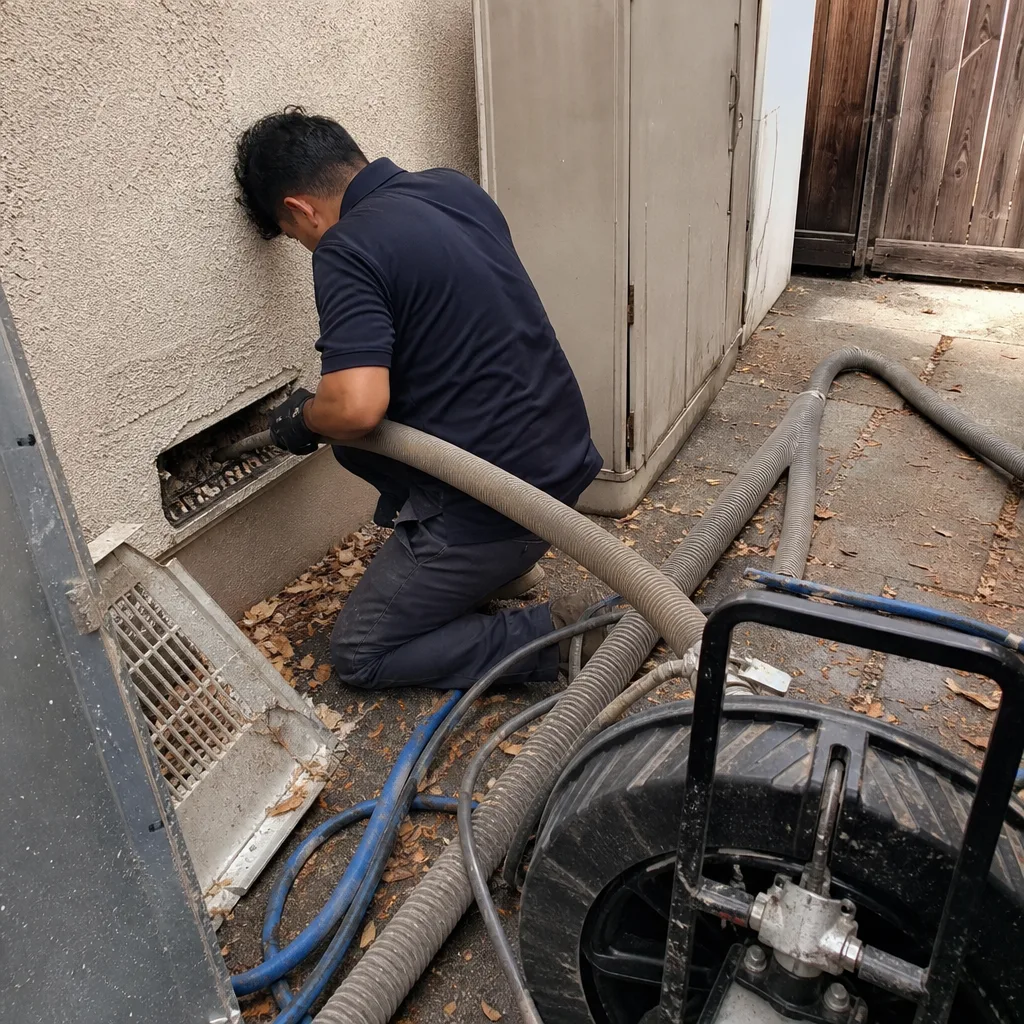 Before
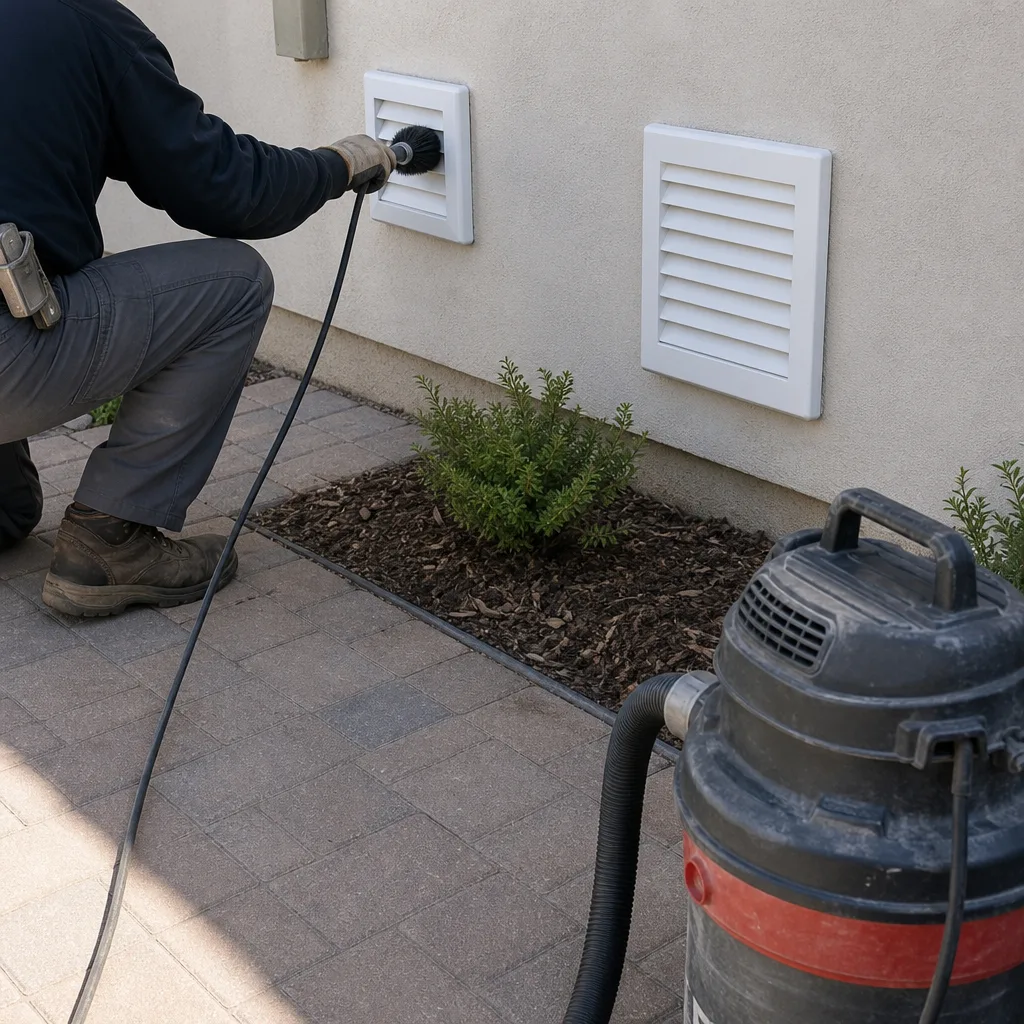 After
When to Call a Professional
Call when your self-diagnostic turns up affirmative answers: weak airflow in specific rooms, fast filter loading, first-cycle odors, fibrous debris, or pest evidence. Call when you’ve noticed any of these signs for more than 30 days and they haven’t resolved with filter replacement. Call when you’re seeing visible dust at registers and realize you’ve been tolerating it longer than you’d admit. And call if you’re buying a home in Rancho Bernardo and can’t verify when the ducts were last cleaned. Golden Air Duct offers free estimates in Rancho Bernardo, and our inspection process tells you exactly what you’re dealing with before any work is proposed. Call (844) 798-0150 to schedule.
Frequently Asked Questions
You know your ducts need cleaning when you observe early indicators like uneven room temperatures with weak airflow at specific registers, filters that load noticeably faster than their rated life, or a musty odor on first system startup. Visible dust at registers confirms what these earlier signs have been telling you, but waiting for that stage means the contamination is already circulating into your living space.
Air duct cleaning costs in Rancho Bernardo typically range from $400 to $800 for a complete residential system, depending on home size, number of returns, accessibility, and the condition findings during inspection. Single flat-rate pricing agreed before work starts is the honest approach; per-vent pricing invites bait-and-switch scenarios where a low teaser rate becomes a large invoice once the technician arrives. Call (844) 798-0150 for an exact quote on your system, estimates are free.
No, effective air duct cleaning requires professional-grade equipment that can physically agitate debris from duct walls and simultaneously capture it through HEPA-level filtration. Consumer vacuums and household tools cannot reach more than a few feet into duct runs and can actually make the problem worse by dislodging material without capturing it. A clean duct system your HVAC and air purifier can finally work with requires the right equipment and the right training.
In Rancho Bernardo, most homes benefit from air duct cleaning every 3 to 5 years, though homes with pets, recent renovation history, or documented pest activity may need more frequent service. The interval that matters is not calendar-based but evidence-based: when your self-diagnostic shows the indicators in this guide, cleaning is due regardless of when it was last done. For more guides & resources, visit our blog. Homes near canyon areas with higher rodent pressure, or properties with mature landscaping that introduces more particulate matter, tend to hit those indicators sooner.
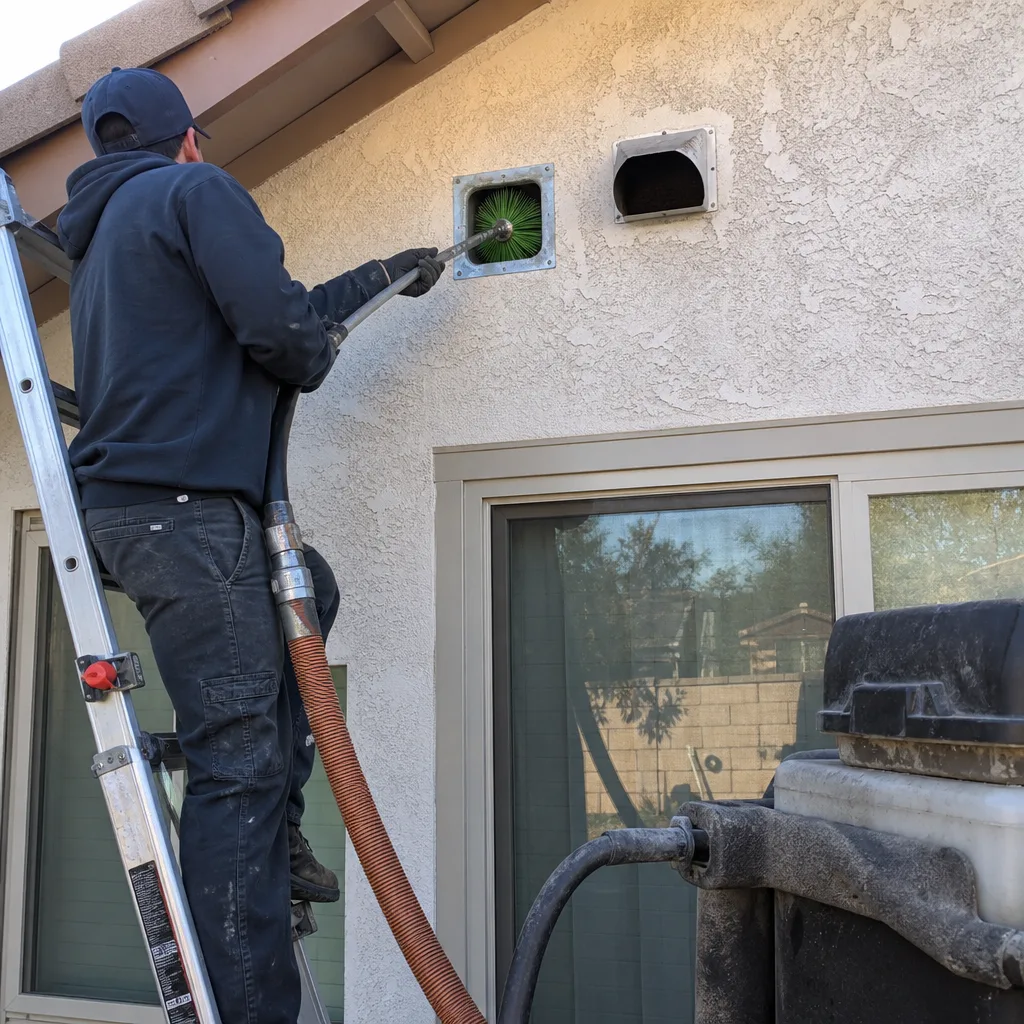
Air duct cleaning addresses the HVAC distribution system that carries conditioned air through your home. Dryer Vent Cleaning in Rancho Bernardo addresses the separate exhaust system that carries hot, lint-laden air from your dryer to the exterior. Your dryer vent is a fire risk when clogged, and we take that seriously. The two systems don’t connect, but both accumulate debris over time and both require periodic professional attention.
If inspection or cleaning reveals damaged ducts, separated joints, collapsed sections, or pest damage, repair is part of the same service. We clean it, and if something’s wrong, we repair it, same visit, same team. That complete-loop capability is why Golden Air Duct positions as a duct system specialist rather than a cleaning-only service. You won’t need to call a second contractor to address what cleaning uncovered.
The Bottom Line
The warning signs that matter most are the ones you can act on early. Uneven temperatures between rooms signal restricted airflow in specific runs. Filters loading in half their rated life tell you contamination is already inside the duct system. That first-cycle musty smell is evidence of biological material that won’t dissipate on its own. None of these signs require special training to recognize, and all of them present weeks or months before visible dust appears at your registers. Rancho Bernardo homeowners who catch the early indicators can address duct contamination before it becomes an air quality problem in every room. Our Golden Air Duct home is the starting point for anyone who recognizes these signs in their own system. The sequence is straightforward: identify the problem, schedule an inspection, clean and repair what’s found, and restore your system to proper function. We find the problem. We fix the problem. Done.
Written by the team at Golden Air Duct, serving Rancho Bernardo since 2013.