
Last updated November 4, 2026
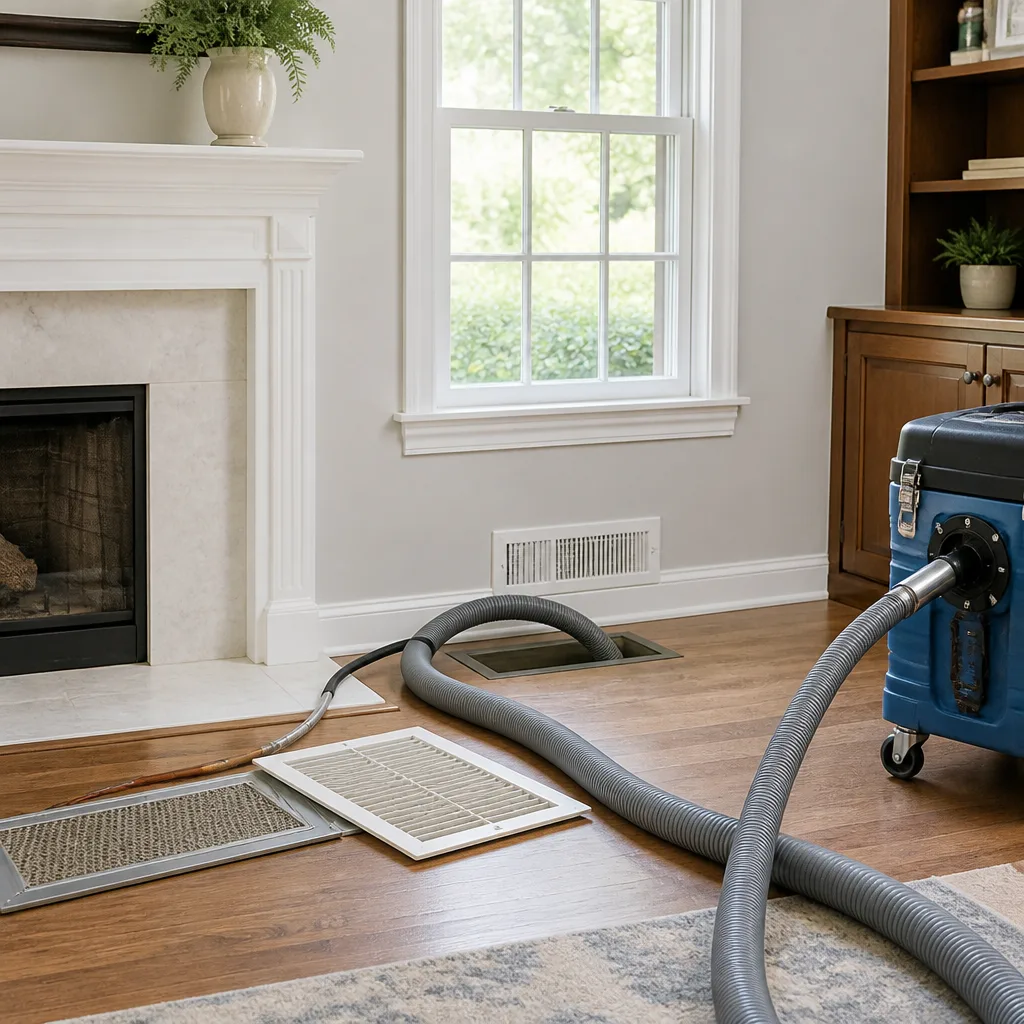 Whole-home duct cleaning
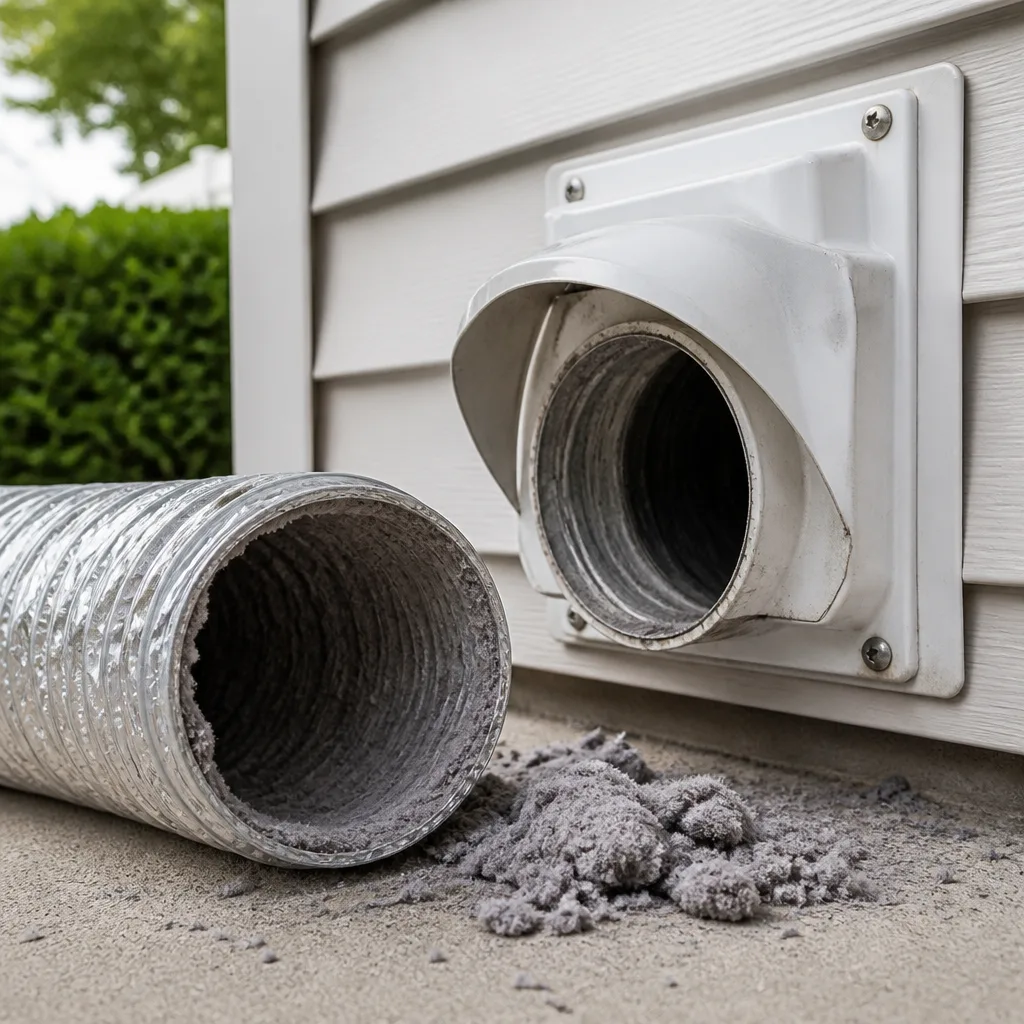 Dryer vent cleaning
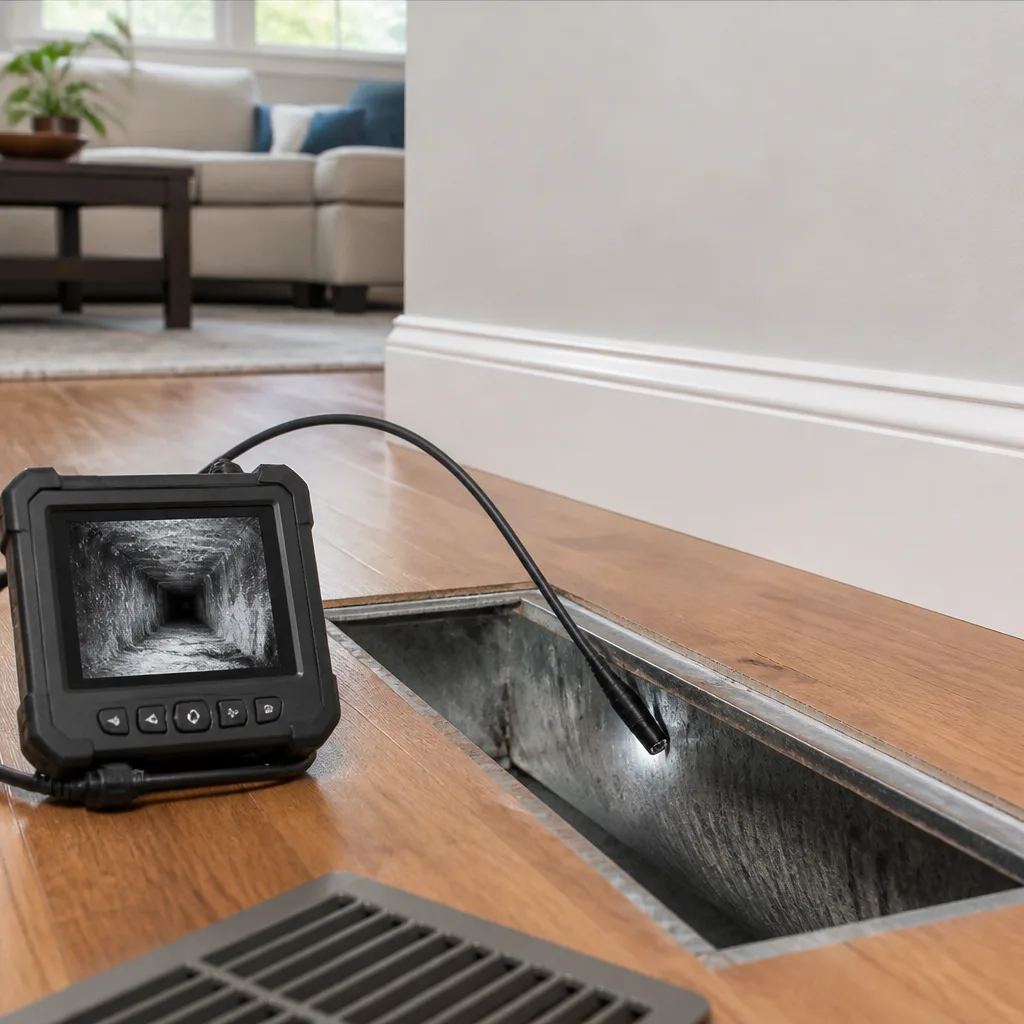 Camera inspection
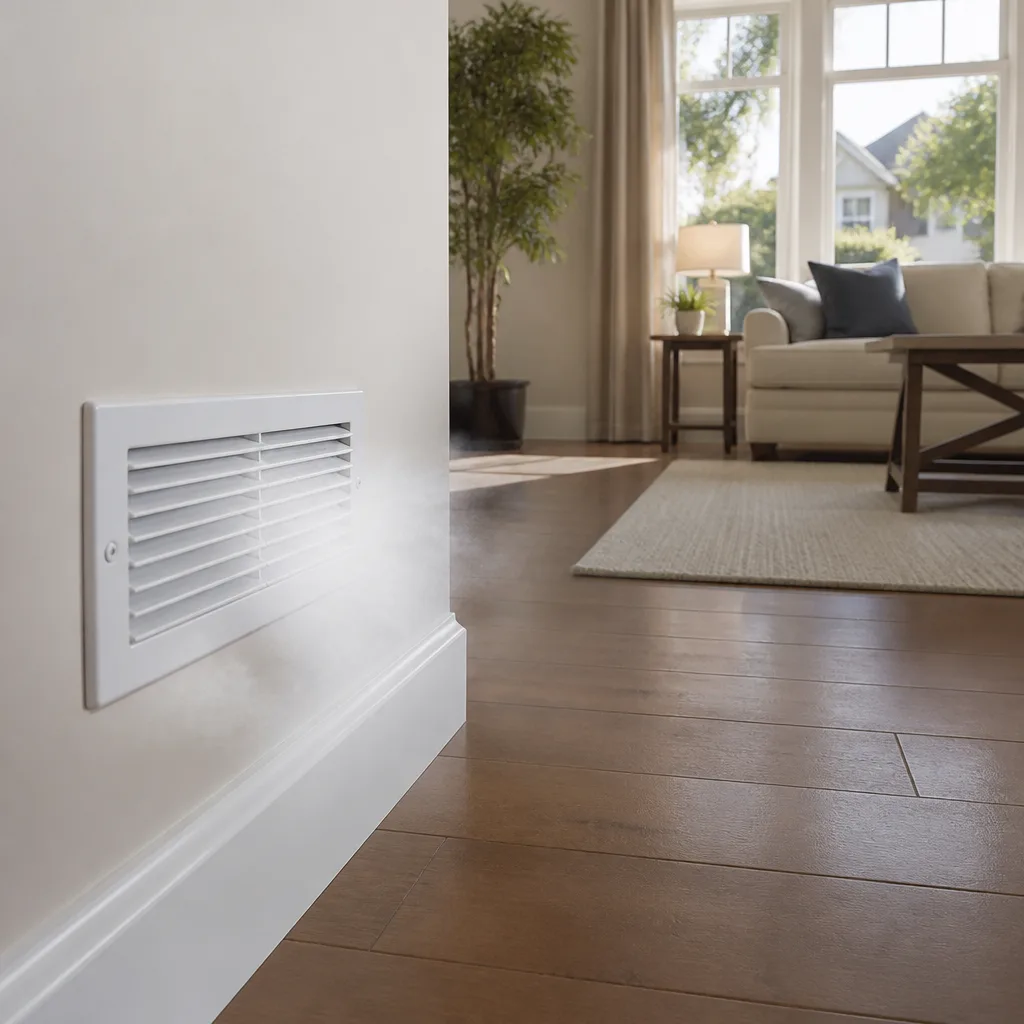 Sanitizing & deodorizing
Whole-system duct and dryer vent check with before-and-after photos - you see exactly what came out of your vents
That "$99 whole-house special" is a bait ad - the real number appears once they are in your hallway, or the "clean" is a shop-vac at the register. We photograph the inside of your ducts before and after instead.
Air Duct Cleaning Maintenance Checklist for Rancho Bernardo Homeowners
The MERV-8 filter you replaced three months ago is already restricting airflow in a Rancho Bernardo home. Not because it’s low quality, but because local construction particulate loads it faster than the manufacturer’s schedule assumes. Rancho Bernardo sits in a constant cycle of new development, canyon dust, and seasonal Santa Ana winds that push fine sediment into return air grilles, through filter media, and into the ductwork itself. Add to that the aging flex duct common in homes built between 1980 and 2005, and you have a duct system that needs a maintenance approach tailored to this specific zip code, not a generic national template. This guide gives you that. We’ll walk through what to check each month, what you can handle on your own, and the exact thresholds where a checklist item becomes a professional repair call. You’ll finish with a plan that extends the life of your HVAC system, keeps indoor air quality where it belongs, and stops you from chasing symptoms that never quite resolve.
Styles & brands we work with
- Whole-home duct cleaning
- Dryer vent cleaning
- Camera inspection
- Sanitizing & deodorizing
Quick Answer
A practical air duct maintenance checklist for Rancho Bernardo homeowners runs on a seasonal cadence: replace pleated filters every 60 to 90 days during mild months and every 30 to 45 days during fire season or active construction nearby, visually inspect supply registers and return grilles monthly for dust streaks and debris, check exposed flex duct runs in attics twice a year for sagging or disconnection, and schedule our Air Duct Cleaning services every 3 to 5 years, or sooner if you’ve completed a remodel, hosted pets long-term, or notice visible dust accumulation at registers. The single most neglected item in this climate? Checking the return air side of the system, which pulls unfiltered attic and crawlspace air into your ductwork when gaps exist.
Table of Contents
- Why Rancho Bernardo Ducts Fail Differently
- Month-by-Month Maintenance Calendar
- Filter Upgrades for Rancho Bernardo Homes
- Visual Inspection Checklist: What to Look For
- Testing Airflow Balance at Home
- Construction Dust and Remodel Aftermath
- Dryer Vent Maintenance: The Overlooked Duct
- Common Mistakes to Avoid
- When to Call a Professional
- Frequently Asked Questions
Why Rancho Bernardo Ducts Fail Differently
Duct systems don’t wear out the same way everywhere. In coastal or humid climates, the enemy is moisture and mold. In Rancho Bernardo, the enemy is particulate load and heat. Homes here sit in a semi-arid climate with three distinct air-quality stressors that most national maintenance guides simply don’t address.
First is construction dust. Rancho Bernardo has seen continuous residential and commercial development for decades, and active job sites within a mile of your home generate silica dust, drywall particulate, and concrete fines that travel on wind currents and settle into attics, around return grilles, and eventually into duct interiors. Homes near the Bernardo Heights and Westwood areas, or along Pomerado Road, regularly show register dust accumulation that traces back to nearby grading and framing activity.
Second is Santa Ana wind season, typically October through February. These offshore winds push dry canyon dust from the San Pasqual Valley and open space corridors across eastern Rancho Bernardo neighborhoods at speeds that overwhelm exterior weather seals and window frames. The dust that settles on your furniture also enters your return air path and gets pulled into the duct system whenever the blower runs.
Third is the aging housing stock. A significant portion of Rancho Bernardo homes were built between 1980 and 2005, which means original flex duct runs that are now 20 to 45 years old. Flex duct in attic spaces degrades over time from heat exposure: the inner liner cracks, the outer vapor barrier tears, and the wire coil loses tension, causing sagging sections that accumulate dust and restrict airflow. We’ve pulled collapsed flex runs from attics in the Oaks North and Seven Oaks neighborhoods that were running at less than half their designed airflow.
None of these three factors appear in a generic home maintenance app. Your checklist has to account for them specifically.
Month-by-Month Maintenance Calendar
Here is the Rancho Bernardo-specific maintenance calendar we recommend to homeowners who want to stay ahead of duct degradation rather than react to it. Each month has one core task. None of these take more than 20 minutes.
January: Post-Holiday Return Grille Deep Inspection
Start the year by inspecting every return air grille in the home. Remove the grille cover, check the filter if one is mounted there, and look for dust caking around the grille edges. January is prime Santa Ana season in Rancho Bernardo, so expect visible dust accumulation. Wipe down grille covers with a damp microfiber cloth and vacuum the recess before reinstalling.
February: Filter Replacement and MERV Assessment
Replace the filter. But before you do, look at the old one. If it’s coated with gray dust and you can no longer see light through it, your 90-day replacement schedule is too long for your home’s particulate load. Move to a 60-day schedule and mark the calendar. Homes near construction zones in Rancho Bernardo or along major roadways like Rancho Bernardo Road and Bernardo Center Drive may need 30-day replacements during this stretch.
March: Supply Register Dust Pattern Check
Walk the house and inspect each supply register. Look for dust streaking or darkening on the wall or ceiling surrounding the register, not just inward dust. Streaking indicates air leakage around the register boot, which pulls attic dust into the airstream and deposits it around the opening. This is a repair item, not a cleaning item.
April: Attic Flex Duct Visual Inspection
Before attic temperatures climb too high, go up and look at your duct runs. Wear a mask and gloves. Check for sections that sag between supports, any pinched or kinked flex, and any duct that has separated from its connection boot. April in Rancho Bernardo is warm enough to make this tolerable but not yet dangerous. Look especially at runs crossing over joist edges and near the attic access hatch.
May: Pre-Summer Blower and Airflow Check
Run the system in cooling mode and walk through every room. Close interior doors and feel whether airflow at each register is consistent from room to room. A room that’s noticeably weaker than others, especially a bedroom at the end of a long duct run or a room over a garage, often indicates a leak or disconnect in the branch duct. This is the month to address it, before July peak loads arrive.
June: Condensate Drain and Coil Area Check
Clogged condensate drains cause moisture backup that supports biological growth on the coil and in the nearby duct segment. Check the drain line for standing water or slow drainage, and inspect the area around the indoor air handler for moisture staining. In Rancho Bernardo’s dry heat, this area should be bone-dry; any persistent moisture signals a drainage problem or an oversized unit short-cycling.
July: Dust and Dander Load Assessment
Summer means the blower runs nearly constantly in Rancho Bernardo. If you have pets, pollen-sensitive family members, or if anyone’s indoor allergy symptoms spike in July despite closed windows, the cause is usually recirculated particulate from the duct system. Note whether registers show fresh dust accumulation within days of cleaning. If they do, your duct system needs professional cleaning, not just another filter swap.
August: Return Air Grille Gap Check
The return side of the system is where unconditioned attic air enters if there are gaps around the return air drop or the grille. Feel around return grilles while the system runs: if air is being pulled in around the edges of the grille rather than only through the face, that’s a gap. Seal it with mastic or have a professional reseal the return chase. This single fix improves system efficiency and keeps attic dust out of your ductwork during peak cooling season.
September: Post-Summer Filter and Duct Review
Replace the filter again and do a quick visual review of the registers and grilles you’ve been monitoring all season. September is also a good month to review Air Duct Cleaning Permits, Codes & Inspections in CA: What You Need to Know and schedule service if your system needs it, before fall fire season shifts wind patterns and brings a new dust source to Rancho Bernardo neighborhoods.
October: Santa Ana Preparation
October begins the Santa Ana wind season. Check all exterior vent terminations: dryer vents, exhaust fans, kitchen hood vents, and bathroom fans. Make sure damper flaps close fully and seal properly. Open dampers allow wind-driven dust to enter the home through the exhaust path, and that dust settles directly into the connected duct run.
November: Post-Wind Inspection and Cleanup
After the first few Santa Ana events, walk the exterior of the home and check for dust accumulation around window frames and exterior vents. Inside, inspect fresh dust at registers and return grilles. November is a common month for us to find dust infiltration through compromised return chases and poorly sealed attic penetrations.
December: Annual System Health Summary
End the year with an honest assessment. How many times did you replace filters? How often did registers show dust within days of cleaning? Did any rooms feel stuffy or under-served? If your answers suggest the duct system itself is the source of the problem, not just the filters, make the professional cleaning and repair call early in the new year before you forget. For ongoing maintenance tips, see our more guides & resources.
Filter Upgrades for Rancho Bernardo Homes
Filter choice is where most Rancho Bernardo homeowners get bad advice. The common recommendation is to buy a higher MERV filter to “catch more dust.” But in a home with an older blower, a restrictive MERV-13 filter can reduce total airflow enough to cause coil freezing, blower motor strain, and uneven room temperatures. The right filter depends on your household composition, not a rating number.
If you have no pets and no respiratory conditions: A standard MERV-8 pleated filter, replaced every 60 to 90 days depending on construction activity nearby, is adequate. It captures the large-particulate load that dominates Rancho Bernardo’s construction dust and Santa Ana wind sediment without restricting airflow.
If you have pets, especially multiple cats or dogs: A MERV-11 pleated filter on a 60-day replacement schedule is a better balance. Pet dander is sticky and combines with dust to clog filter media faster, but going beyond MERV-11 usually pushes static pressure too high for older blowers. If your home uses an Aprilaire media cabinet, use the manufacturer-specified Aprilaire media rather than a generic box filter; it seals better and provides more even filtration coverage.
If anyone in the home has allergy or asthma concerns: A MERV-13 filter is reasonable, but only if the system can handle it. Have your static pressure checked before upgrading. If the system has a Honeywell thermostat or air quality monitor, it may already be tracking filter pressure drop and can tell you when the filter actually loads rather than guessing by date. In our experience, many Rancho Bernardo homes running Honeywell monitoring see filter change alerts measurably sooner than the manufacturer’s generic schedule.
If you’ve recently remodeled: Run a lower-MERV filter and change it frequently during and immediately after the project. Construction dust loads filters within weeks, and the fine drywall dust will blind a MERV-8 filter quickly. Replace after the project concludes and the dust settles, then assess whether the duct system itself needs cleaning. A filter cannot remove what has already entered the duct system.
For all filter changes, seal the filter in its slot. Air bypassing the filter means unfiltered air entering the coil and the supply ducts. If the filter fits loosely, use foam gasket tape on the filter access door or upgrade to a properly sized media cabinet. A filter that flaps or shifts during blower operation is not filtering anything.
Visual Inspection Checklist: What to Look For
Most duct problems in Rancho Bernardo homes are visible long before they become HVAC failures. You just need to know where to look and what counts as a finding worth acting on. These are the five inspection points we check on every home we visit, in the order we check them.
1. Register Dust Patterns
Dark streaking around a supply register usually means air is leaking around the register boot or the register itself is not sealed to the wall or ceiling opening. The streak is composed of attic dust that enters the airstream downstream of the filter, then deposits on the surface around the register as the air exits. This is a repair trigger: sealing the boot connection requires access to the register from the attic side or removal of the register for proper caulking.
2. Flex Duct Sag
Flex duct should be pulled taut between support points, with no visible droop. A sagging flex run that holds a gentle U-shape accumulates dust in the bottom of the sag and restricts airflow by reducing the effective cross-section of the duct, especially in the hot attic air of a Rancho Bernardo summer. When you see sag, the support straps are either missing or loosened from years of heat cycling. This is a repair item; simply re-strapping is sometimes enough, but collapses and torn liners require section replacement.
3. Return Air Grille Gaps
Place a thin piece of tissue paper near the edges of a return grille while the blower runs. If the tissue is pulled toward the edges of the grille, air is being drawn in around the grille, not through the filter. That means the return cavity is pulling from the attic or wall cavity. The result is unconditioned, unfiltered air entering your duct system and the evaporator coil. On a Honeywell thermostat, this shows up as a persistent gap between set temperature and achieved temperature on warm afternoons.
4. Duct Insulation Tears
Inspect any exposed duct in the attic, garage, or crawlspace. The outer jacket on flex duct should be intact and continuous. Tears in the outer jacket expose the inner liner to ambient attic heat, causing condensation on the cool duct surface during AC operation and thermal gain that reduces cooling capacity. Small tears can be properly repaired with foil tape rated for duct use; larger breaches should be addressed by a professional.
5. Air Handler Cabinet Leaks
Open the air handler cabinet if you’re comfortable doing so and look at the blower compartment. Visible dust inside the cabinet, despite regular filter changes, means unfiltered air is entering somewhere upstream. Common entry points in Rancho Bernardo homes include poorly sealed return duct joints inside the attic and access panels on the air handler itself. If the blower wheel has visible dust caked on the blades, the system needs professional cleaning and the leak source must be identified and sealed. A dirty blower wheel reduces airflow by up to 30 percent in severe cases.
Testing Airflow Balance at Home
An airflow balance check is something any Rancho Bernardo homeowner can do in under 15 minutes, and it will tell you more about your duct system than any filter inspection ever will. The principle is simple: with all interior doors closed and the system running, each conditioned room should receive roughly proportional airflow. Rooms that don’t have a return path, are at the end of long duct runs, or have leaking branch ducts will show noticeable variance.
Step 1: Set the thermostat fan to ON, not AUTO, so the blower runs continuously during the test. Close all exterior doors and windows.
Step 2: Close every interior door. In a properly designed and sealed system, each room with a supply register should also have a return path, either a dedicated return, a transfer grille above the door, or an undercut door gap.
Step 3: Hold a single-ply tissue, not a paper towel, about 12 inches from each supply register. Note whether the tissue is pushed away from the register consistently. Compare rooms.
Step 4: For rooms that feel weak, crack the interior door open about two inches and retest. If airflow improves noticeably with the door open, the room has a return air deficiency. The room is pressurized by supply air, and without a return path, the air cannot circulate effectively. This is common in Rancho Bernardo homes where bedrooms were added or converted without balancing the return system.
Step 5: If airflow is weak even with the door open, the likely cause is a duct leak, a disconnected branch, or a collapsed flex run in the attic. This is the threshold where a checklist item becomes a professional diagnosis. We offer free estimates for Air Duct Repair in Rancho Bernardo, and an airflow diagnosis is part of every service visit.
For a more precise measurement, a free anemometer app on your phone held at register face can give relative readings, but they are not laboratory-accurate. Use them for room-to-room comparison, not for absolute CFM calculations.
Construction Dust and Remodel Aftermath
If you’ve lived in Rancho Bernardo for any length of time, you’ve watched new homes rise in the remaining infill parcels and seen the dust cloud that follows. Construction particulate is not just an exterior nuisance. It enters homes through window frames, door seals, and attic vents, and it finds its way into return air paths and duct interiors. If you live near an active job site, your ducts are accumulating construction dust even if your windows stay closed all day.
During active construction near your home, we recommend the following adjustments to your normal maintenance routine:
- Replace filters every 30 days during grading, framing, and drywall phases of nearby projects, regardless of the filter manufacturer’s stated lifespan.
- Check supply registers weekly for dust streaking, which indicates the duct system is carrying construction particulate through the supply side.
- Keep bathroom exhaust fans running during exterior dusty periods to maintain slight negative pressure and reduce dust infiltration through wall penetrations.
- Inspect the condensate drain at the air handler monthly during construction season; fine dust that bypasses the filter can coat the evaporator coil and wash into the drain line.
- After construction activity concludes and the dust has settled, schedule a professional duct cleaning to remove what has accumulated inside the duct system. A filter change alone will not do this.
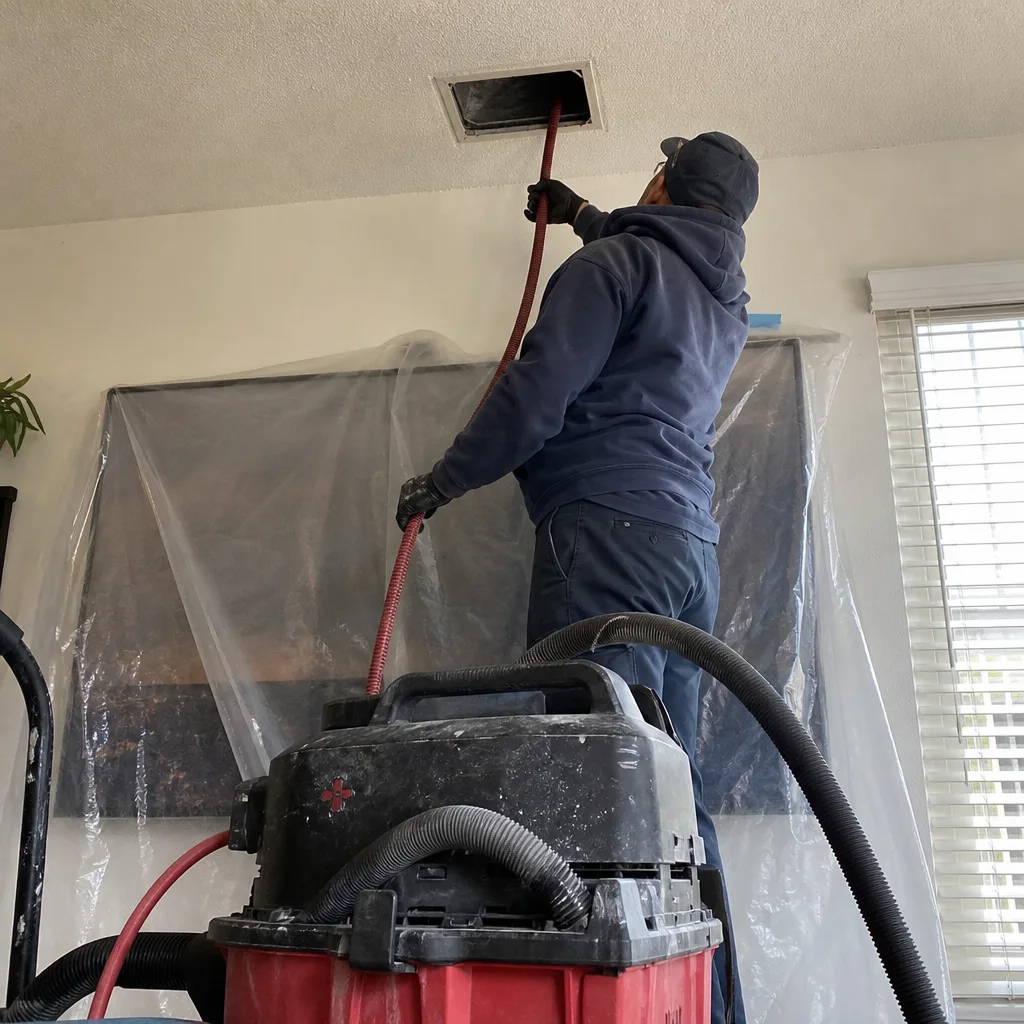
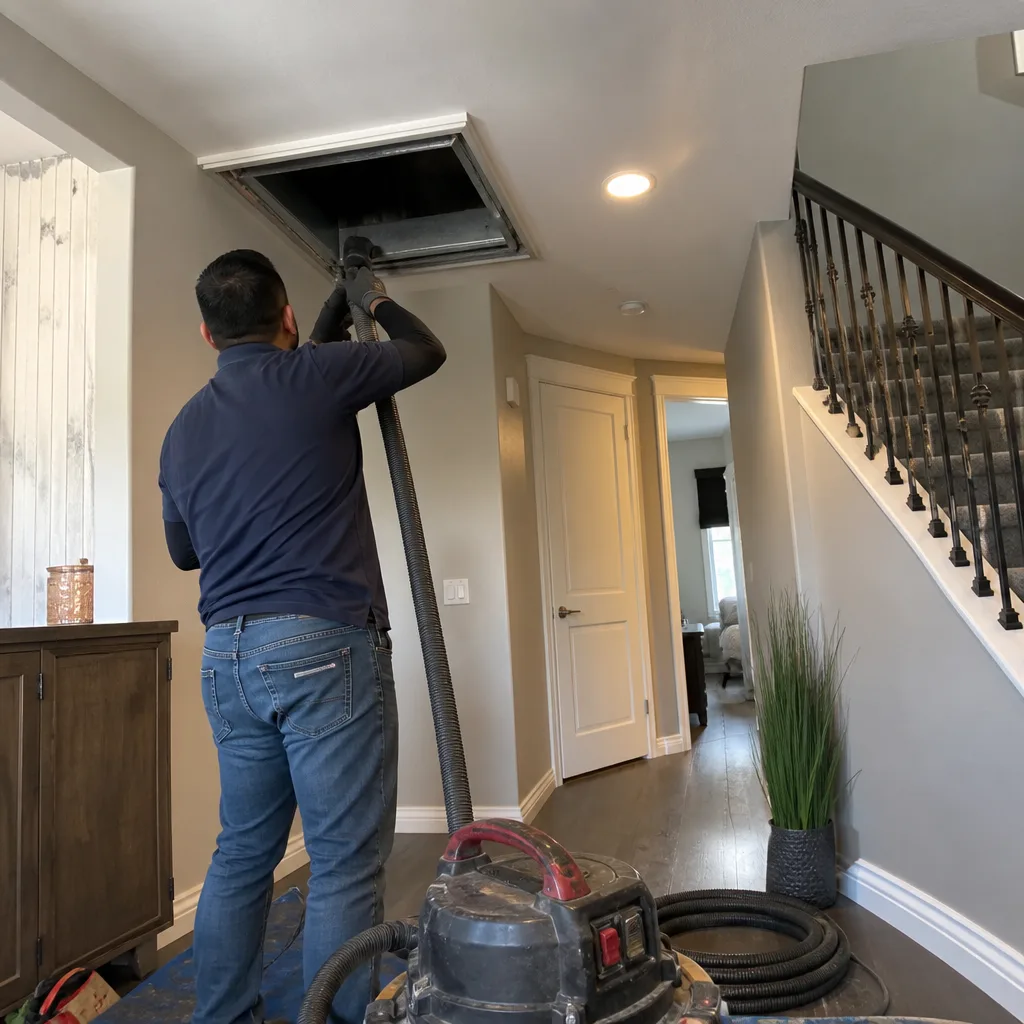
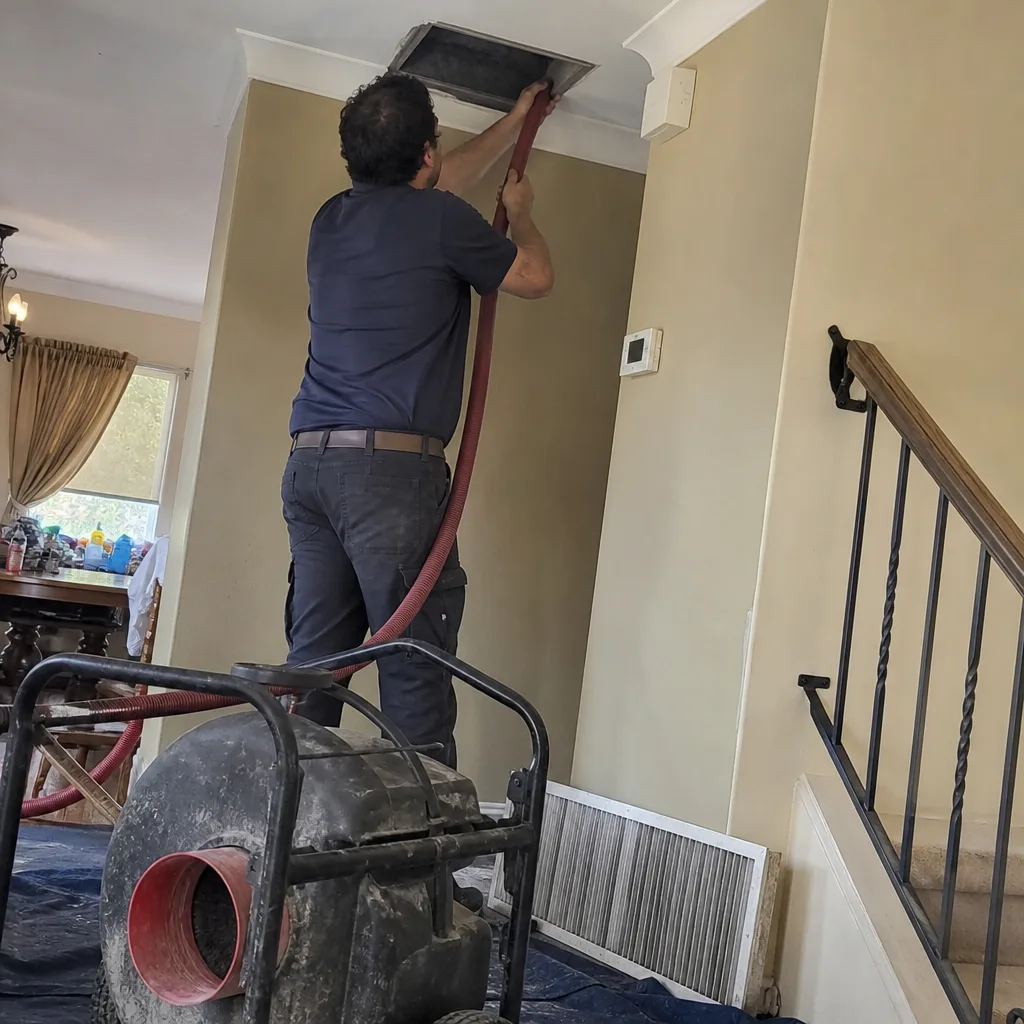
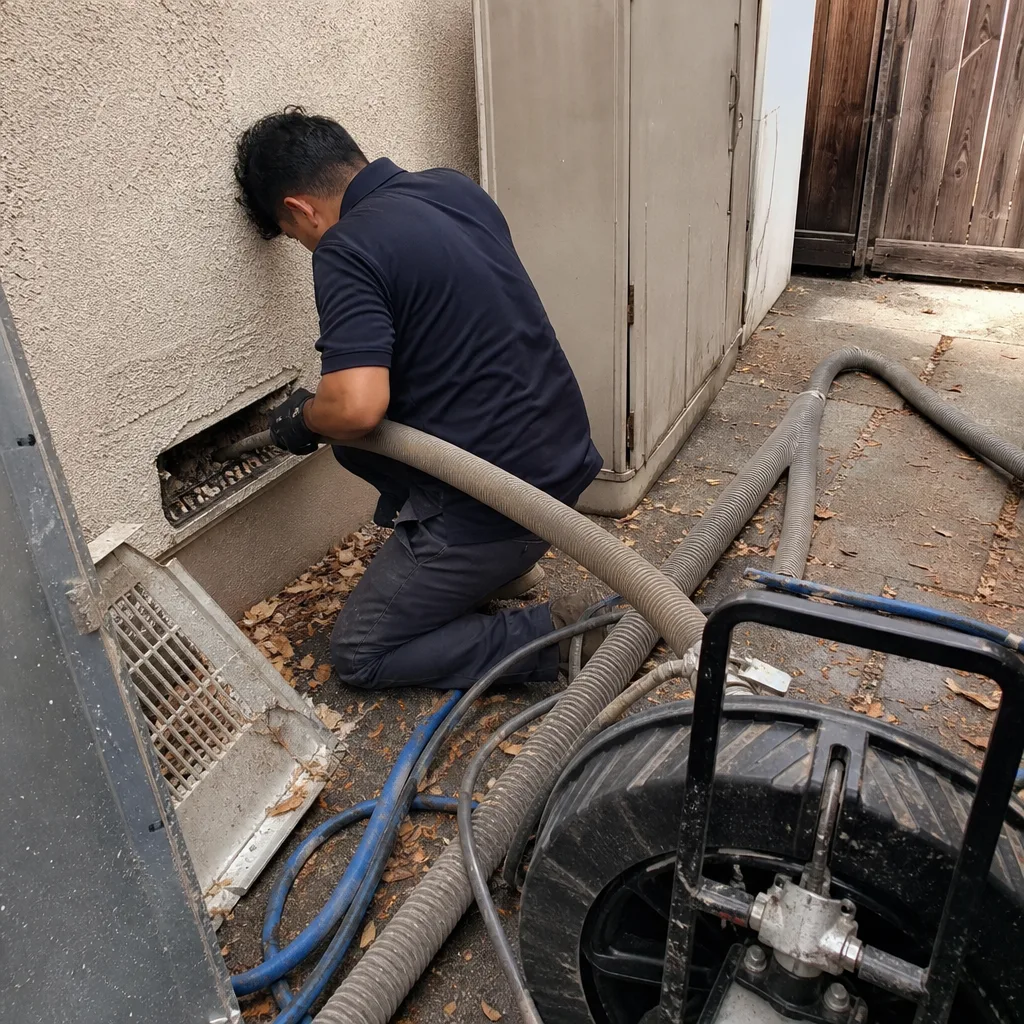
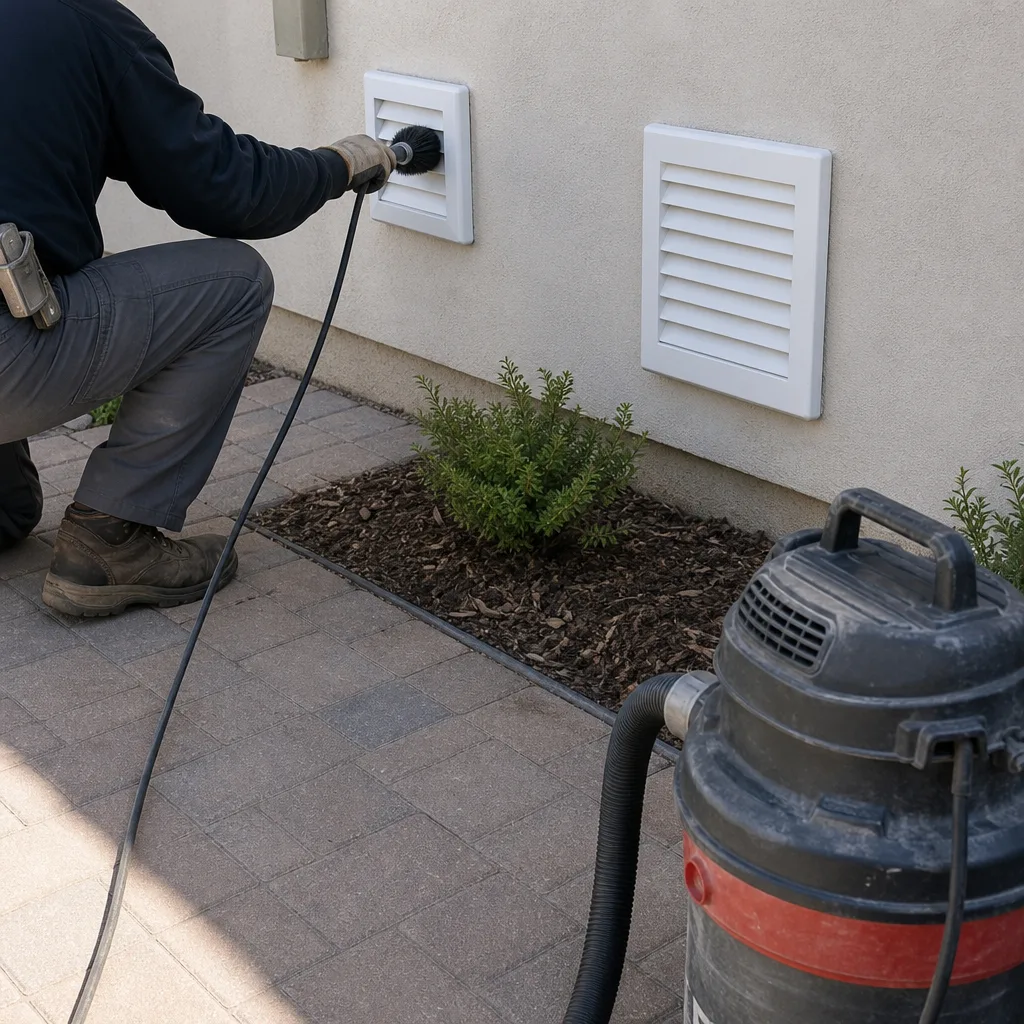
For homeowners who have completed an interior remodel, especially drywall work, flooring removal, or any project that produced visible dust, the same logic applies. Construction dust is fine enough to bypass consumer-grade filters and settle in the duct system where it will be recirculated for months afterward. Our Air Duct Cleaning in Rancho Bernardo service uses professional-grade Rotobrush rotary brush equipment and Nikro HEPA-rated vacuum systems specifically because consumer equipment cannot remove construction dust that has embedded in duct surfaces. We also deploy Abatement Technologies containment equipment to keep dislodged debris from re-entering your living space during the cleaning process, a protocol that matters most when the duct system is heavily loaded with fine particulate.
Dryer Vent Maintenance: The Overlooked Duct
Your dryer vent is a duct. It carries lint-laden air from the dryer to the exterior. And in Rancho Bernardo, where dryer vents often run through attics, walls, or under slabs, it is among the most neglected ducts in the average home. The U.S. Fire Administration has consistently identified clogged dryer vents as a leading cause of residential dryer fires, and the risk compounds in homes where the vent run is long or has multiple elbows.
Add dryer vent maintenance to your seasonal checklist at least twice a year, in spring and fall. Here is what to check:
- After each drying cycle, confirm the exterior vent flap opens and closes freely when the dryer runs. A flap that stays open or doesn’t open indicates a blockage or a broken spring.
- If clothes take more than one full cycle to dry, especially heavy items like towels and jeans, the vent is restricting airflow. In our experience, a dryer vent restricted by lint can add 20 to 30 minutes to drying time.
- Inspect the exterior termination point quarterly for lint buildup around the opening and visible debris in the flap area. Santa Ana winds can push dust and organic material into the vent when the damper doesn’t seal.
- If the vent run passes through the attic, inspect the exposed section for sagging, disconnection, or tears in the vent material. Foil-type flexible dryer vent should be replaced with rigid metal vent wherever possible; it resists lint accumulation and is far less likely to be crushed or disconnected.
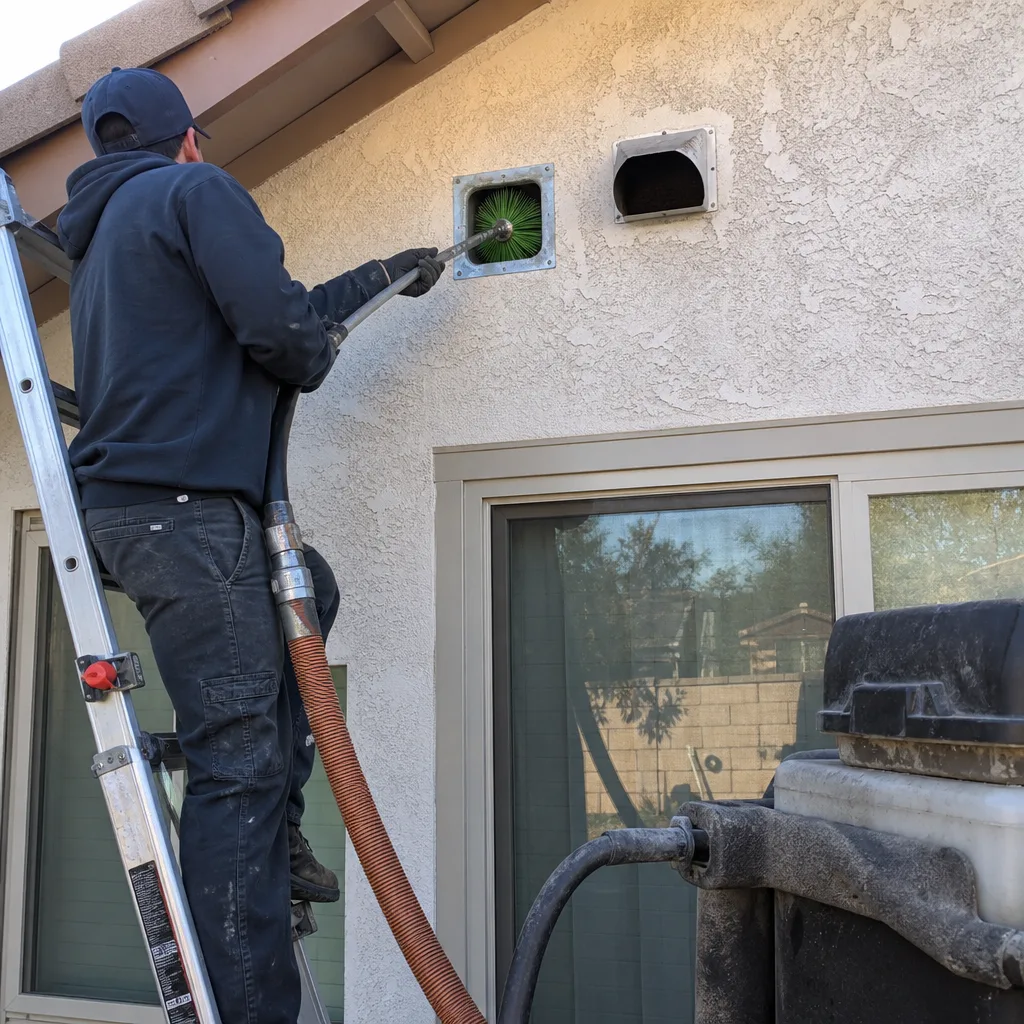
Professional dryer vent cleaning is a dedicated service at Golden Air Duct, not an afterthought added to an air duct cleaning visit. We use the same Rotobrush and Nikro equipment platform for dryer vent work, sized for the smaller duct diameter. If you’re uncertain about the condition of your dryer vent or haven’t had it inspected in years, call us at (844) 798-0150. Dryer Vent Cleaning in Rancho Bernardo takes about an hour and directly reduces the fire risk of the second most common ignition source in residential structure fires.
Common Mistakes to Avoid
- Assuming a higher MERV rating is always better. A restrictive filter on an older Rancho Bernardo HVAC system can reduce total airflow enough to cause coil freezing and compressor strain. Match MERV rating to your blower’s capability and your household needs, not to marketing claims.
- Ignoring the return air side of the system. Most homeowners check supply registers and never look at return grilles, return chases, or the return air drop. The return side is where unfiltered attic air enters your ducts, and it’s the most common source of persistent dust problems in Rancho Bernardo homes.
- Cleaning only what you can see. Wiping register grilles and vacuuming visible dust doesn’t address what’s inside the duct runs themselves. Duct interiors accumulate material that no household vacuum can reach, and it recirculates every time the blower runs.
- Replacing filters on a fixed schedule regardless of conditions. A filter in a home near construction or during Santa Ana season loads far faster than a filter in a quiet cul-de-sac on the Bernardo Heights ridgeline. Adjust replacement frequency based on what the filter actually looks like when you pull it, not a calendar guess.
- Sealing registers closed in unused rooms. Closing registers in unused rooms raises static pressure in the duct system and can worsen leaks at joints and fittings. If you want to zone your system, do it with dampers at the trunk, not by choking off branch registers.
- Using duct tape on ductwork. Standard gray duct tape, despite its name, is not rated for duct sealing. It dries out and falls off within a few seasons in Rancho Bernardo’s attic heat. Use foil tape with a UL listing or, for permanent repairs, mastic applied by a professional.
- Assuming new construction means clean ducts. New homes in newer Rancho Bernardo developments often have construction debris inside the duct system, including drywall scraps, fasteners, and sawdust. Always verify, never assume.
When to Call a Professional
Some checklist items are maintenance. Others are repair triggers. You’ve reached the repair threshold when any of these conditions appear: visible dust streaking around supply registers that returns within days of cleaning, a flex duct run in the attic that sags more than a gentle curve or shows a visible kink, a persistent airflow imbalance between rooms that doesn’t resolve with open doors, a dryer that still takes two cycles to dry clothes after you’ve cleaned the lint trap and checked the exterior vent, or any signs of moisture at the air handler cabinet. These conditions point to leaks, disconnections, or collapses that no filter change will fix.
Golden Air Duct offers free estimates in Rancho Bernardo. Call (844) 798-0150 and we’ll assess your duct system in person, with professional-grade equipment and a plain-language explanation of what we found. If the system needs cleaning, we clean it with Rotobrush rotary brush equipment and Nikro HEPA-rated vacuum systems. If we find something broken, we repair it. Same visit, same team. We find the problem. We fix the problem. Done.
Frequently Asked Questions
Air ducts should be cleaned every 3 to 5 years in most Rancho Bernardo homes, but that interval shortens to every 2 to 3 years if you have multiple pets, live near active construction, experience frequent indoor allergy symptoms, or have completed a remodel since the last cleaning. The particulate load in this area, driven by construction dust and Santa Ana wind events, means duct systems here accumulate material faster than in coastal or humid climates.
The clearest signs are dust accumulating at supply registers within days of cleaning them, visible dust streaks on walls or ceilings around registers, a blower motor and coil that show visible dust coating when you open the air handler, and indoor air that stays dusty despite regular filter changes. If you replace filters on schedule and the problem persists, the ducts themselves are the source. Call (844) 798-0150 for a professional assessment.
You cannot effectively clean your own air ducts with household equipment. Consumer vacuums lack the reach and filtration to remove embedded dust from duct interiors, and improper cleaning can dislodge material that then circulates through your home. Professional cleaning requires rotary brush agitation combined with HEPA-rated negative air collection, which is why Golden Air Duct uses Rotobrush and Nikro equipment with Abatement Technologies containment protocols on every job.
Professional air duct cleaning in Rancho Bernardo typically ranges from $350 to $800 for a whole-home system, depending on the number of ducts, the level of contamination, and whether the system includes hard-to-access or heavily loaded return chases. Reputable companies quote a flat price per system, not per vent, and the price is agreed before work starts. For an exact quote on your home, call (844) 798-0150.
Cheaper duct cleaning quotes usually come from companies using consumer-grade vacuums rather than professional negative-air equipment, skipping the return side of the system entirely, or quoting a low teaser price that becomes a much larger invoice once the technician begins the work. A proper duct cleaning includes the full supply and return system, uses HEPA-level filtration to protect your home during the process, and includes an inspection of what was actually done. If a quote sounds too low to support that level of work, it usually means something is being skipped.
Ask for before-and-after photos of your duct interiors. A professional company using proper equipment can photograph the duct surfaces through register openings and access points, showing the condition before cleaning and the result afterward. Golden Air Duct provides this documentation on every job. You should also walk the house after the work is complete and confirm that registers and grilles have been replaced securely and that no visible debris remains at register faces.
The Bottom Line
Rancho Bernardo duct maintenance is not a generic once-a-year filter swap. It is a seasonal discipline built around the construction dust, Santa Ana wind particulate, and aging flex duct that define this area’s housing stock. The calendar is straightforward: monthly register and grille checks, filter replacements matched to your actual particulate load, twice-yearly attic inspections, and professional cleaning every 3 to 5 years, sooner if you’ve remodeled or lived through a construction cycle next door. What separates a maintained system from a neglected one is not effort, it’s knowing what to look for. That’s the checklist above. Use it. And when an item crosses from maintenance into repair, call Golden Air Duct at (844) 798-0150. We clean it, and if something’s wrong, we repair it, same visit, same team. A clean duct system your HVAC and air purifier can finally work with.
Written by the team at Golden Air Duct, serving Rancho Bernardo since 2013.
See the difference
 Before
 After
 Before
 After
 Before
 After