
Last updated November 4, 2026
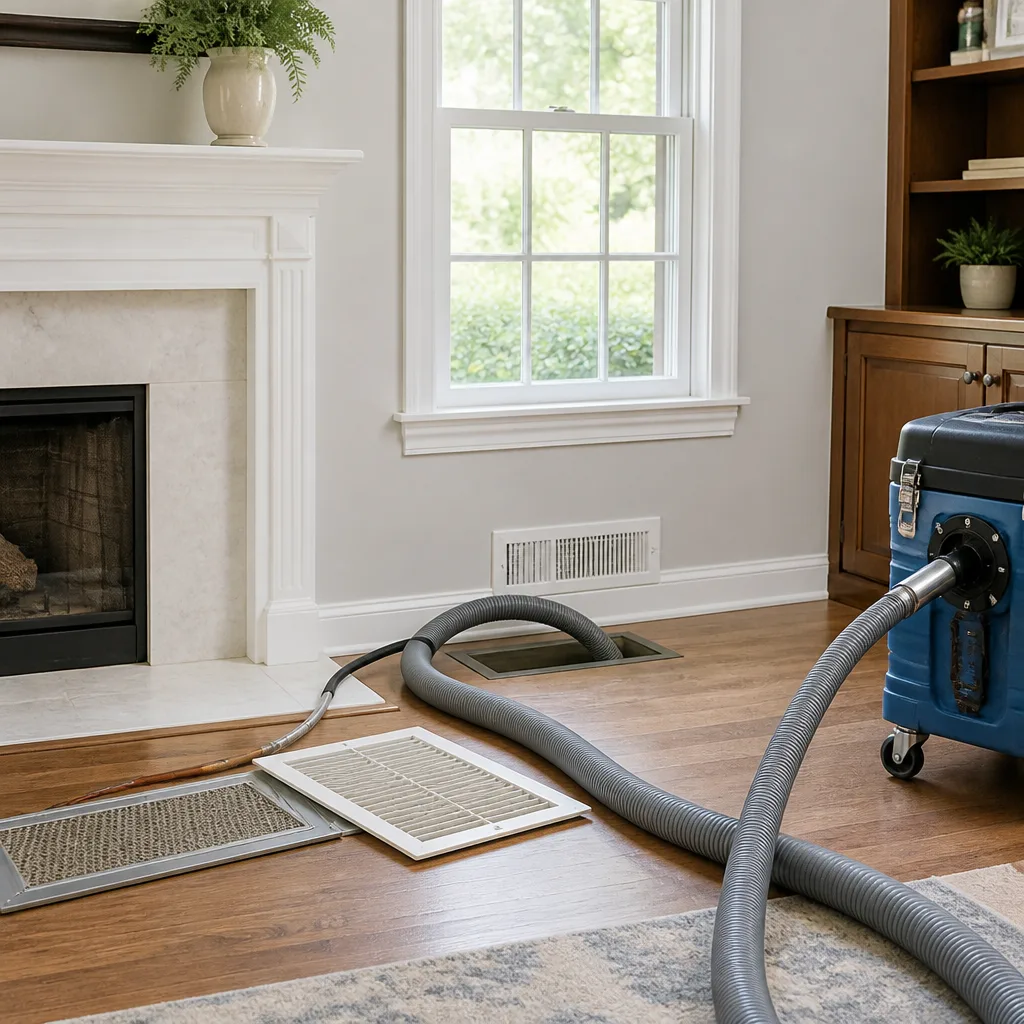 Whole-home duct cleaning
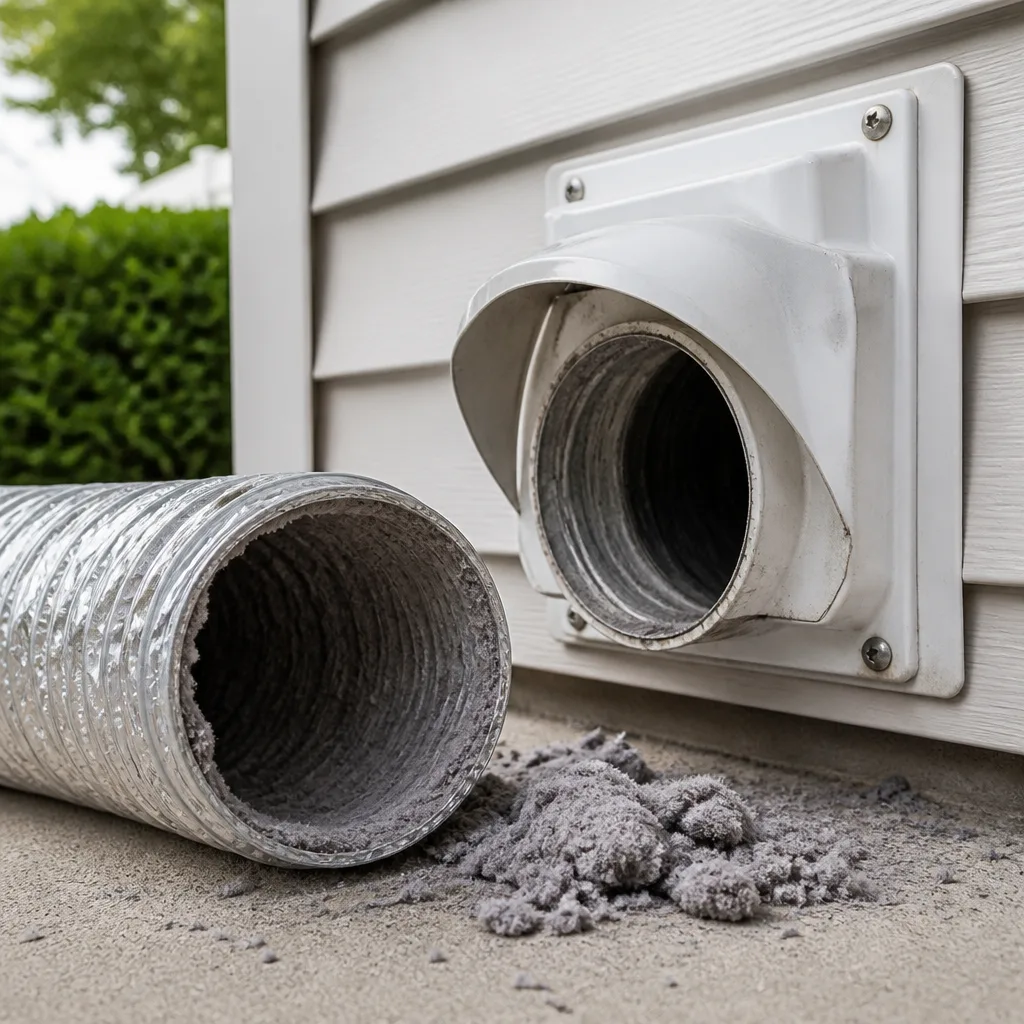 Dryer vent cleaning
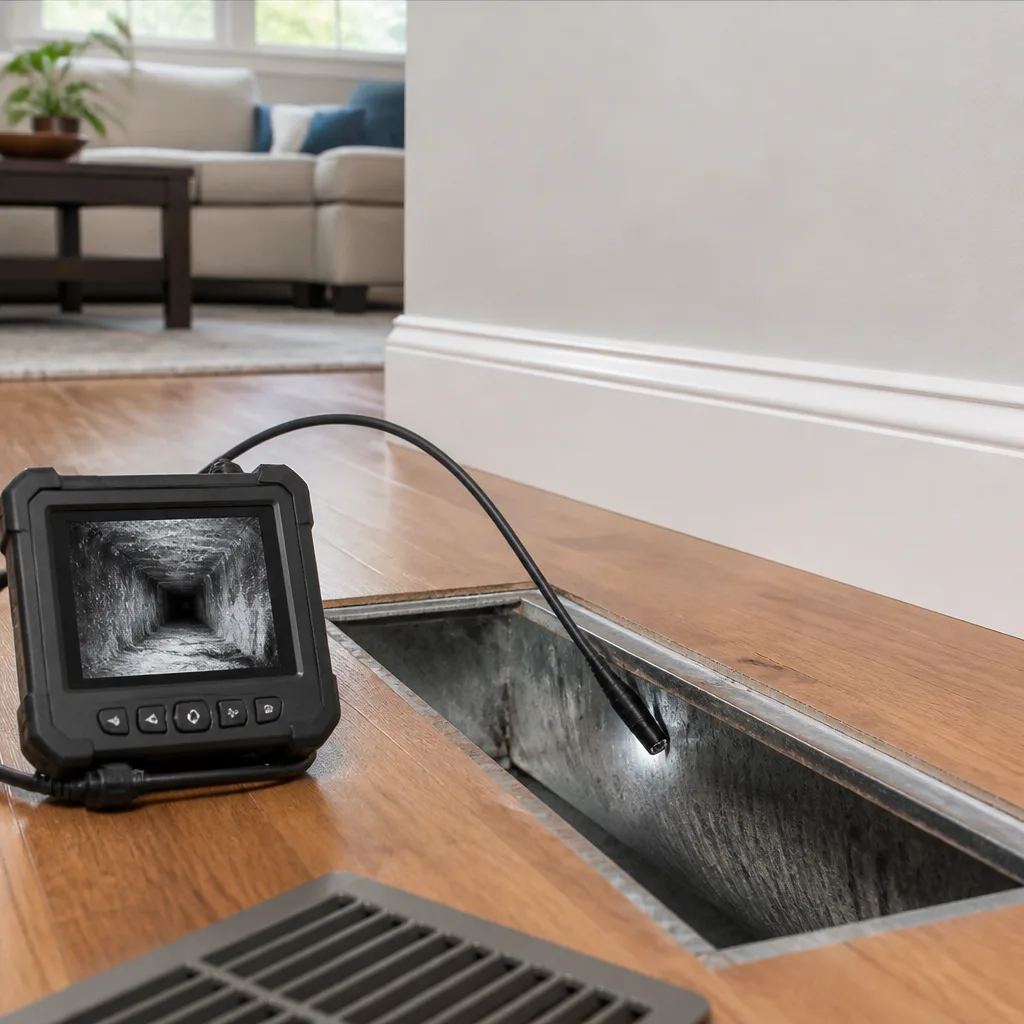 Camera inspection
 Sanitizing & deodorizing
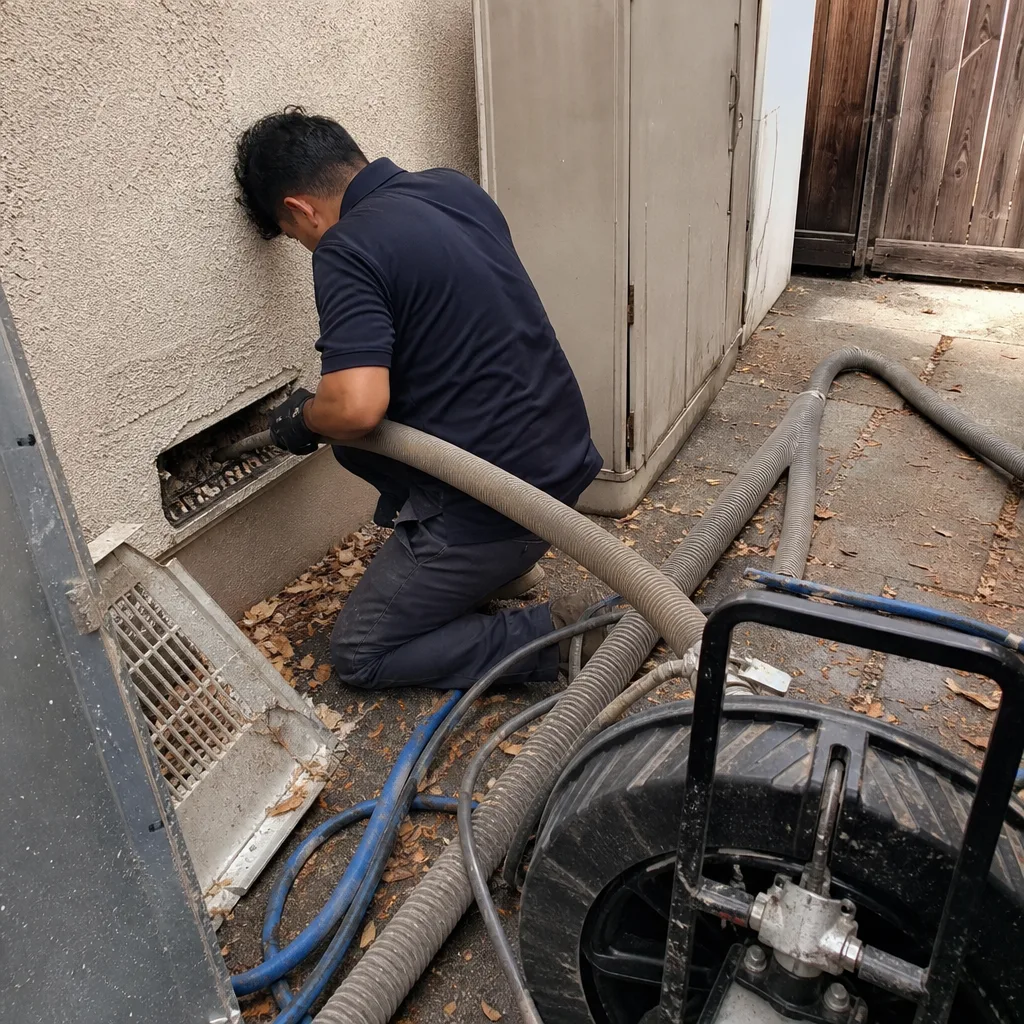
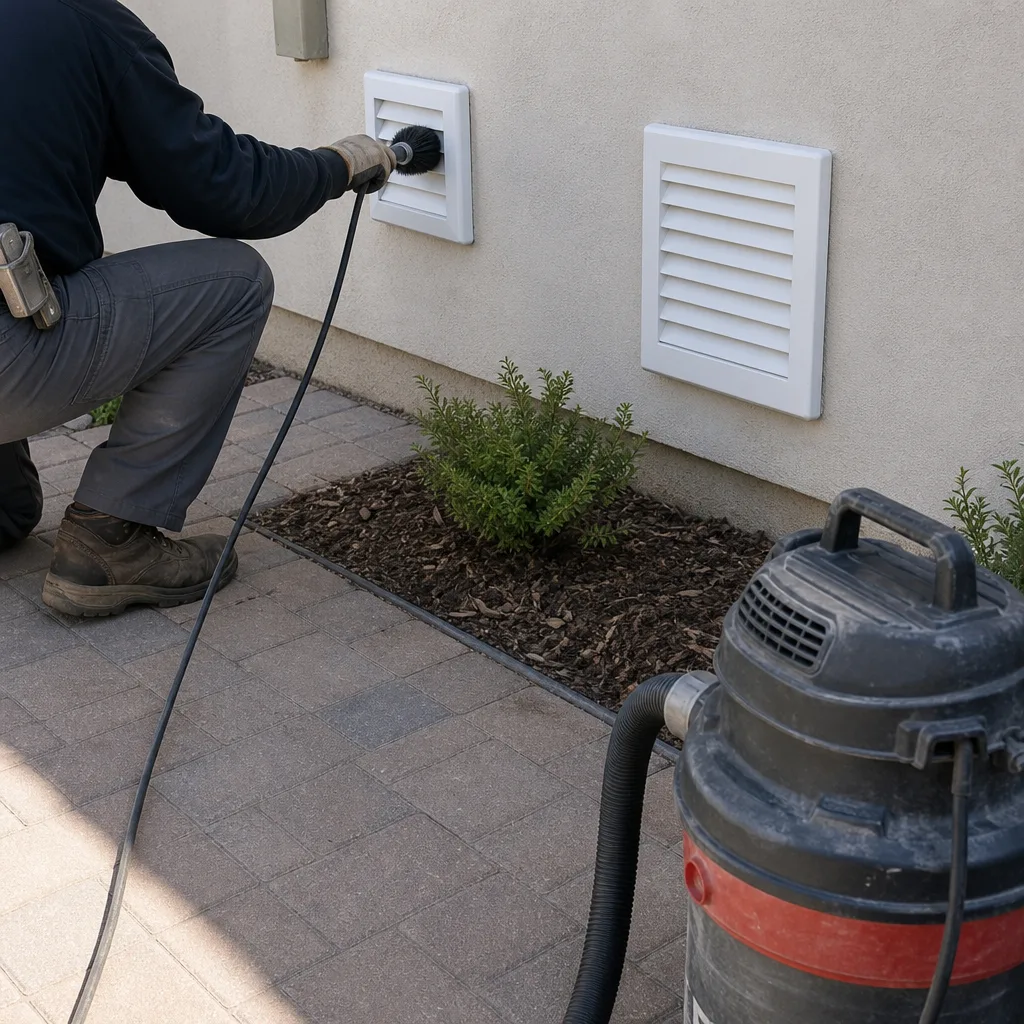
Whole-system duct and dryer vent check with before-and-after photos - you see exactly what came out of your vents
That "$99 whole-house special" is a bait ad - the real number appears once they are in your hallway, or the "clean" is a shop-vac at the register. We photograph the inside of your ducts before and after instead.
Seasonal Air Duct Cleaning Care for Rancho Bernardo: Year-Round Homeowner’s Guide
Here’s a counterintuitive fact we’ve learned from more than a decade of duct inspections in Rancho Bernardo: the single best time to schedule an air duct cleaning is not spring. It’s the two-week window after Santa Ana wind season ends in November, when the fine particulate those winds push into return systems has fully settled, but before your HVAC shifts into full heating mode. Most national advice was written for four-season climates with basements and furnace filters. That advice doesn’t survive contact with a Rancho Bernardo canyon wind, a wildfire smoke event, or a 95°F inland heat stretch. This guide is built around the four distinct duct-stress periods that actually happen here, so you can plan your maintenance on the calendar this region actually lives by.
Quick Answer
The best seasonal schedule for duct care in Rancho Bernardo is: schedule our Air Duct Cleaning services in late November after Santa Ana winds subside, change HVAC filters quarterly with upgrades to MERV 11 or higher during wildfire season, inspect flex duct connections in spring and fall when humidity swings loosen fittings, and visually check supply registers monthly during summer heat and construction season. This local rhythm keeps your system cleaner, your air healthier, and your HVAC running efficiently through every climate shift the inland corridor throws at it.
Styles & brands we work with
- Whole-home duct cleaning
- Dryer vent cleaning
- Camera inspection
- Sanitizing & deodorizing
Table of Contents
- Rancho Bernardo’s Four Duct-Stress Windows
- Assessing Ducts After a Wildfire Smoke Event
- Santa Ana Winds and Fall Particulate Loading
- Winter Start-Up: What Happens When the Heat Kicks On
- Pre-Summer Inspection for 95°F+ Heat Stretches
- Humidity Swings and Flex Duct Connections
- Rancho Bernardo Duct Care Calendar
- Common Mistakes to Avoid
- When to Call a Professional
- Frequently Asked Questions
Rancho Bernardo’s Four Duct-Stress Windows
Rancho Bernardo sits far enough inland that coastal marine layer mornings give way to dry, hot afternoons for much of the year. That means your duct system doesn’t face one slow season and one quick one. It faces four distinct stress periods, each with its own contaminant profile and its own maintenance demand. Understanding these windows is the difference between cleaning your ducts when they need it and cleaning them when a national blog told you to. For truly local guidance, see our more guides & resources.
The four windows look like this:
- Wildfire smoke infiltration (June through October): Smoke particles are sub-micron and don’t just sit on your furnace filter. They get pulled through the return registers, coat the interior walls of the ductwork, and settle in the blower cabinet. Even after the smoke clears, the odor can resurface every time the system cycles. Homes in Rancho Bernardo’s canyon-adjacent neighborhoods like the Westwood and Seven Oaks areas see this more than flatland streets.
- Santa Ana particulate loading (October through November): Santa Ana events push fine dust, pollen fragments, and construction particulate through every gap in a home’s envelope. Return ducts on the leeward side of the house act as collection points. By late November, many systems carry a measurable layer of ultra-fine dust that resists standard filter capture.
- Heavy HVAC heating start-up (December through February): When the first cold snap hits, the blower runs longer cycles than it has in months. That sustained air movement re-suspends anything sitting in the ductwork and bakes dust onto the heat exchanger. It’s also the season when furnaces with marginal airflow reveal themselves, because the air can’t move efficiently through a loaded system.
- Construction season dust (March through August): Rancho Bernardo sees steady remodeling, landscaping, and re-roofing activity. Drywall dust, tile grout powder, and landscape debris get tracked inside and pulled into return ducts. Combined with spring pollen, this window is the most common source of persistent interior dust complaints we hear from homeowners.
Each window demands a slightly different response. Some need filter upgrades. Some need visual inspection. Some need full air duct cleaning in Rancho Bernardo. The rest of this guide walks through each response in order.
Assessing Ducts After a Wildfire Smoke Event
Wildfire smoke rarely leaves visible proof on your registers. The particles are too small. What it leaves behind is odor, residue on horizontal surfaces inside the return plenum, and a fine gray coating on the blower fan blades. Homeowners in Rancho Bernardo who wait for a visual cue at the supply vent usually miss the window when smoke damage is easiest to reverse.
Here’s a step-by-step assessment you can do yourself after any significant smoke event, whether the fire was in the backcountry or 30 miles away:
- Run the system fan for 10 minutes, then smell the supply air. Smoke odor that appears only when the fan runs, and fades when it stops, points to residue in the ducts or blower cabinet rather than the house itself.
- Remove one supply register and wipe inside the duct wall with a clean white cloth. A gray or tan residue that smears indicates smoke particulate attached to the duct interior. Light dust is normal. Gritty residue that smells when rubbed is not.
- Check the return air filter for gray or brown streaking. Filters that darken unevenly after a smoke event indicate high particulate load moving through the return side.
- Inspect the area around return registers on walls. Smoke particles leave a faint shadow or ghosting pattern around return openings. This means the return path was pulling heavily contaminated air.
- Remove the blower access panel if you’re comfortable doing so, and look at the fan cage. Smoke residue makes fan blades look dull or gray rather than shiny metal. This is the strongest indicator that professional cleaning is warranted, because the blower distributes whatever is on it to every room in the house.
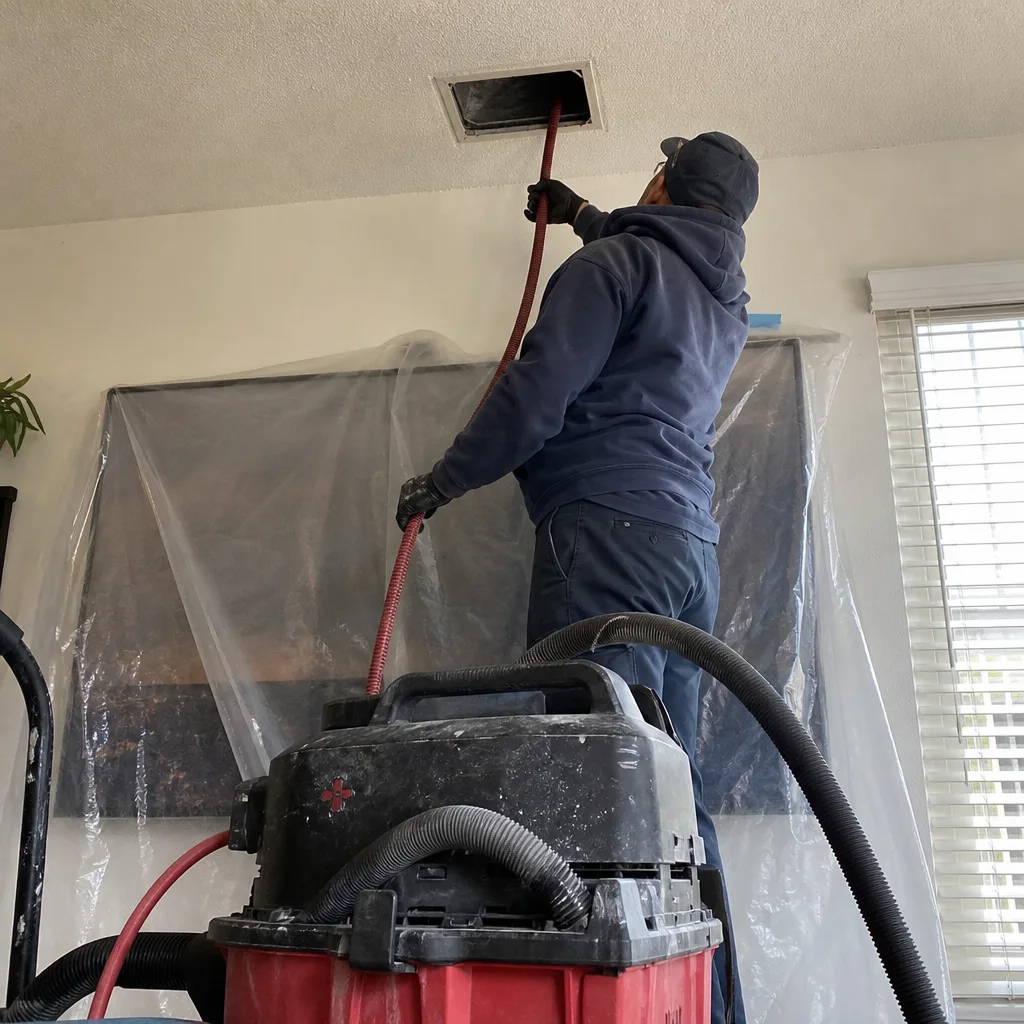
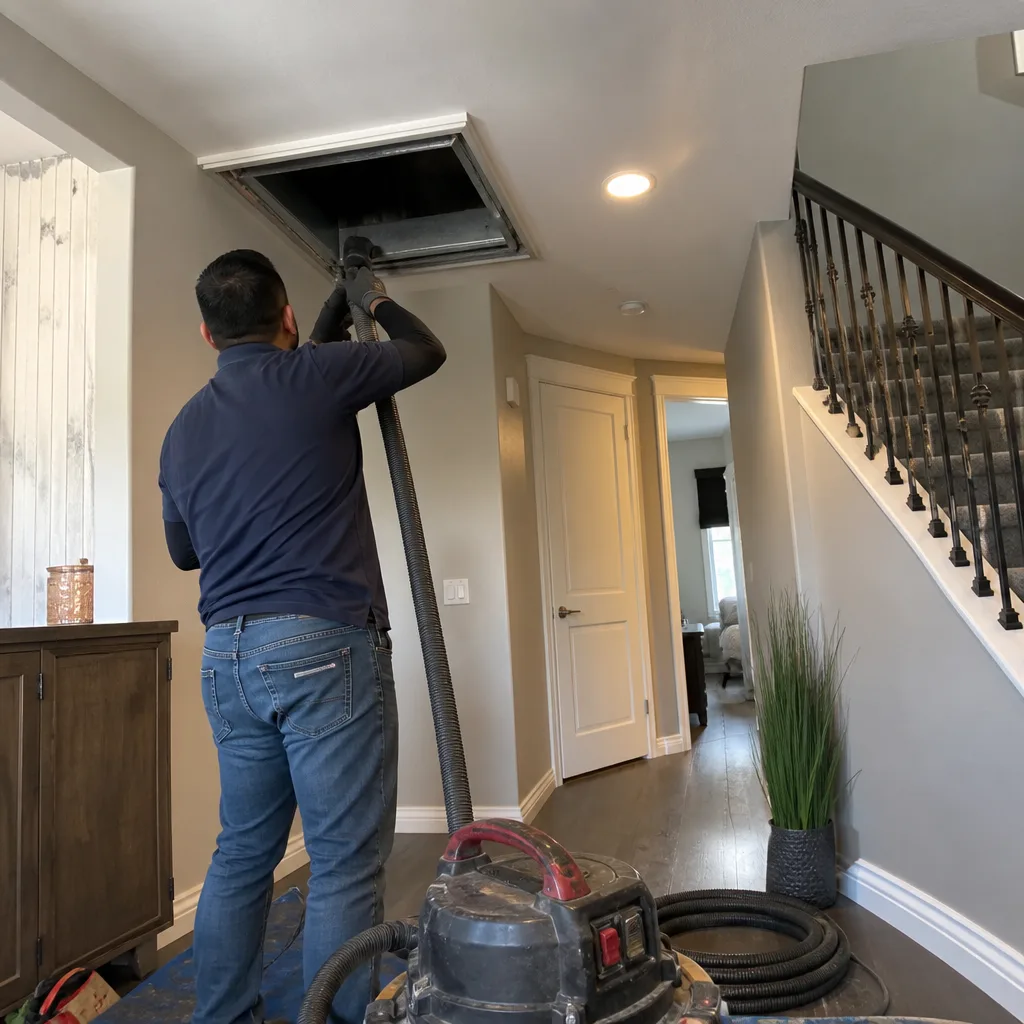
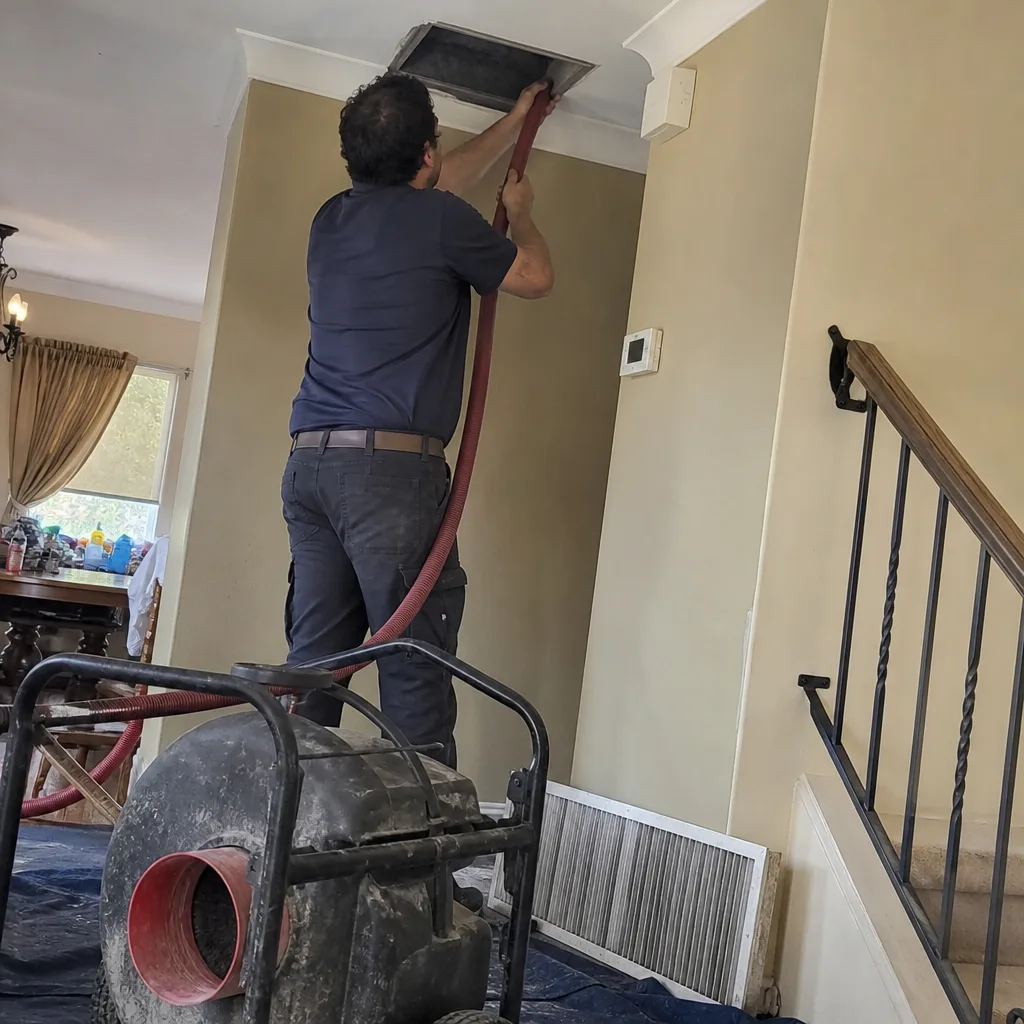
If you find two or more of these indicators, a surface-level vent wipe down won’t solve the problem. The residue needs removal from the interior duct surfaces, the blower assembly, and the return plenum. Our technicians use professional equipment for this, including HEPA-filtered Nikro vacuum systems that contain what they extract, rather than blowing it back through the living space. If the smoke event also caused heat or ember damage, a full air duct repair in Rancho Bernardo may be needed to restore proper airflow paths.
One more note specific to Rancho Bernardo: smoke particles are acidic, and they accelerate the deterioration of flex duct lining. Homes that experienced repeated smoke exposure over multiple fire seasons often show internal flex duct delamination even when the exterior looks fine. That’s a mechanical repair issue, not a cleaning issue, and it’s one reason our inspections always include a duct condition assessment, not just a surface cleanliness check.
Santa Ana Winds and Fall Particulate Loading
Santa Ana events are the most underrated duct contaminant event in Rancho Bernardo. Dry, offshore winds gusting 30 to 50 mph move through local canyons and pick up everything the summer left behind: pollen fragments, construction dust from summer projects, dry topsoil, and ash residue from earlier fire activity. The air gets dry, static, and loaded with particulate.
Homes don’t need to have open windows for this to matter. The return side of an HVAC system runs under negative pressure when the blower operates, which means it actively pulls air through wall penetrations, can lights, door gaps, and every other small opening in the envelope. During a multi-day Santa Ana event, a Rancho Bernardo home’s return air can carry significantly more particulate than normal ambient conditions, and much of it is small enough to pass through a standard MERV 8 filter.
Here’s what Santa Ana particulate loading looks like in practice:
- Supply registers show a fine tan dust film within 72 hours of the wind event. This is particulate that already made it past the filter and into the supply side.
- The return filter is visibly darkened after a single week rather than a month. When filter life drops this sharply, the ductwork behind the filter is accumulating the same load.
- Static buildup inside the home increases, and airborne dust clings to television screens and electronics unusually fast. This is the visible signal that the indoor air is carrying more particulate than your filtration is handling.
- Occupants notice a dry, dusty smell when the furnace first kicks on after a Santa Ana period. That’s resuspended particulate from inside the duct runs.
The timing guidance here is simple: if you schedule one professional cleaning per year, schedule it after the last significant Santa Ana event, which in most years falls in mid to late November – see our Air Duct Cleaning Cost Breakdown: The Rancho Bernardo Homeowner’s Reference for 2026 for what to expect. Cleaning before the winds means a fresh system loaded again within weeks. Cleaning in spring means living with the accumulated particulate all winter, through every heating cycle.
This is also the window when moving to a higher MERV rating makes the most difference. A MERV 11 or MERV 13 filter during Santa Ana season captures more of the fine particulate than a standard filter, which protects the duct interiors from the worst of the load. If your system is compatible with Aprilaire media filters, this is the season to switch. If you’re not sure what your system can handle, a quick filter cabinet inspection tells us more than any generic advice can.
Winter Start-Up: What Happens When the Heat Kicks On
The first sustained cold snap in Rancho Bernardo, usually late November or December, forces your HVAC into a different operating mode. Cooling cycles are short and intermittent in fall. Heating cycles are longer and more frequent. That shift matters for your ducts.
Longer heating cycles create stronger and more consistent airflow through the entire duct network. Anything that accumulated during Santa Ana season, or settled into low spots in the duct runs, gets lifted and moved. Not out of the system, necessarily. Onto the heat exchanger, into the supply register backs, and into the air your family breathes all winter.
There’s a second issue that shows up in the heating season. Dust that has baked onto the heat exchanger produces a distinctive smell: a hot, acrid, slightly chemical odor that appears when the system runs and disappears when it stops. Homeowners sometimes mistake it for a gas leak or an electrical problem. In most cases, it’s accumulated dust and pet dander burning off the exchanger. It’s not usually dangerous, but it is a signal that the system needed cleaning before heating season started, not after.
Winter is also when marginal duct repairs become obvious. A small disconnection at a flex duct collar may not be noticeable in summer, when the temperature difference between supply air and room air is moderate. In winter, that same leak sends conditioned warm air into the attic or crawlspace instead of the room. The result: higher heating bills, cold rooms at the far end of the run, and a furnace that works harder than it needs to. If you notice one bedroom that never warms up properly, or a gas bill that spikes in December without a corresponding comfort improvement, a professional duct inspection is the right next step. We have repaired dozens of Rancho Bernardo systems where a single disconnected or crushed flex duct run was silently wasting 20% or more of the conditioned air.
For winter preparation specifically, here’s a short checklist we recommend to homeowners in the area:
- Replace the HVAC filter the week before the first expected cold snap.
- Walk the house and check every supply register for airflow by holding a tissue near the vent while the heat runs.
- Feel the return air grilles for strong suction. Weak return airflow in one area often means a blocked or disconnected return run.
- Listen for new rattles or flapping sounds when the blower ramps up. Loose duct connections sound different in heating mode than cooling mode.
- Check your thermostat history after two weeks of heat for unusually long run times. Long cycles can point to dirty coils, loaded ducts, or a leaking duct system.
Pre-Summer Inspection for 95°F+ Heat Stretches
Rancho Bernardo’s inland location means summer temperatures regularly exceed 95°F, and heat waves can push above 100°F for consecutive days. During these stretches, your air conditioner runs near constantly. That’s hard on the equipment, but it’s also the season when a clean duct system pays the biggest dividend in both comfort and energy cost.
The physics are straightforward: an air conditioner can only cool the volume of air that actually moves through the coil. If your return ducts are partially loaded with dust and debris, the system moves less air. Less air across the coil means less heat removed from the house, which means longer run times and higher bills. In a Rancho Bernardo July, a 15% airflow reduction doesn’t feel like a subtle problem. It feels like a cooling system that can’t keep up.
Here’s what to check before summer heat arrives, ideally in April or early May:
- Inspect every supply register in the house. Remove each one and look inside with a flashlight. Visible dust accumulation at the register back means the duct interior is carrying a heavier load than it should.
- Check the return air path. Make sure return registers are not blocked by furniture, rugs, or stored items. In Rancho Bernardo homes, we regularly see return grilles in hallways that get covered by a console table or bench, which chokes the entire system.
- Inspect the outdoor condenser for clearance. Dry brush, plant debris, and construction dust from local projects all reduce airflow through the condenser coil. A clean condenser is outside the duct system, but it’s part of the same airflow economics.
- Run the system for 15 minutes and measure the temperature difference between the return and supply air. A healthy system shows a 15 to 20 degree split. A split below 15 degrees in summer often points to airflow restriction, and loaded ducts are a leading cause.
- Look for new dust accumulation on horizontal surfaces within 24 hours of cleaning. If dust returns that quickly, it’s being distributed by the HVAC, not generated by the household.
If these checks reveal significant buildup, summer is a legitimate time for duct cleaning in Rancho Bernardo, especially if you skipped the fall window. We clean systems year-round, and a summer cleaning before a heat wave has saved more than one family from a 90 degree indoor afternoon.
Humidity Swings and Flex Duct Connections
Rancho Bernardo’s humidity profile swings more than most homeowners realize. Coastal influence in spring keeps mornings damp, especially in areas closer to the Green Valley corridor. By late summer and fall, Santa Ana conditions drop indoor humidity into the teens. Those swings matter for flex duct connections.
Flex duct is made of a spiral wire core inside a plastic and fiberglass liner, with an outer vapor barrier. The collar connections at each end rely on a tight fit plus mechanical fastening. When humidity shifts, the materials expand and contract at different rates. A connection that was tight in March can be loose by October. Loose connections allow conditioned air to escape into unconditioned spaces, and they also allow dust, insulation particles, and humid air to enter the return side.
The two times of year when we see the most flex duct failures in Rancho Bernardo are late spring, after the humidity begins to drop, and early fall, when Santa Ana conditions first arrive. This is a transition-window issue, and it means spring and fall are the right times for a connection inspection, even if you don’t need a full cleaning.
What to check at each transition:
- Supply register airflow: Weaker airflow in specific rooms after a humidity shift often means a connection at that branch line has loosened or separated.
- Attic or crawlspace dust patterns: Dust streaking outward from a duct connection indicates air escaping at that joint.
- Visible flex duct sagging: Duct runs that sag more than before may have lost tension at a support point, which puts stress on the end collars.
- New whistling or hissing sounds near registers: These are signs of air leakage around the boot connection.
Loose connections are not a cleaning issue. They are a repair issue, and this is one of the reasons air duct repair in Rancho Bernardo matters as much as cleaning. We clean it, and if something’s wrong, we repair it, same visit, same team. A cleaned duct system with loose connections still leaks. A sealed system with dirty ducts still distributes dust. The two services work together.
Rancho Bernardo Duct Care Calendar
Here is the seasonal rhythm we recommend based on local climate patterns. It’s a template you can adapt to your home’s age, occupancy, and whether anyone in the household has allergies or respiratory conditions.
January to February (Heating Season)
- Monitor for dust odor on heat start-up. If present, note it and plan for cleaning in the next available window.
- Check filters monthly during peak heating; heating cycles move more dust than cooling cycles.
- If you use portable humidifiers, position them away from return grilles. Humidifier mist carries minerals that foul filters and coat duct interiors.
March to April (Spring Transition)
- Inspect flex duct connections as humidity drops. Look for sagging, loose collars, and weak register airflow.
- Replace the HVAC filter with a fresh one before pollen season peaks in May.
- Walk all supply and return registers. Clean register covers with a damp cloth. This is maintenance, not duct cleaning.
May to August (Construction and Heat Season)
- During remodeling or re-roofing anywhere on the property, run the system less and seal off return registers in the work area.
- Upgrade to a MERV 11 or higher filter if your system supports it. Confirm compatibility first.
- Check filter every 30 days. Construction dust and summer particulate loading shorten filter life dramatically.
- If the home will be unoccupied for travel, close supply registers in unused rooms to reduce particulate settling in those runs.
September to October (Wildfire and Santa Ana Season)
- After any smoke event, do the visual assessment described earlier in this guide.
- Keep windows closed during Santa Ana winds, especially on the return-side walls of the home.
- Inspect the area around return registers for smoke ghosting or dust shadow patterns.
November to December (Primary Cleaning Window)
- Schedule professional air duct cleaning after the last significant Santa Ana event. This is the year’s best window in Rancho Bernardo.
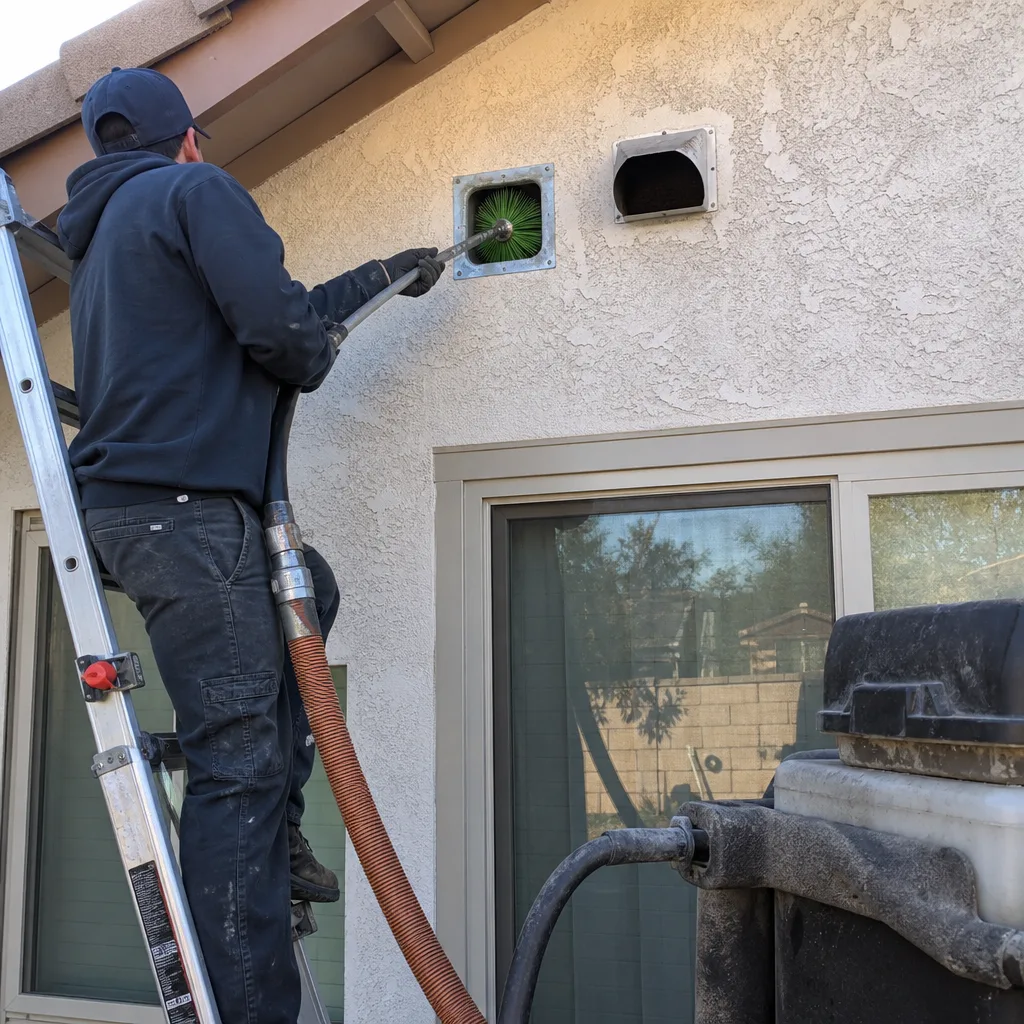
- Have dryer vent cleaning done in the same visit if it has been more than a year. Lint accumulation in dryer venting is a fire risk, and dryer vent cleaning in Rancho Bernardo is a service we take seriously.
- Inspect and replace the HVAC filter one final time before heating loads increase.
December (Optional Second Cleaning Window)
- If you skipped November or had an unusually long fire season, early December is still effective. The goal is cleaning before the heating system runs daily.
Common Mistakes to Avoid
- Following a generic “spring cleaning” schedule from a national source. Spring cleaning in Rancho Bernardo means cleaning in March, then spending the next nine months accumulating construction dust, wildfire particulate, and Santa Ana loading. The fall window after the winds is far more effective for this region.
- Assuming a clean filter means clean ducts. A filter only catches what reaches it. Everything that bypasses the filter, or settles in the return side before it, behaves differently. We have seen filters changed monthly on systems with visibly loaded supply duct interiors.
- Waiting for a visible problem before scheduling an inspection. Most duct contamination never shows up as black streaks on the registers. By the time you see surface evidence, the system has been distributing the problem for months.
- Running a whole-house fan during Santa Ana winds. Whole-house fans pull massive volumes of unfiltered outside air into the attic and the living space. During a wind event, that air is loaded with fine particulate that will settle directly into the return system.
- Ignoring flex duct sagging in the attic. Sagging indicates weakened support or a loose connection. Left alone, it becomes a disconnection. A disconnected branch line means one room is not being conditioned at all.
- Using a higher-MERV filter than the system was designed for. A MERV 13 filter in a system designed for MERV 8 increases static pressure and reduces airflow. It can protect the ducts while stressing the blower. Always confirm compatibility before upgrading filtration, especially if you run an older system in an established Rancho Bernardo neighborhood.
- Taking the cheapest duct cleaning quote as the standard. Duct cleaning is an industry where price shopping rarely ends well. Professional cleaning with real equipment, including HEPA-filtered extraction and negative-air containment, costs what it costs for a reason. A system that is cleaned without containment just moves dust around the house.
When to Call a Professional
Call a professional when smoke odor persists after a fire event, when filter life drops dramatically in a short period, when heating season brings a burning dust smell each time the system runs, or when one or more rooms never reach the set temperature. These are all signs that the problem is inside the ductwork or at the connections, not in the filter or the thermostat. Also call if you find flex duct sagging, loose register connections, or if your home has gone more than four years without a professional cleaning in Rancho Bernardo’s dusty inland climate. Golden Air Duct offers free estimates in Rancho Bernardo. Call (844) 798-0150 to schedule yours.
Frequently Asked Questions
Every three to five years for most homes, with an annual filter replacement schedule and a professional inspection at seasonal transitions. Homes with pets, allergy-sensitive occupants, or exposure to wildfire smoke and Santa Ana dust may need cleaning every two to three years. The condition of your ducts after a fall Santa Ana season is the best single indicator, because that’s when particulate loading peaks in Rancho Bernardo. Call (844) 798-0150 for a free estimate if you’re not sure whether your system is due.
You can clean register covers and wipe accessible surfaces, but real interior duct cleaning requires professional equipment that reaches the full length of each run and extracts what it dislodges. Consumer shop-vac setups don’t create the negative pressure needed to pull debris from the system, and they often make contamination worse by loosening debris without capturing it. We use Rotobrush rotary brush systems and Nikro HEPA-filtered vacuum equipment on every cleaning for this reason.
Yes, and the reason is specific to this region. Santa Ana winds in October and November load your ducts with fine particulate. Cleaning after that settles means you start winter with a clean system. Cleaning in spring means that load stays in the ducts through the entire heating season, recirculating through the blower and heat exchanger every time the system runs. In Rancho Bernardo, fall cleaning is the higher-value window.
It does. Smoke particles are small enough to pass through most residential filters and they settle on the interior walls of your return and supply ductwork, the blower assembly, and the heat exchanger. The odor can persist for months and reappear whenever the system cycles. If you smell smoke when the HVAC runs but not when it’s off, that’s the signature of smoke residue in the system, and it usually requires professional cleaning to remove.
Dirty ducts restrict airflow, and restricted airflow forces your HVAC to run longer to move the same amount of conditioned air. In a Rancho Bernardo summer, when the system already works hard, that extra run time shows up directly on your SDG&E bill. A system with clean ducts moves air more efficiently, reaches the set temperature faster, and cycles off sooner.
No. Cleaning removes debris. Repairing a broken or loose flex duct connection is a separate mechanical fix. Golden Air Duct handles both. If a cleaning reveals a disconnected or collapsed flex duct run, our technicians can repair it in the same visit, which saves you the cost and delay of hiring a second contractor. That’s the repair capability that sets us apart from cleaning-only companies.
The Bottom Line
Rancho Bernardo’s ducts face a different calendar than the rest of the country. Wildfire smoke, Santa Ana wind particulate, long hot summers, and humidity swings create four distinct stress periods, and the most effective maintenance responds to each one in turn. Clean in late fall after the winds settle, upgrade filtration before summer heat and fire season arrive, inspect flex duct connections at the spring and fall humidity transitions, and watch for the quiet signals of a loaded system: a dust smell at furnace start, a filter that darkens too fast, a bedroom that never warms. Pair that seasonal rhythm with a professional cleaning every three to five years, and your HVAC can finally breathe. We clean it, and if something’s wrong, we repair it. Same visit, same team. Call (844) 798-0150 to schedule your free estimate in Rancho Bernardo.
Written by the team at Golden Air Duct home, serving Rancho Bernardo since 2013.
See the difference
 Before
 After
 Before
 After
 Before
 After