
Last updated November 2, 2026
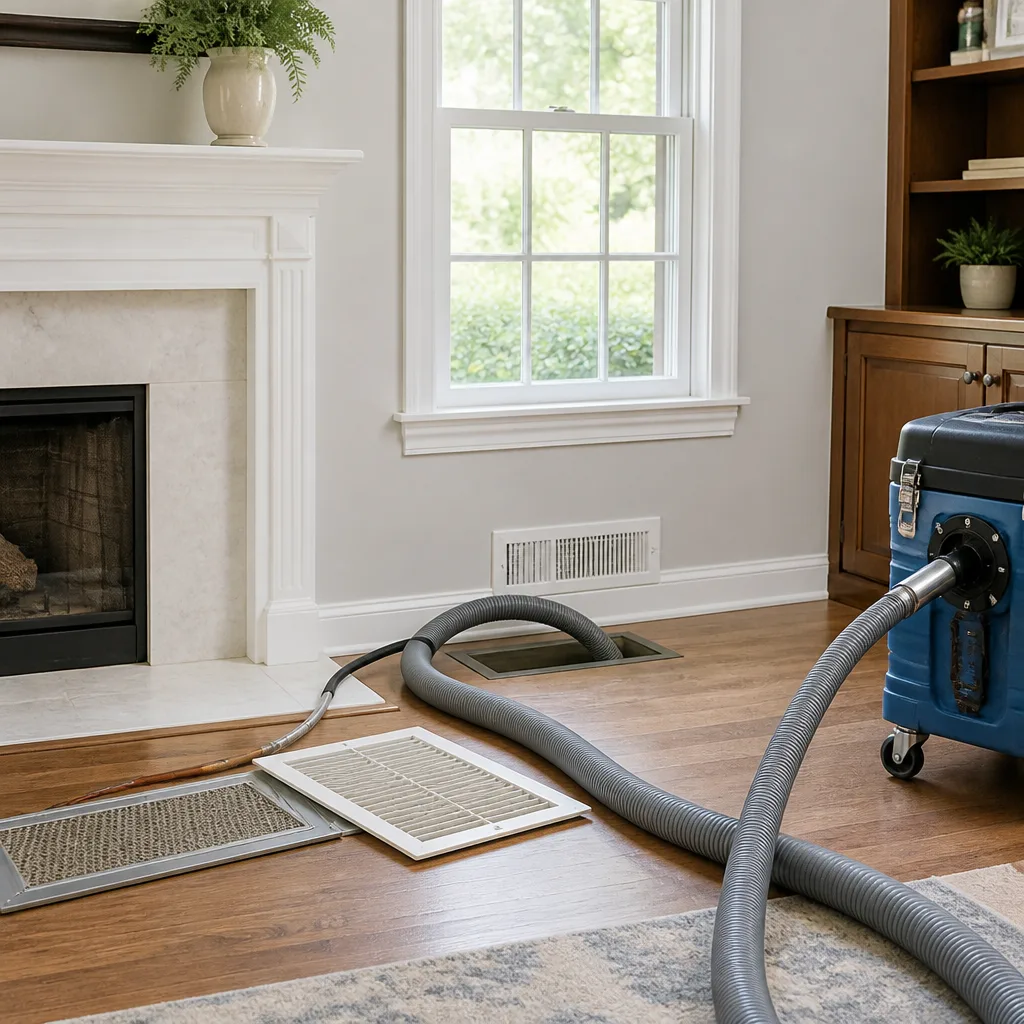 Whole-home duct cleaning
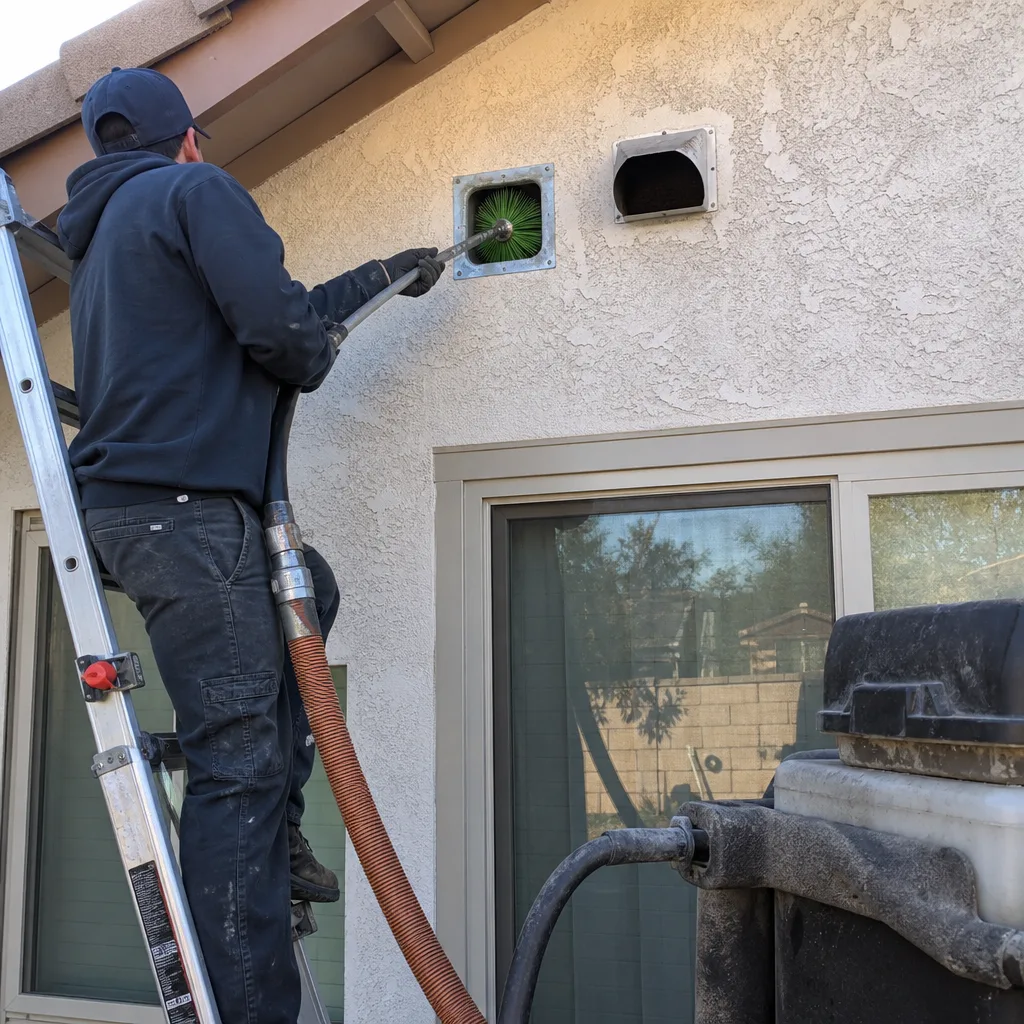
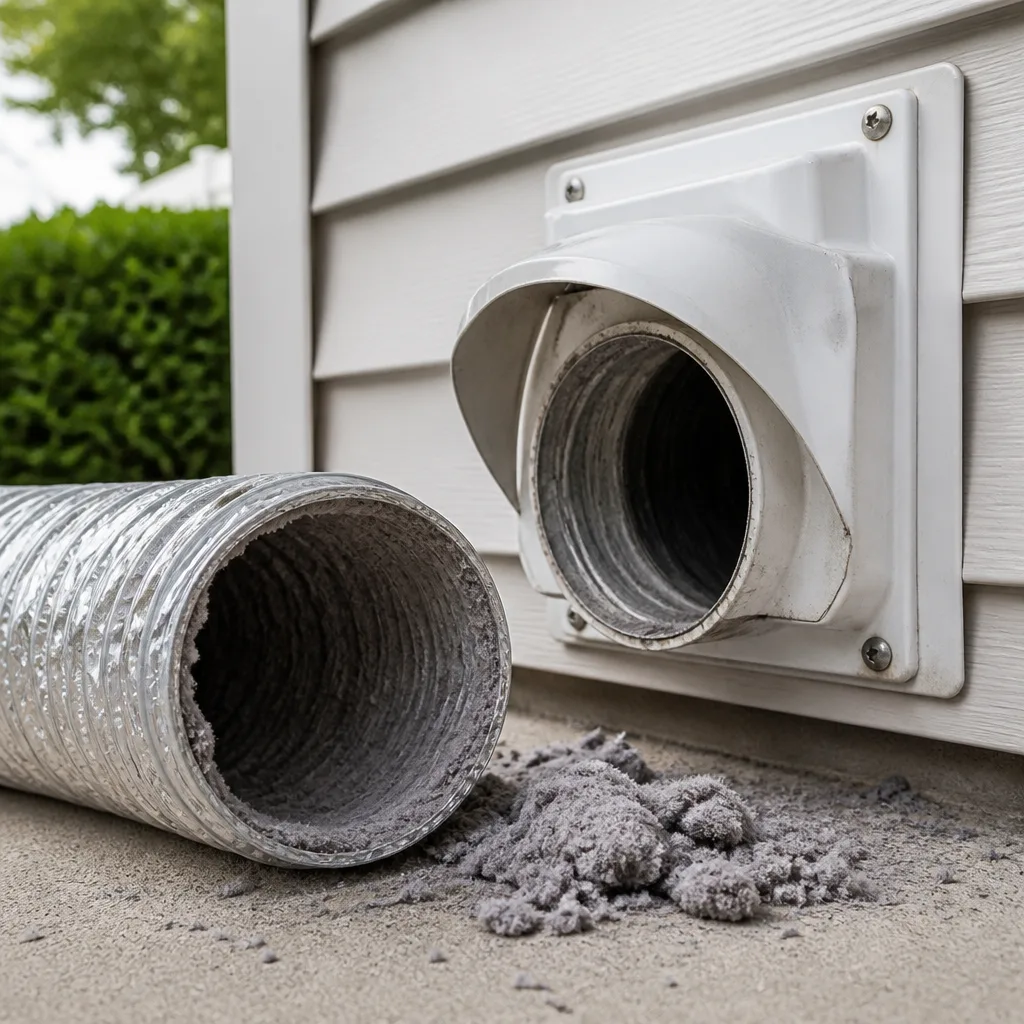 Dryer vent cleaning
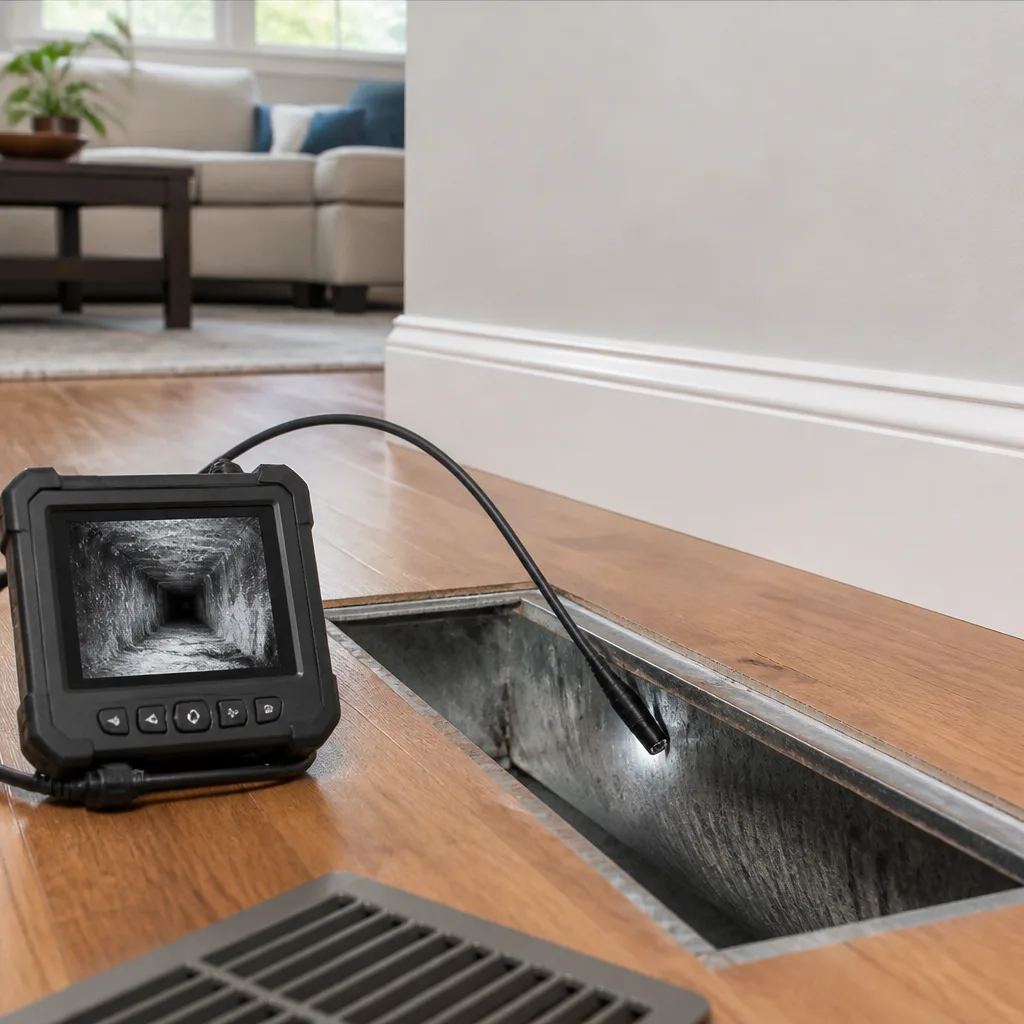 Camera inspection
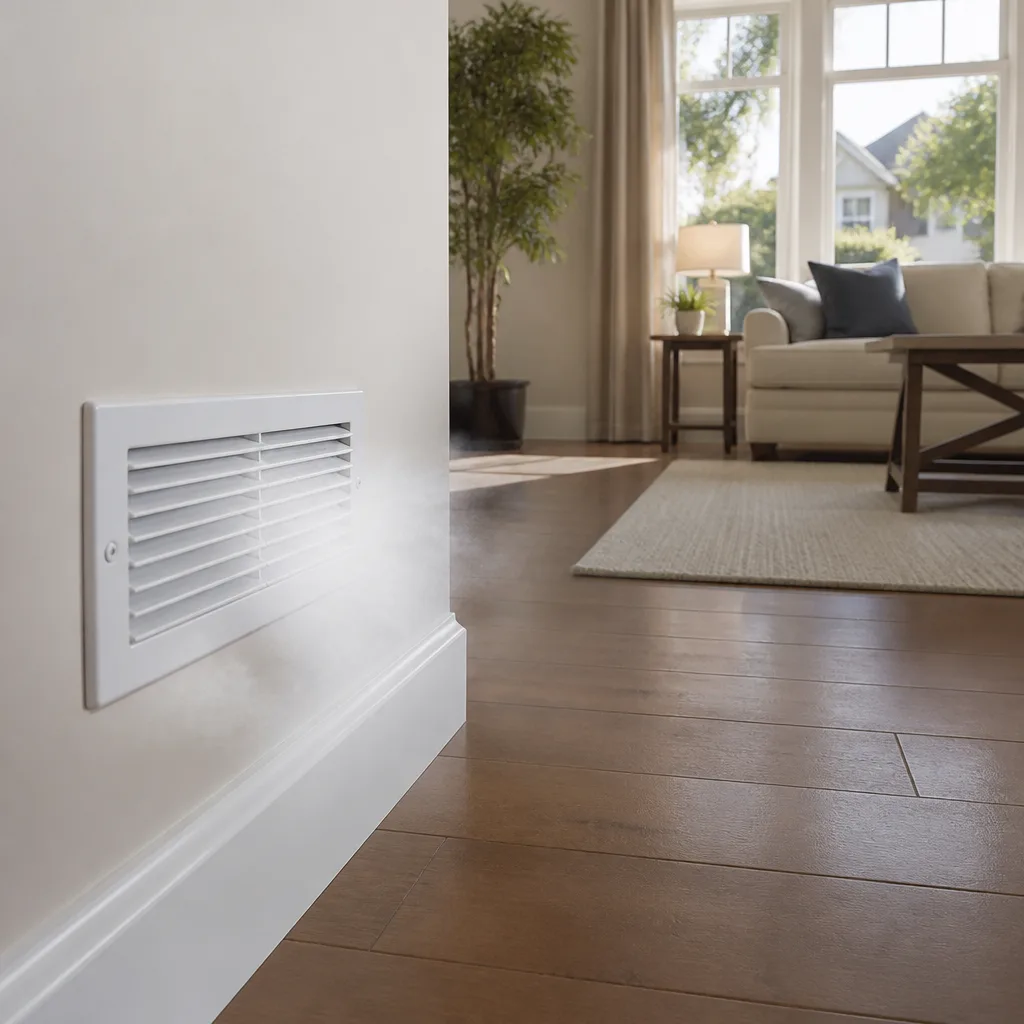 Sanitizing & deodorizing
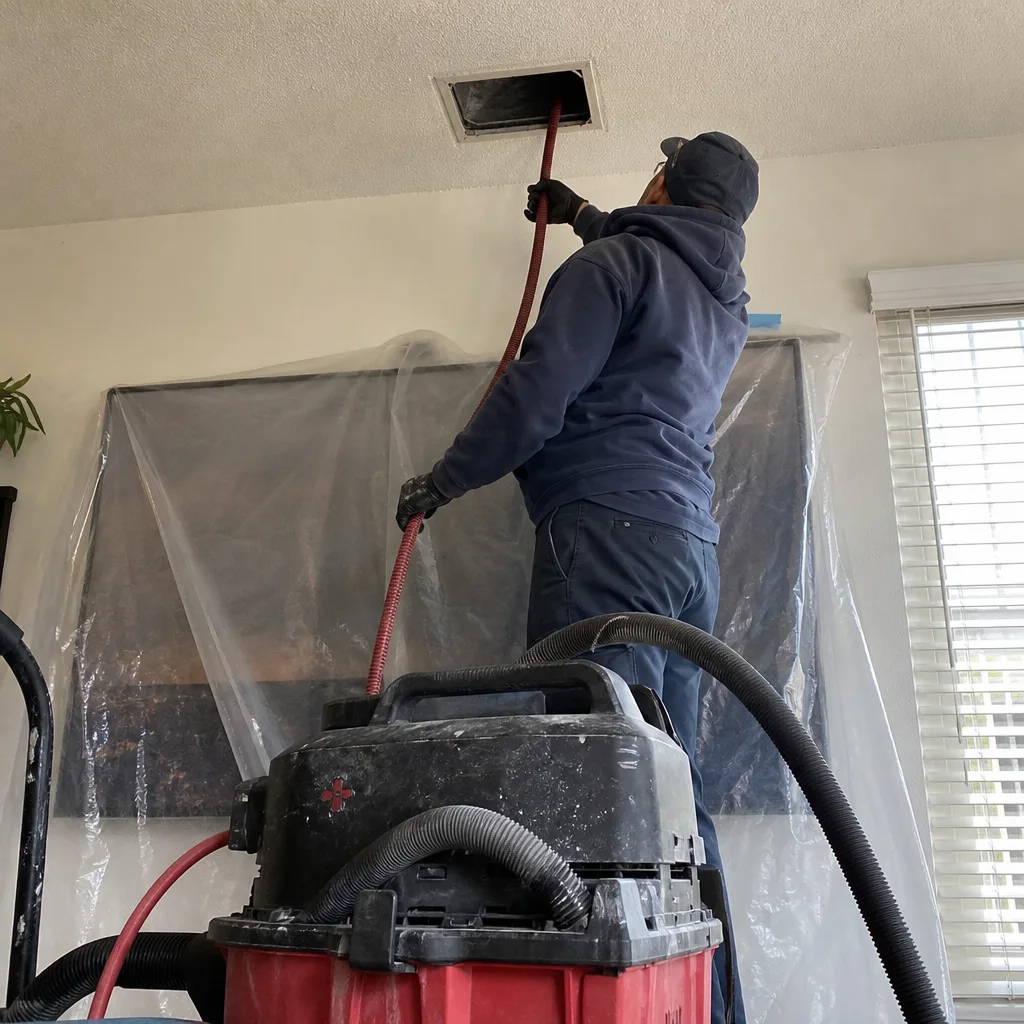
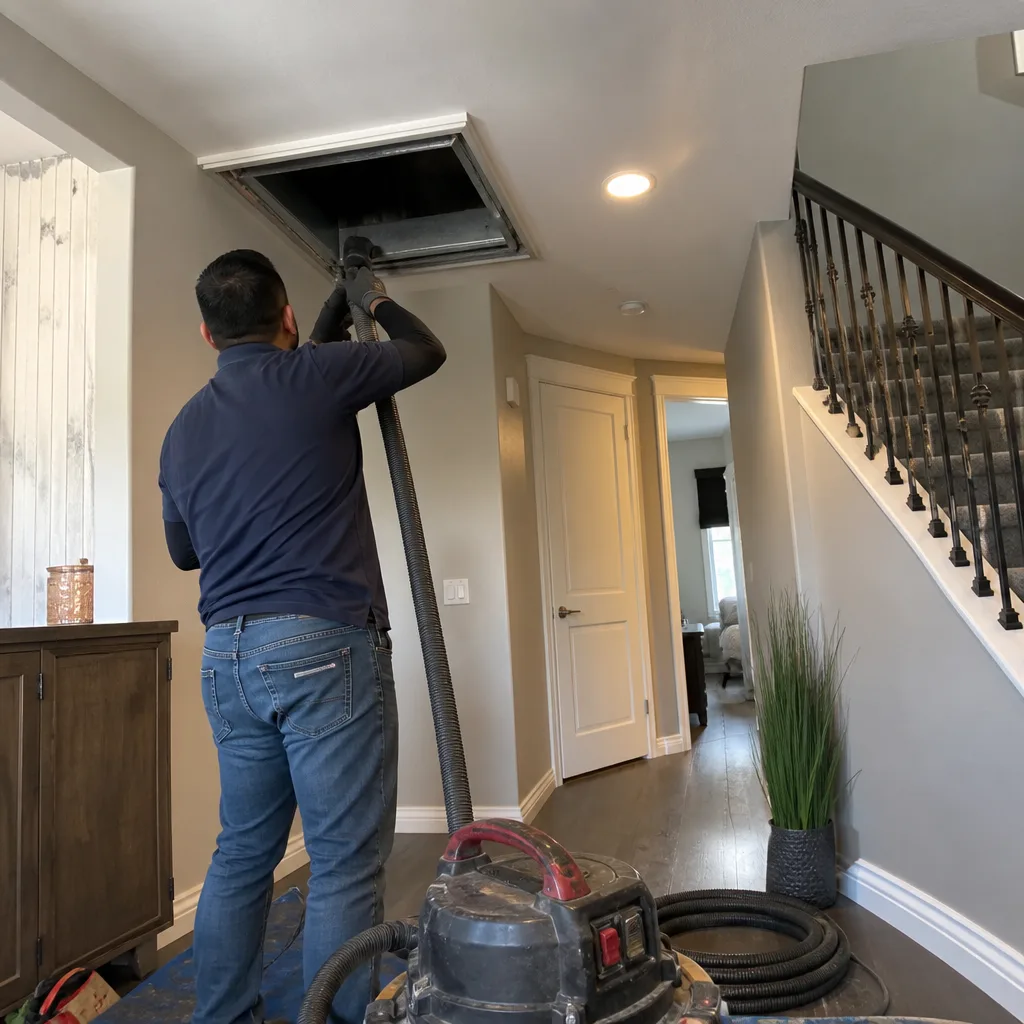
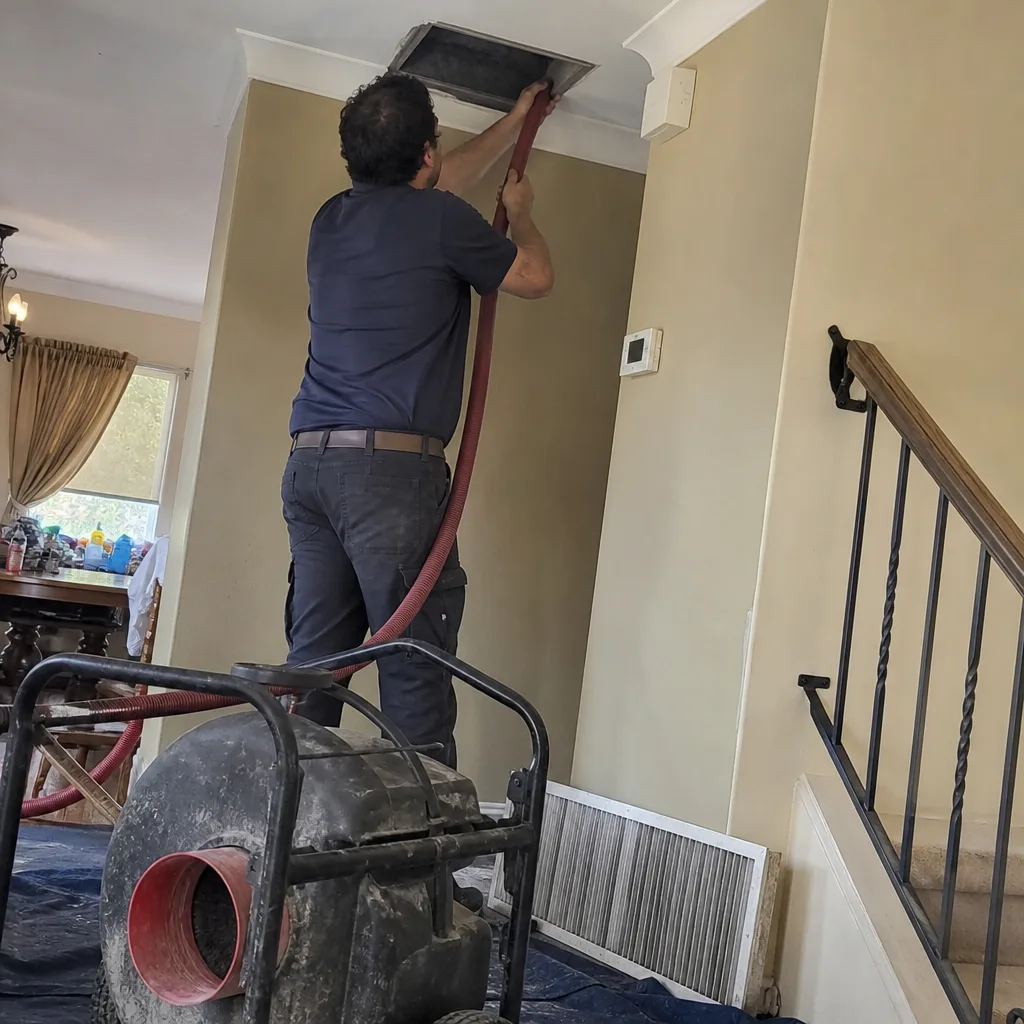
Whole-system duct and dryer vent check with before-and-after photos - you see exactly what came out of your vents
That "$99 whole-house special" is a bait ad - the real number appears once they are in your hallway, or the "clean" is a shop-vac at the register. We photograph the inside of your ducts before and after instead.
Air Duct Cleaning Emergency Preparedness Guide for Rancho Bernardo Homes
After the 2007 Witch Creek Fire tore through Rancho Bernardo and destroyed more than 300 homes, the families who returned to intact houses faced a problem nobody had warned them about. Many switched their air conditioning back on within hours of getting home, and their duct systems, which had been quietly pulling in smoke and ash for days, began recirculating those particles through every room. They spent the next several months breathing air their own HVAC was contaminating. This guide explains what Rancho Bernardo homeowners should do with their duct systems before fire season, during an active smoke event, and after the smoke clears. You will learn the specific preparation steps that reduce smoke infiltration, the counterintuitive move during a Red Flag event, and the documentation protocol that makes insurance claims go smoother.
Quick Answer
If wildfire smoke has affected your Rancho Bernardo home, do not run your HVAC system until the filter and returns have been inspected for ash. Schedule a professional air duct cleaning in Rancho Bernardo that includes source-removal of smoke particulate, not just a surface vacuum. Document everything with photos before any cleaning begins, and keep the spent filter in a sealed plastic bag for your insurance adjuster.
Styles & brands we work with
- Whole-home duct cleaning
- Dryer vent cleaning
- Camera inspection
- Sanitizing & deodorizing
Table of Contents
- Pre-Fire Season Duct Preparation for Rancho Bernardo Homes
- What to Do With Your HVAC During an Active Smoke Event
- Post-Smoke Assessment: Before You Restart the HVAC
- How Wildfire Ash Differs from Construction Dust in Ducts
- Documentation Steps for Insurance Claims After Smoke Contamination
- Why Your Dryer Vent Matters During Fire Season
- Common Mistakes to Avoid
- When to Call a Professional
- Frequently Asked Questions
Pre-Fire Season Duct Preparation for Rancho Bernardo Homes
Rancho Bernardo sits in a fire-prone corridor. The canyons, the chaparral, the Santa Ana winds from the east. Every September through November, the risk climbs. The best time to prepare your duct system is not the day you smell smoke. It is the month before fire season begins.
Start with the filter. Many Rancho Bernardo homes run standard MERV 8 fiberglass filters because they are cheap and easy to find. During fire season, you want at least a MERV 11. If you are serious about smoke particulate, step up to a MERV 13, but check your HVAC system’s static pressure rating first. A MERV 13 filter is dense. Some older blower motors, especially in the original Westwood and Seven Oaks tract homes from the late 1960s and early 1970s, struggle against that resistance. A strained blower shortens motor life and costs you real money.
The second check is filter seating. A filter that does not sit flush in its slot lets air bypass it entirely. You can have a perfect MERV 13 installed, and if there is a quarter-inch gap on one side, smoke-laden air sails right past. We have seen this in Rancho Bernardo homes repeatedly, and it is one of the simplest fixes a homeowner can do. Pull the filter out, look at the slot, and make sure the filter frame contacts all four sides. If it does not, add foam weatherstripping tape to the filter frame edge.
Third, look at your return registers. These are the grilles where air gets pulled into the system. They are usually on walls or ceilings. In a smoke event, these are the intake points. If your return registers are loose, cracked, or pulling air from an unconditioned attic space, the system will draw smoke in from places you cannot see. Tighten every return register screw. If the register box behind the grille is not sealed to the drywall, that gap is a leak point.
Finally, if you have a whole-home air purifier from Honeywell or Aprilaire attached to your HVAC, check that it is operational before fire season starts. A clean duct system is the platform these purifiers work with. Guardsman and similar filtration units can only catch what reaches them. If your ducts are already loaded with years of accumulated dust and pet dander, adding wildfire smoke to that mix creates a pollutant load that overwhelms even the best filtration.
What to Do With Your HVAC During an Active Smoke Event
The counterintuitive answer to this question is: in many cases, shut the system off entirely. Here is why.
If smoke is close, the particulate load in the outside air is extremely high. When your HVAC runs in cooling mode, it is not pulling outside air in through a vent. It recirculates interior air. But every time a door opens, every window seal leak, every bathroom exhaust fan run, every cooking range hood cycle, new smoky air enters the house. That air is pulled into the return registers and through the system. The filter catches some. The rest deposits on the blower wheel, the evaporator coil, and the interior surfaces of the supply and return duct runs.
Running the system continuously during a heavy smoke event essentially uses your ductwork as a smoke particulate trap. The more you run it, the more material builds up inside the system. Then the smoke passes, and you restart the system with a fresh filter, and the blower starts stripping the deposited particulate off the interior duct surfaces and pushing it back into your rooms.
So the recommendation during a close, heavy smoke event is to shut the system off if outside air quality is in the “Hazardous” range and you can tolerate the indoor temperature. If you have a central air purifier with its own fan, run that as a standalone unit if the manufacturer allows. If you must run the HVAC because of heat or medical need, use the highest MERV filter your system will tolerate, run the fan in “On” mode rather than “Auto” so air keeps moving through the filter, and plan to have the ducts cleaned afterward regardless.
Post-Smoke Assessment: Before You Restart the HVAC
After the smoke clears and air quality returns to safe levels, do not reach for the thermostat. Walk through this assessment protocol first. We have used this same sequence on dozens of Rancho Bernardo homes following the Witch Creek Fire, the 2014 Poinsettia Fire, and smaller vegetation fires in the San Pasqual Valley.
- Check the filter first. Remove it. If it is discolored, covered in fine gray or brown residue, or you can see visible ash accumulation in the pleats, that filter did its job. Put it in a sealed plastic bag. Do not throw it away. It is evidence for your insurance claim.
- Look at every return register in the home. Remove the grille if you can. Look at the inside surface of the duct immediately behind it. Visible ash, soot, or a fine gray film means smoke particulate entered the duct system. A flashlight helps. You are looking for anything beyond normal household dust.
- Smell the air coming from the supply vents. If you can smell smoke when the system has been off for hours and the outside air is clear, that odor is coming from inside the ducts. Do not mistake this for the general smell of smoke that clings to furniture and carpet. Duct-source smoke odor is strongest right at the vent.
- Check the blower area on your furnace or air handler. If you can safely open the blower access panel, look for ash accumulation on the blower wheel blades. If ash is there, it is throughout the system.
If you find any of these signs, do not run the system until a professional duct cleaning has been completed. Running it spreads the contamination and makes the eventual cleaning more difficult.
How Wildfire Ash Differs from Construction Dust in Ducts
Wildfire ash is not just dust with a different origin story. Its physical and chemical properties require a different cleaning approach, and this is where many standard duct cleaning protocols fall short in Rancho Bernardo.
Construction dust is mostly large, heavy particulate. Drywall dust, sawdust, concrete fines. It settles quickly, accumulates in horizontal duct runs, and responds well to standard rotary brush agitation. Wildfire ash is different. It contains sub-micron particles, partially combusted organic compounds, and chemical residues from burned synthetic materials, plastics, and residential chemicals. These particles are extremely light, electrostatically attracted to duct surfaces, and they bond to the thin film of oils and residue that already coats duct interiors.
A standard brush-and-vacuum pass can remove loose ash on the surface. It does not reliably remove the bonded particulate layer, and it does not address the odor-causing residues that have absorbed into porous duct liner materials. Post-fire duct decontamination requires:
- Higher dwell time on each section of duct. The brush needs to work the surface, not just pass through it.
- HEPA-level filtration on the vacuum side. If the collection system is not HEPA rated, ultra-fine ash particles get blown back into the home during cleaning.
- Negative air containment. In our post-fire duct work, we use Abatement Technologies containment equipment to keep dislodged ash particulate from recirculating into the living space. This is a standard protocol in fire restoration, but it is rarely seen in routine residential duct cleaning.
- Inspection of duct liner and sealing materials. If ash has embedded into porous duct board or deteriorated liner, cleaning alone may not be enough. The affected sections may need air duct repair in Rancho Bernardo, including liner replacement and sealing.
The bottom line: if a contractor quotes you the same price for post-fire duct cleaning as they do for a routine cleaning, they are either not planning to do the job properly or they do not understand the difference between the two. In Rancho Bernardo after a major fire event, you want a company with professional-grade equipment like Rotobrush and Nikro systems, not a shop vac with a brush attachment.
Documentation Steps for Insurance Claims After Smoke Contamination
Insurance adjusters process smoke contamination claims every fire season in Rancho Bernardo. The ones who approve the full scope of duct cleaning and decontamination are the ones who receive organized, visual, undeniable evidence. Here is what to document, in order.
- Photograph the spent filter in place before you remove it. Then photograph it again after removal, both sides, next to a new filter of the same size for visual contrast. Then bag it and keep it.
- Photograph every return register before any cleaning begins. Get close-up shots of visible ash or discoloration on the grille face and, if possible, through the grille into the duct behind it.
- Photograph the blower wheel and the interior of the air handler if visible ash is present. Your HVAC technician or duct cleaning contractor can help with this. Ask them to hold a white cloth or paper against the blower wheel surface. A gray transfer mark is photographic evidence you cannot fake.
- Request a written assessment from your duct cleaning contractor that includes visual findings, a scope of work for source removal and decontamination, and a statement of equipment used. This document matters. Adjusters are more likely to approve claims when the scope is specific and the equipment described matches fire restoration standards.
- Note the date of the smoke event, the duration of exposure, and any smoke odor readings you observed in your home. Keep a simple log. Adjusters look for a clear timeline connecting the event to the contamination.
- Do not discard anything. The filter, the photographs, the assessment, the log. Everything goes into one folder for the adjuster.
We have walked Rancho Bernardo homeowners through this documentation process after several fire seasons, and the claims that include this level of evidence move faster and get approved more fully than those that consist of a single work order from a cleaning company.
Why Your Dryer Vent Matters During Fire Season
This is a section most duct cleaning guides would not include in a fire preparedness piece. But it belongs here, because dryer vent cleaning in Rancho Bernardo is directly connected to fire safety in this community, and the connection runs both ways.
First, the direct risk: a clogged dryer vent is a leading cause of residential fires. Lint is highly combustible. A dryer vent packed with years of accumulated lint and running at high exhaust temperatures is a fire waiting for a spark. During Red Flag conditions, that risk does not go away, and emergency response times are stretched by wildfire operations. A house fire that starts in a dryer vent during a wildfire emergency is a worst-case scenario for a family.
Second, the indirect risk: your dryer vent is an exhaust pathway from inside your home to the outside. When the vent damper does not seal properly, it becomes an intake pathway. On a smoky day, a dryer that is not running can still let smoke enter the laundry room through a failed vent damper. A cleaned, properly sealed dryer vent closes that pathway. We check the exterior vent damper on every dryer vent cleaning we perform, and we find failed or missing dampers in a significant percentage of Rancho Bernardo homes.
Include dryer vent inspection in your pre-fire season checklist. If the vent has not been cleaned in two years or more, do it before the Santa Anas arrive.
Common Mistakes to Avoid
- Running the HVAC immediately after returning to a smoke-exposed home. We covered this above, but it bears repeating. This is the single most common mistake Rancho Bernardo homeowners make after a fire event, and it spreads contamination throughout the system.
- Assuming a new filter fixes the problem. A new filter only cleans the air passing through it. It does nothing to remove particulate already deposited on the duct interior surfaces, the blower wheel, or the evaporator coil. Those deposits keep off-gassing and shedding particles long after the filter is changed.
- Using a budget duct cleaning service with no HEPA filtration. If the vacuum system on the truck is not HEPA rated, the ultra-fine wildfire ash particles are being blown back into your home through the exhaust. You are paying to move ash around, not remove it.
- Failing to photograph the filter before bagging it. Once the filter is in a bag, you still have evidence. Once it is in the trash, you have none. Photograph first, then bag, then keep.
- Cleaning only the supply ducts and ignoring the return side. Smoke enters through the returns. If the return ducts are not cleaned, the system pulls air across contaminated surfaces every time it runs and re-deposits particulate into the supply side.
- Scheduling duct cleaning before the smoke has fully cleared. Cleaning ducts while outside air is still smoky means the system is being re-contaminated as it is cleaned. Wait for clear air, or at least a significant improvement, before scheduling the work.
- Ignoring the dryer vent because the dryer “still works.” A dryer that still works can still have a dangerously clogged vent. Lint accumulation reduces airflow gradually, and the dryer compensates by running longer and hotter. By the time you notice a problem, the vent is often severely restricted.
When to Call a Professional
Professional duct cleaning after a wildfire event is not a luxury service. It is restoration work, and it belongs in the same category as smoke damage remediation for carpets, upholstery, and drywall. Call a professional when: you find visible ash at the returns or blower wheel, you cannot shake the smoke smell from your vents weeks after the event, your insurance adjuster has asked for a professional assessment, or you have a family member with asthma, COPD, or allergies who will be living in the home. We use Rotobrush rotary brush systems and Nikro HEPA-rated vacuum units on every air duct cleaning in Rancho Bernardo job, and we pair that with Abatement Technologies containment for post-fire work. Golden Air Duct offers free estimates in Rancho Bernardo, call (844) 798-0150.
Frequently Asked Questions
Post-fire duct cleaning in Rancho Bernardo typically runs between $650 and $1,400 for a standard single-family home, depending on system size, extent of contamination, and whether duct repair or liner replacement is needed. At Golden Air Duct home, we give one flat price per system before any work begins. Call (844) 798-0150 for an exact quote after a visual assessment.
You should have your ducts assessed as soon as the outdoor air quality in Rancho Bernardo returns to safe levels and you have documented the visible contamination. Do not run the HVAC system in the meantime. If you can smell smoke from the vents or see ash at the returns, treat the system as contaminated until a professional source-removal cleaning has been completed.
Many Rancho Bernardo homeowners have successfully claimed post-fire duct cleaning under smoke damage coverage, but approval depends heavily on documentation. Photograph the spent filter in place, photograph ash at the returns, keep the filter in a sealed bag, and request a written assessment from your duct cleaning contractor. Adjusters are far more likely to approve claims that include this evidence.
In most cases, no. Standard duct cleaning removes loose dust and debris with a rotary brush pass. Wildfire ash requires a more thorough approach: extended brush dwell time, HEPA-level vacuum collection, negative air containment during cleaning, and inspection of duct liner and sealing materials for absorbed residues. If a contractor offers the same price for post-fire cleaning as routine cleaning, ask why.
Ask for before-and-after photos of the duct interior surfaces from the actual job, not stock images. After the work is complete, place a clean white cloth over a supply vent with the fan running for five minutes. If the cloth comes away with gray or brown residue, particulate remains in the system. A properly cleaned and decontaminated system should not shed visible particulate.
Sometimes. If the duct liner has absorbed smoke residues, cleaning alone may leave persistent odor issues. If the ducts were damaged, disconnected, or have significant leaks, cleaning will not fix those problems. This is why air duct repair in Rancho Bernardo matters. At Golden Air Duct home, we repair what the cleaning uncovers in the same visit.
The Bottom Line
Rancho Bernardo’s fire history is not a hypothetical. The 2007 Witch Creek Fire is a structural fact of this community, and so is the reality that smoke and ash behave differently in a duct system than ordinary dust. Preparing before fire season means checking filter ratings, seating, and return integrity. During a smoke event, shutting the system off is often the smartest move. After the smoke clears, the assessment protocol and documentation process determine whether your ducts get properly cleaned and whether your insurance covers it. And when the job calls for professional air duct cleaning in Rancho Bernardo, that work should include source removal, HEPA collection, and repair capability, not a surface vacuum pass and a friendly goodbye. If you have questions about your specific system after a smoke event, call Golden Air Duct at (844) 798-0150 for a free estimate.
Written by the team at Golden Air Duct, serving Rancho Bernardo since 2013.
See the difference
 Before
 After
 Before
 After
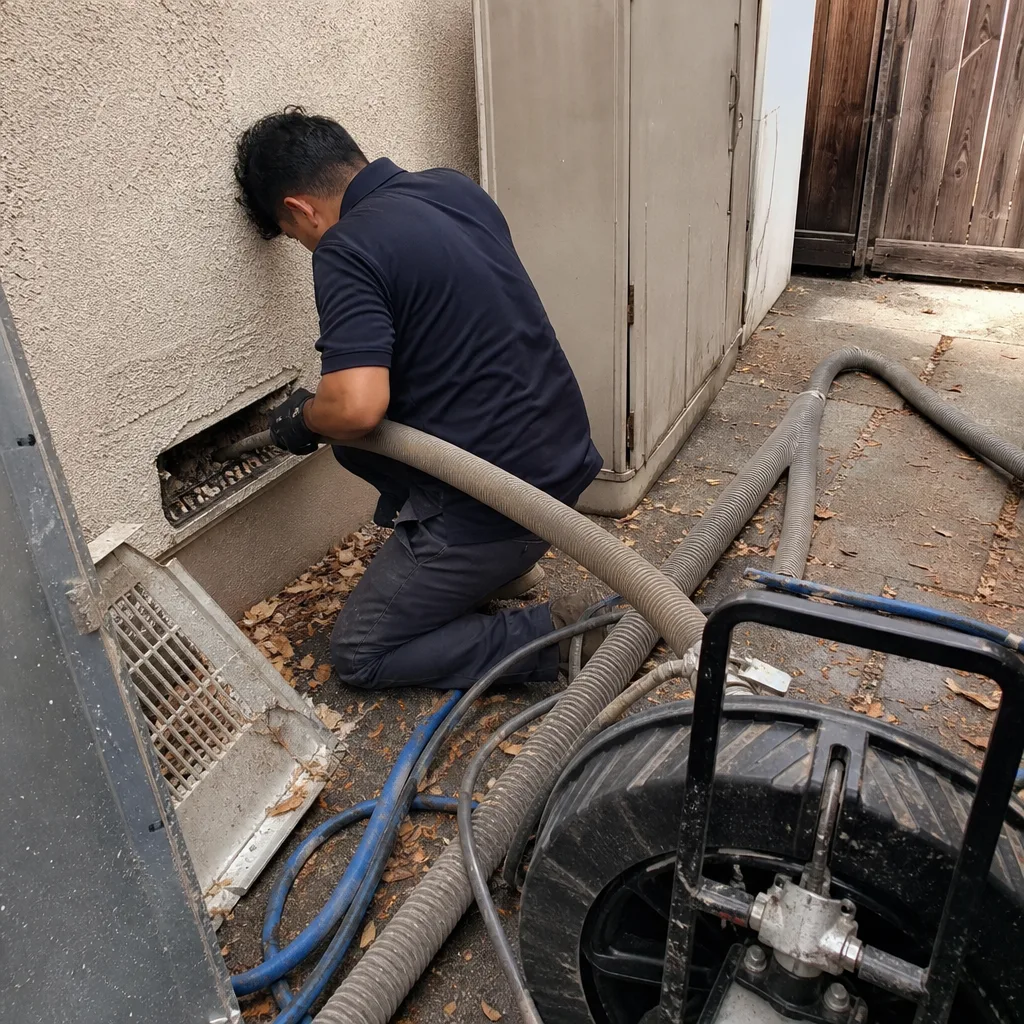 Before
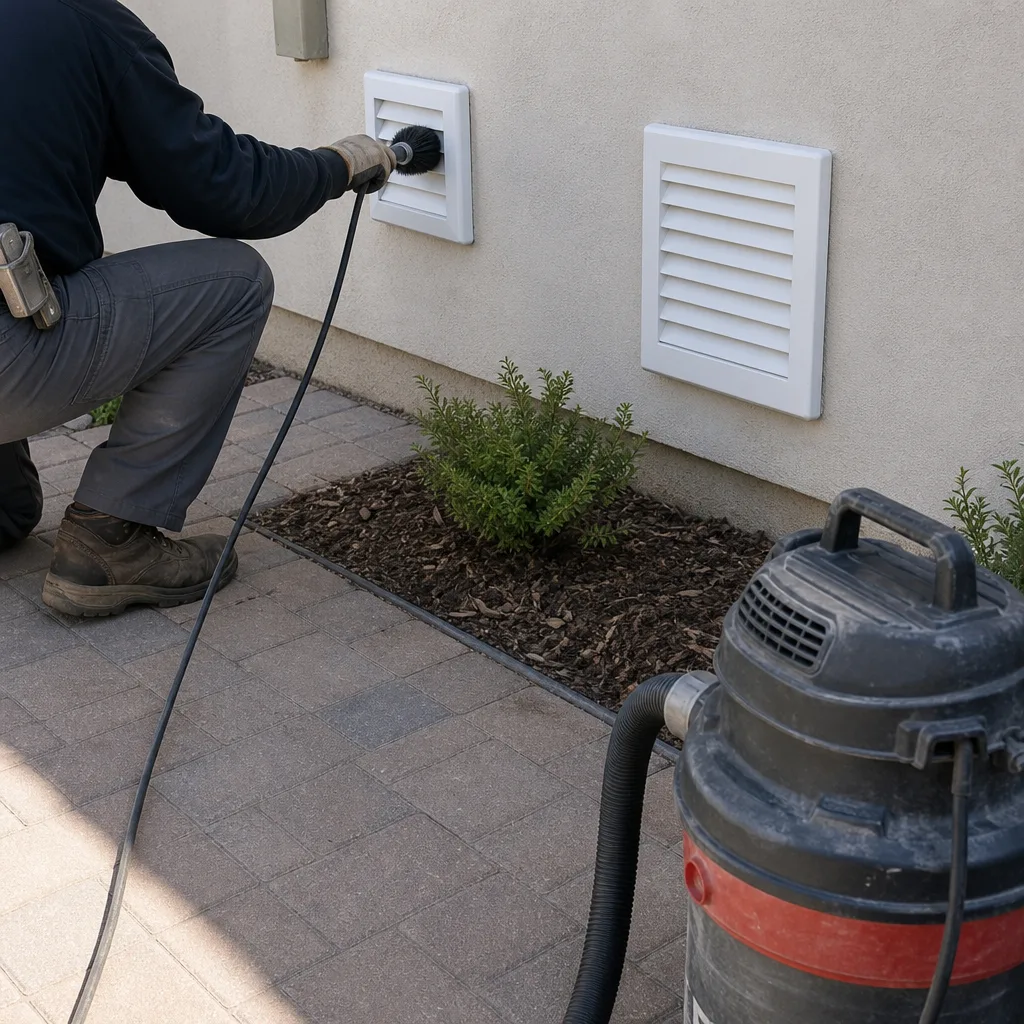 After